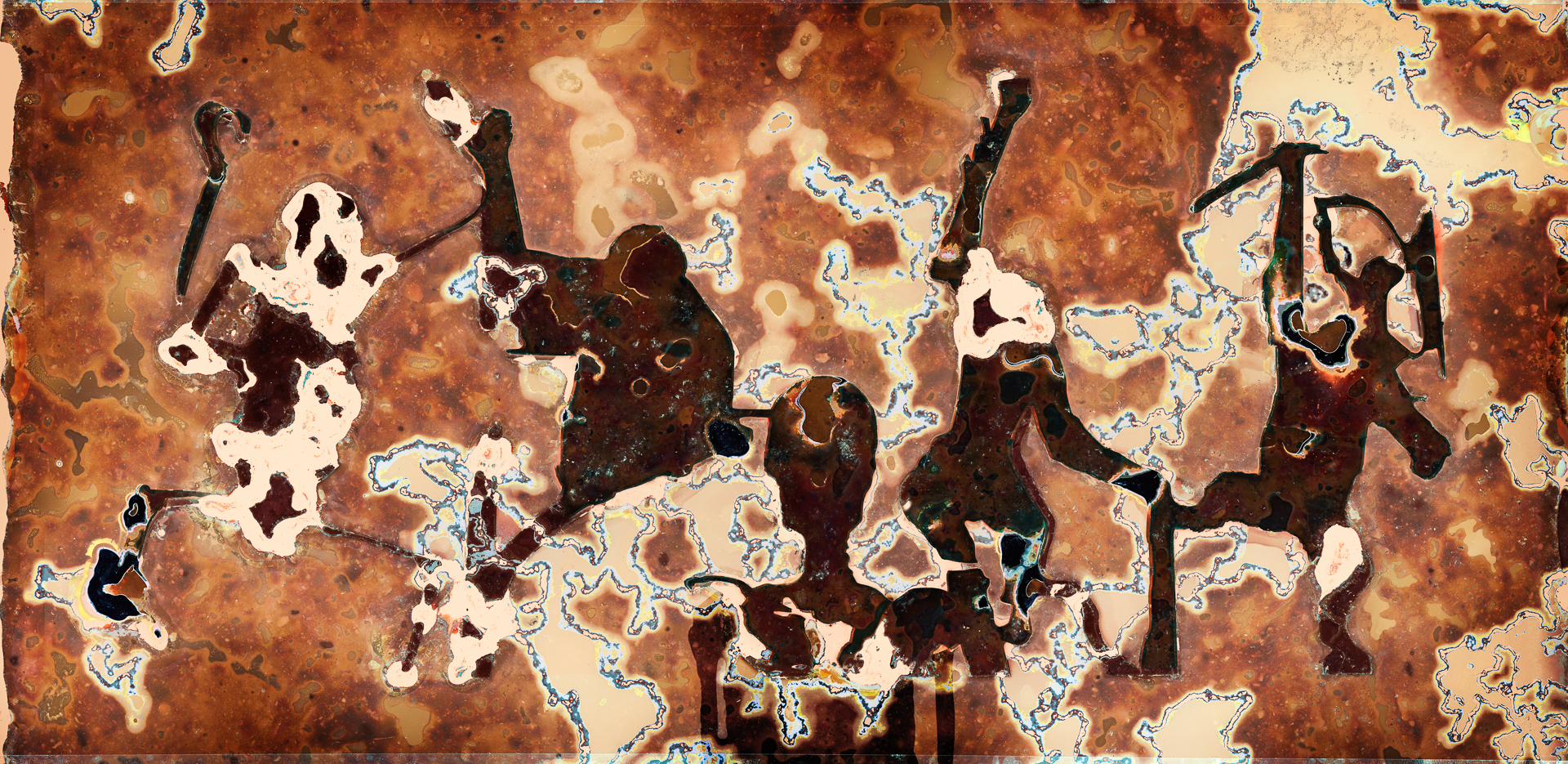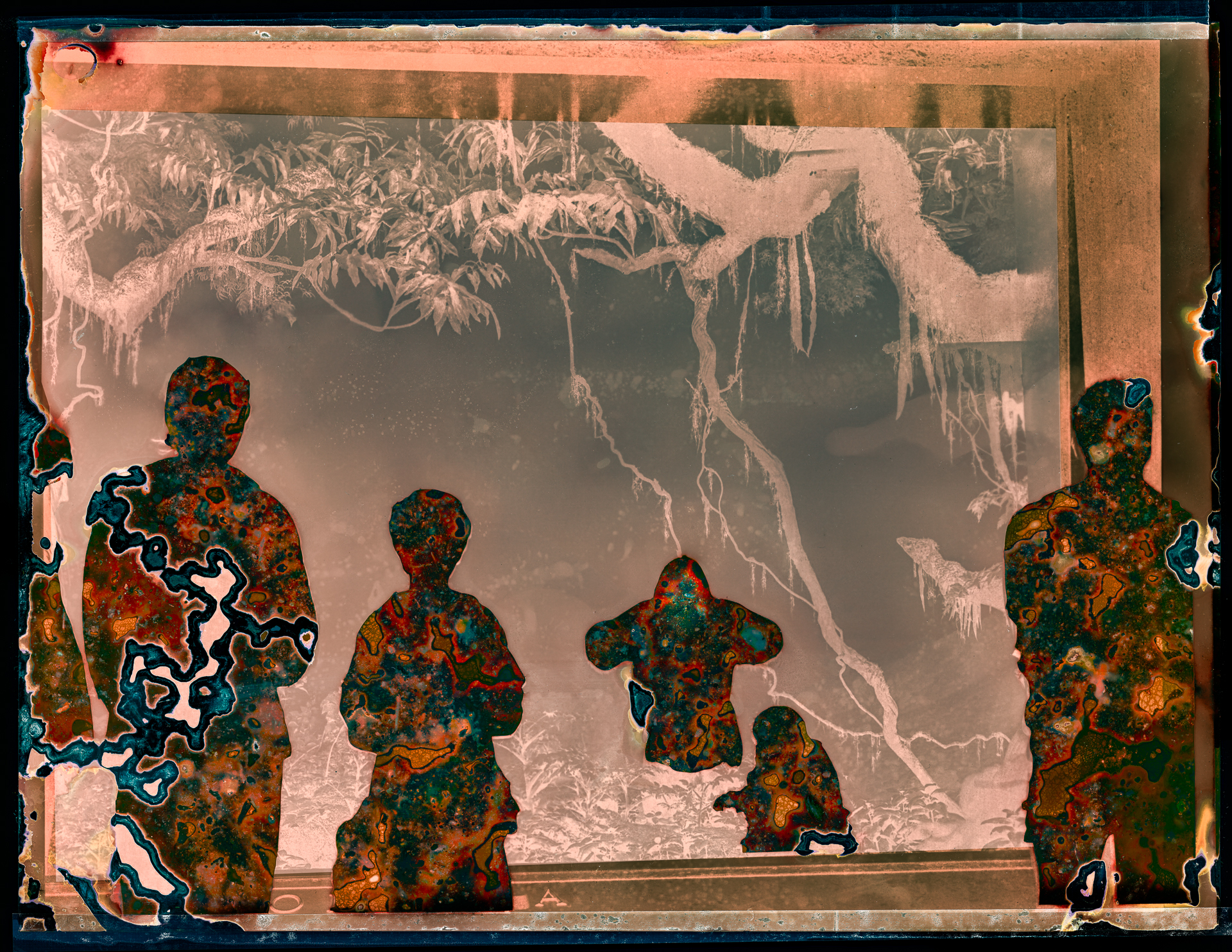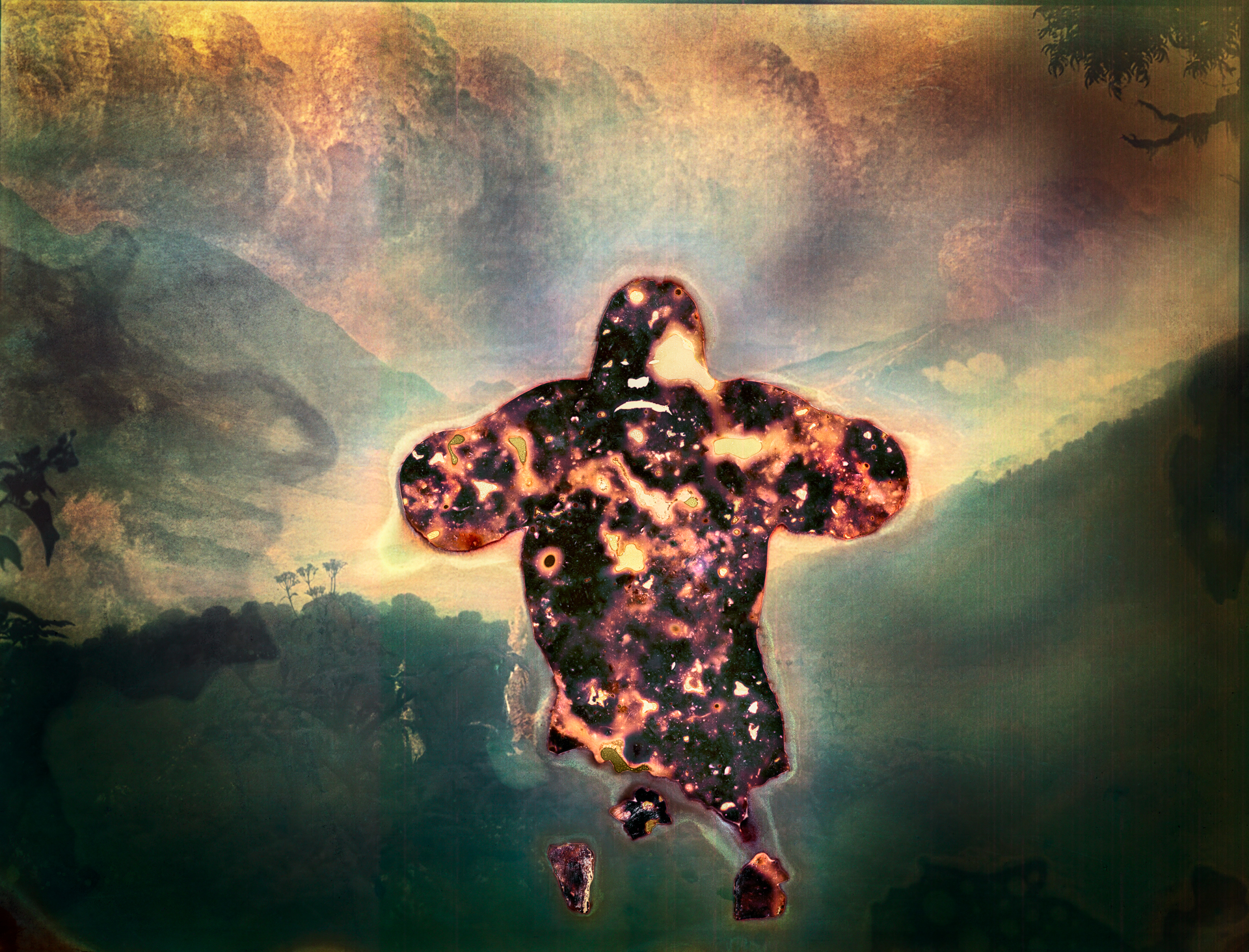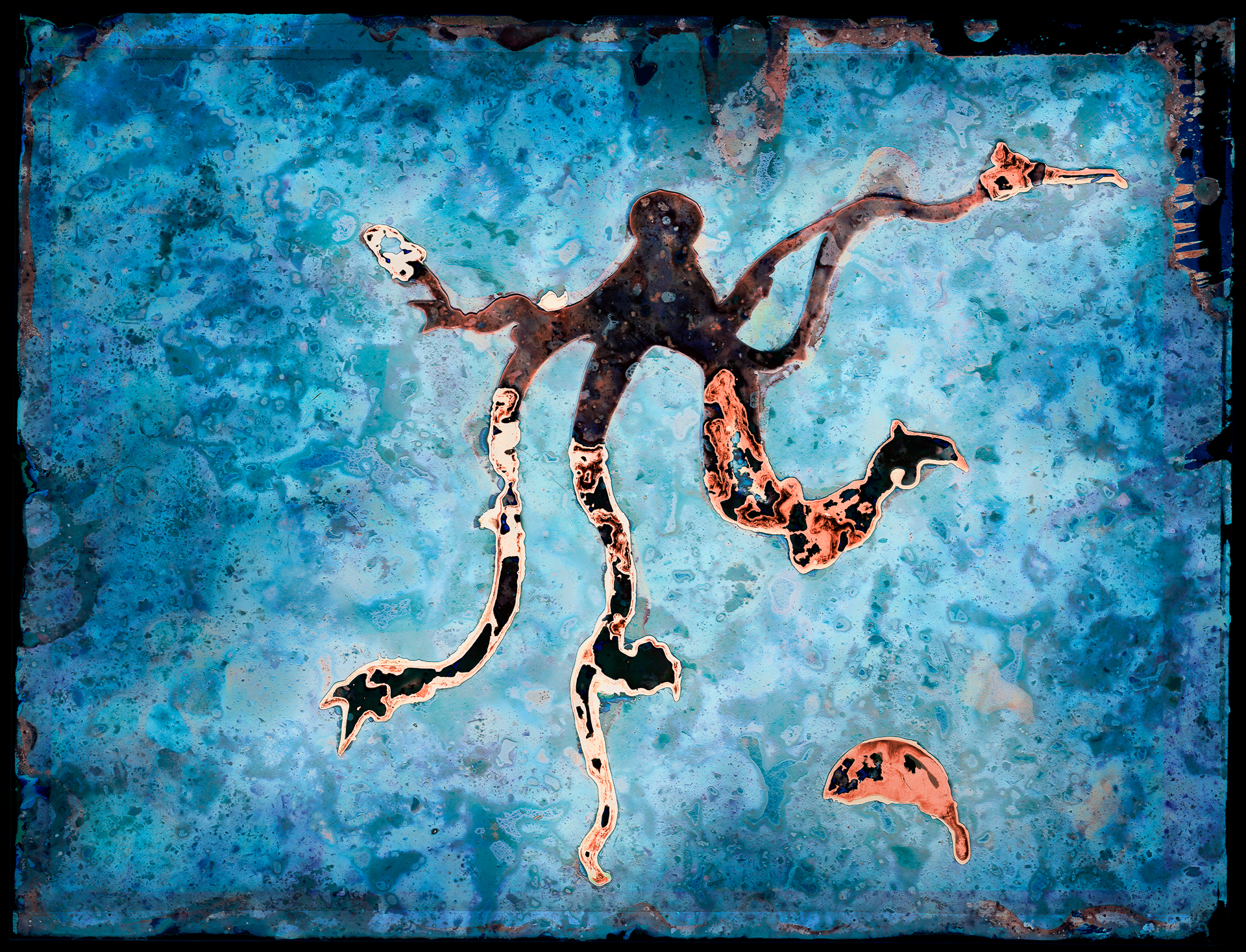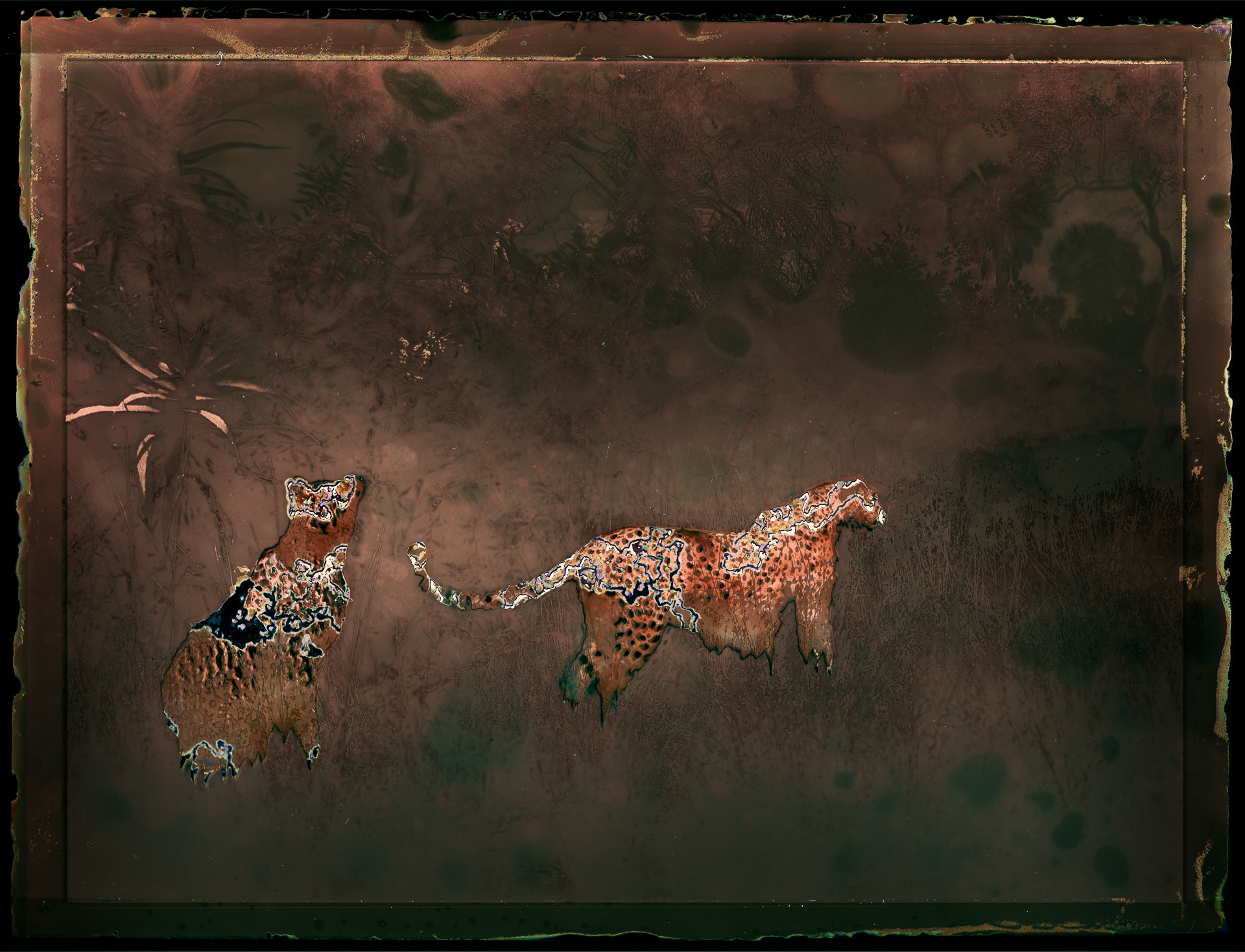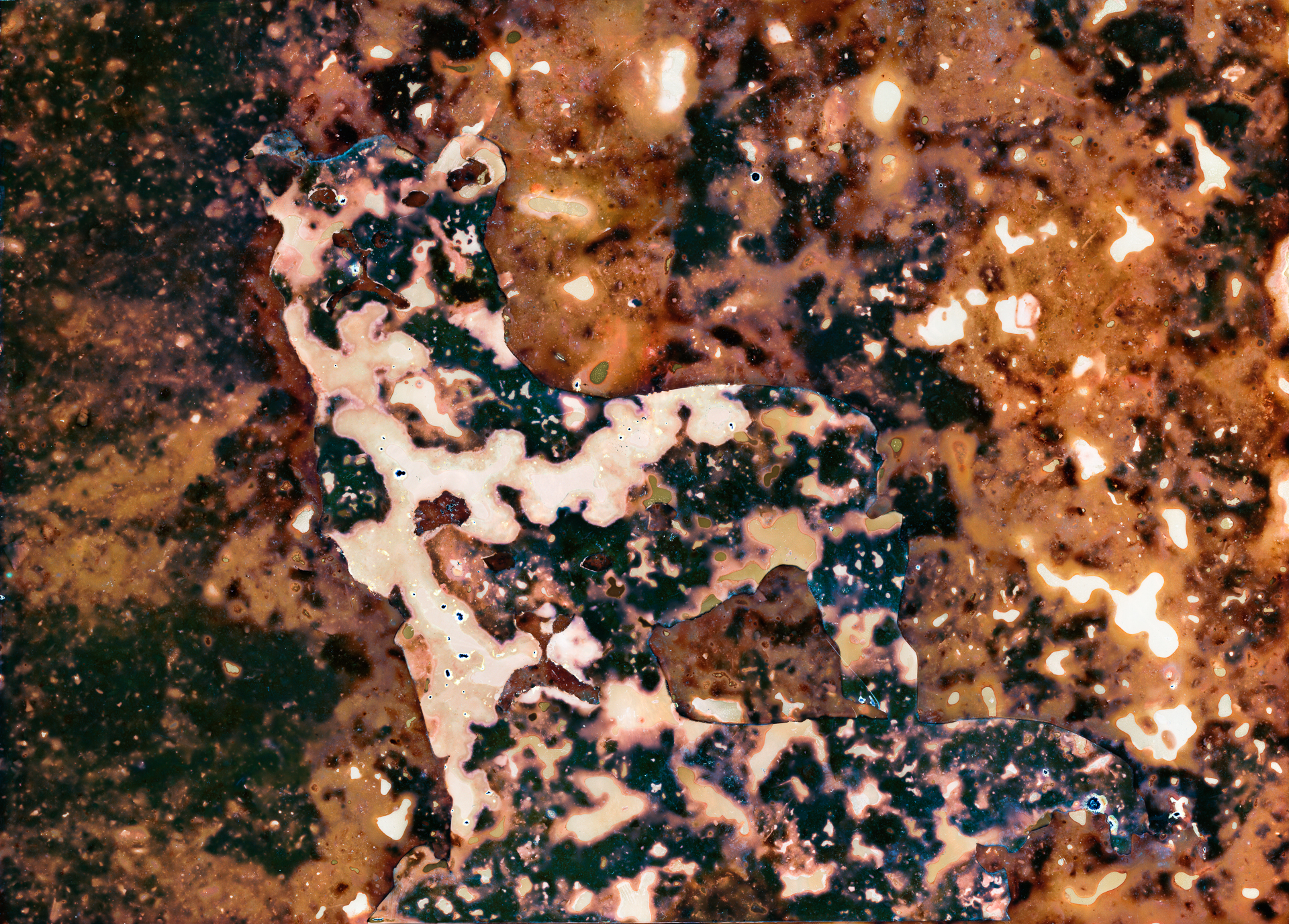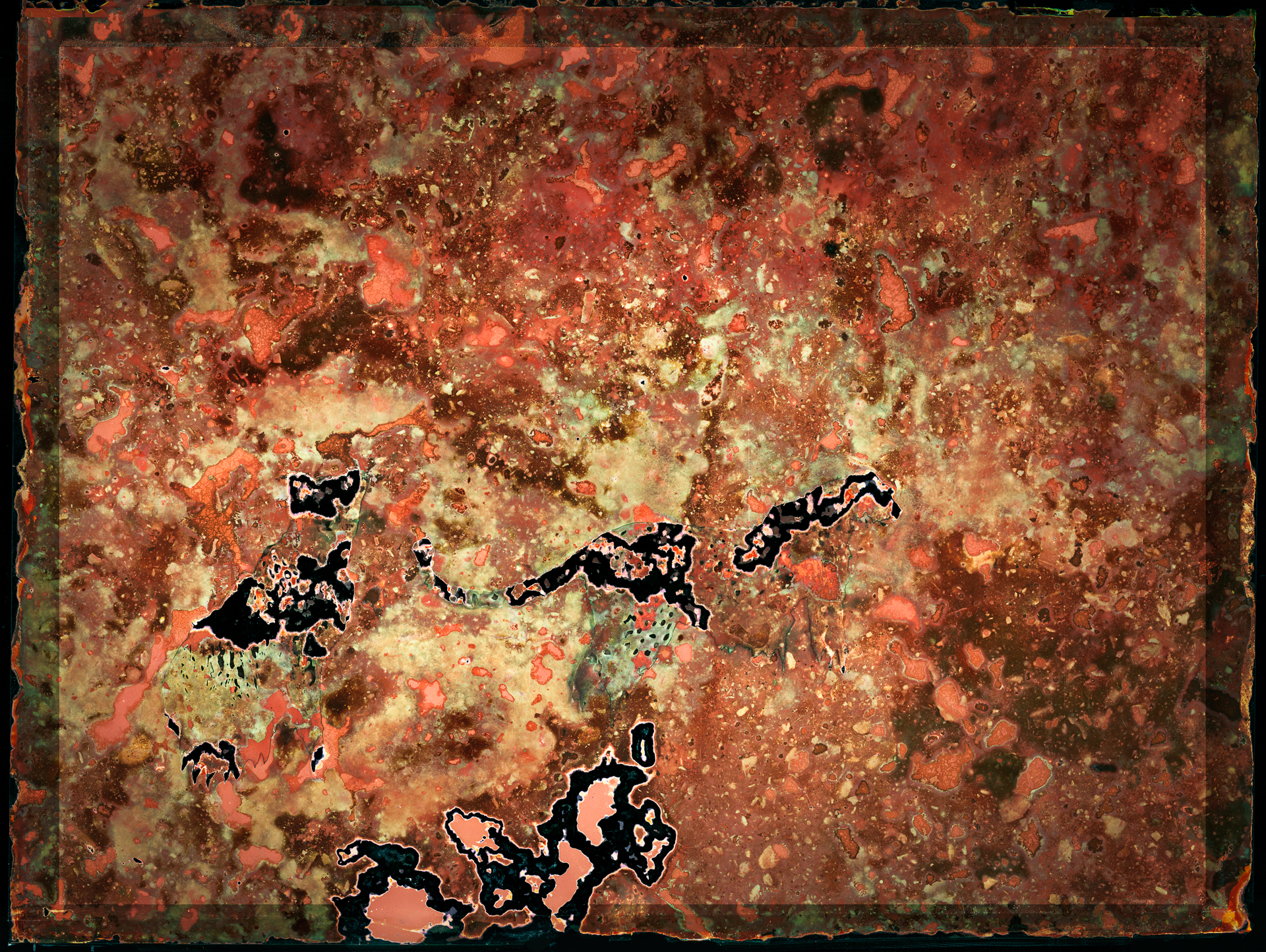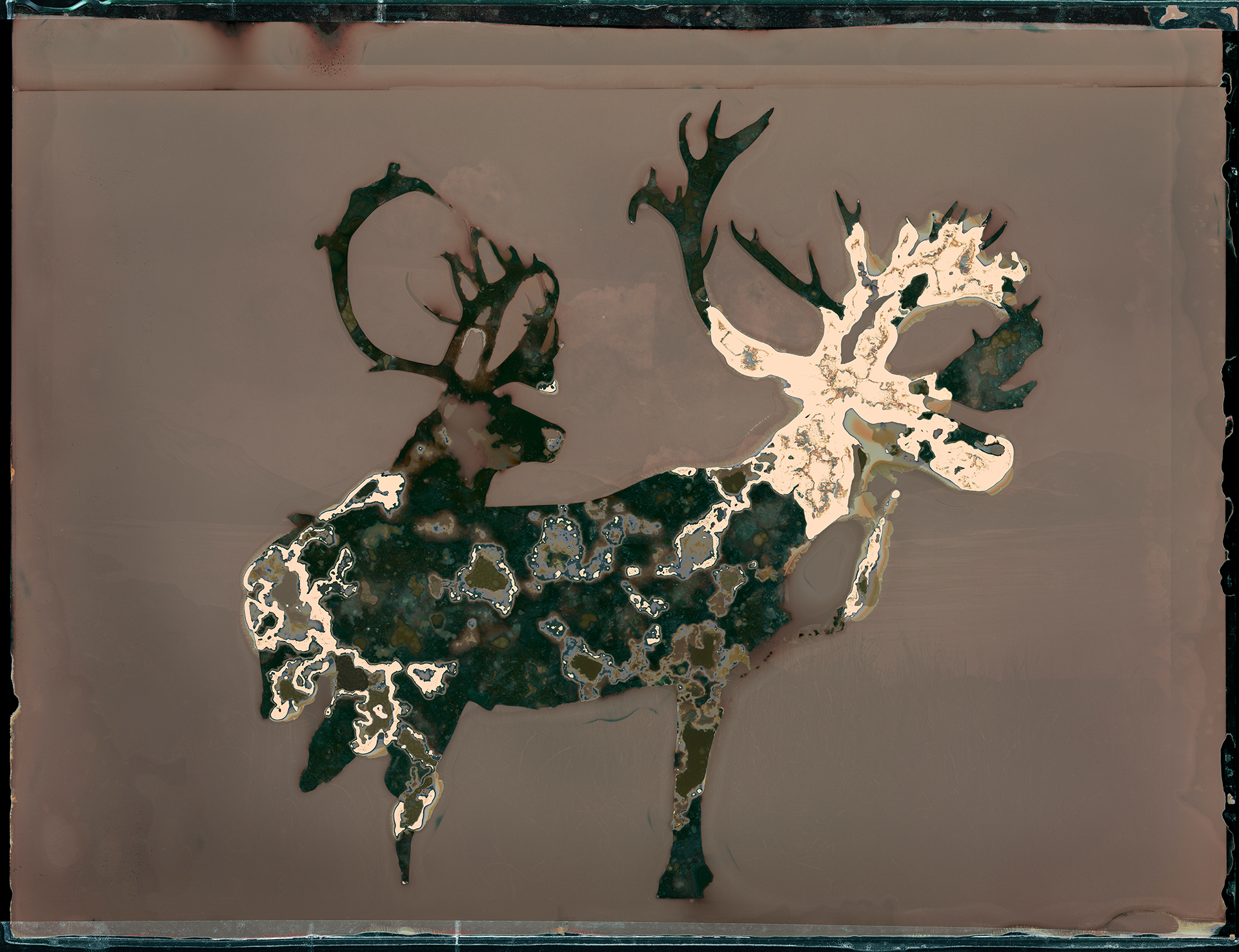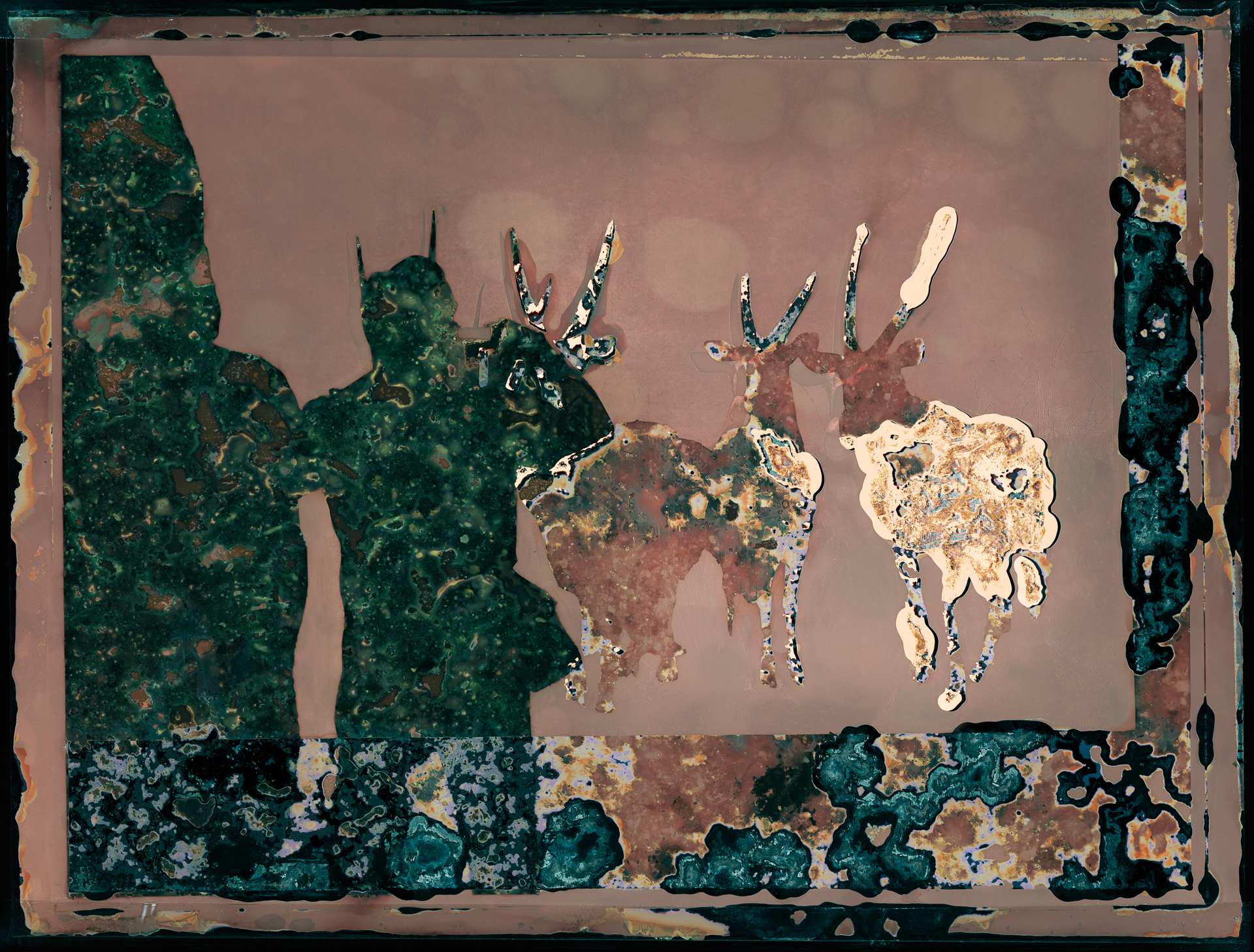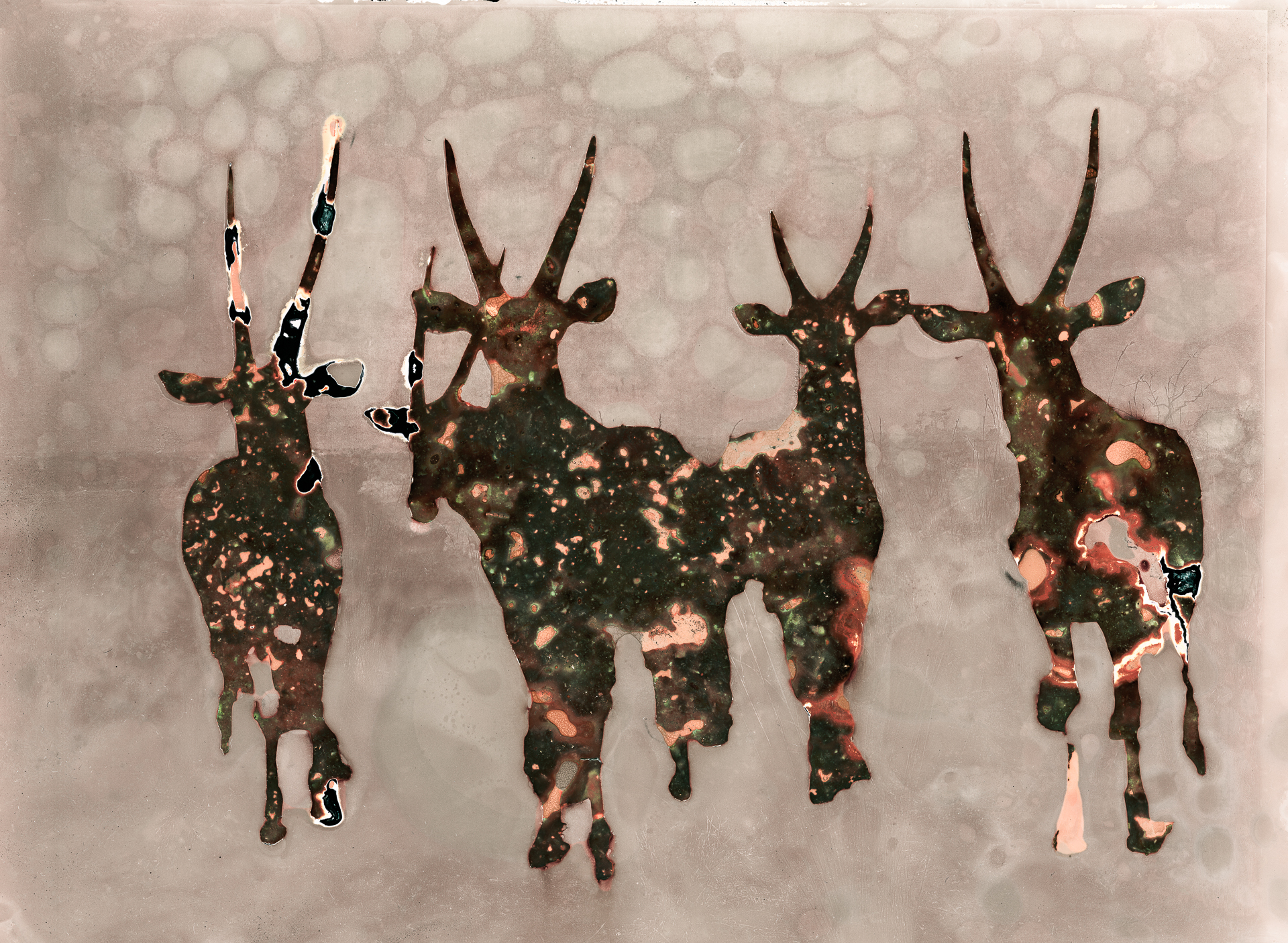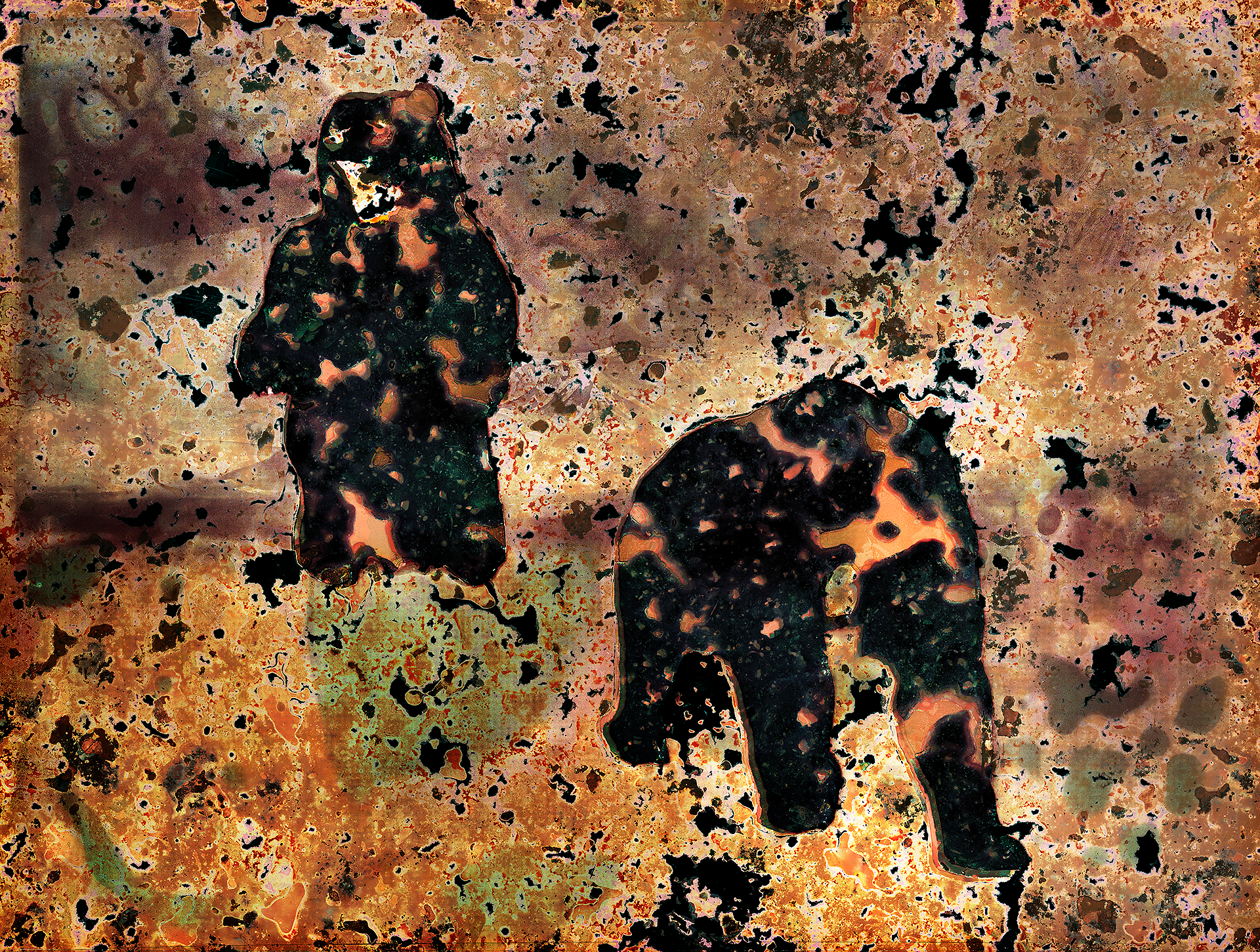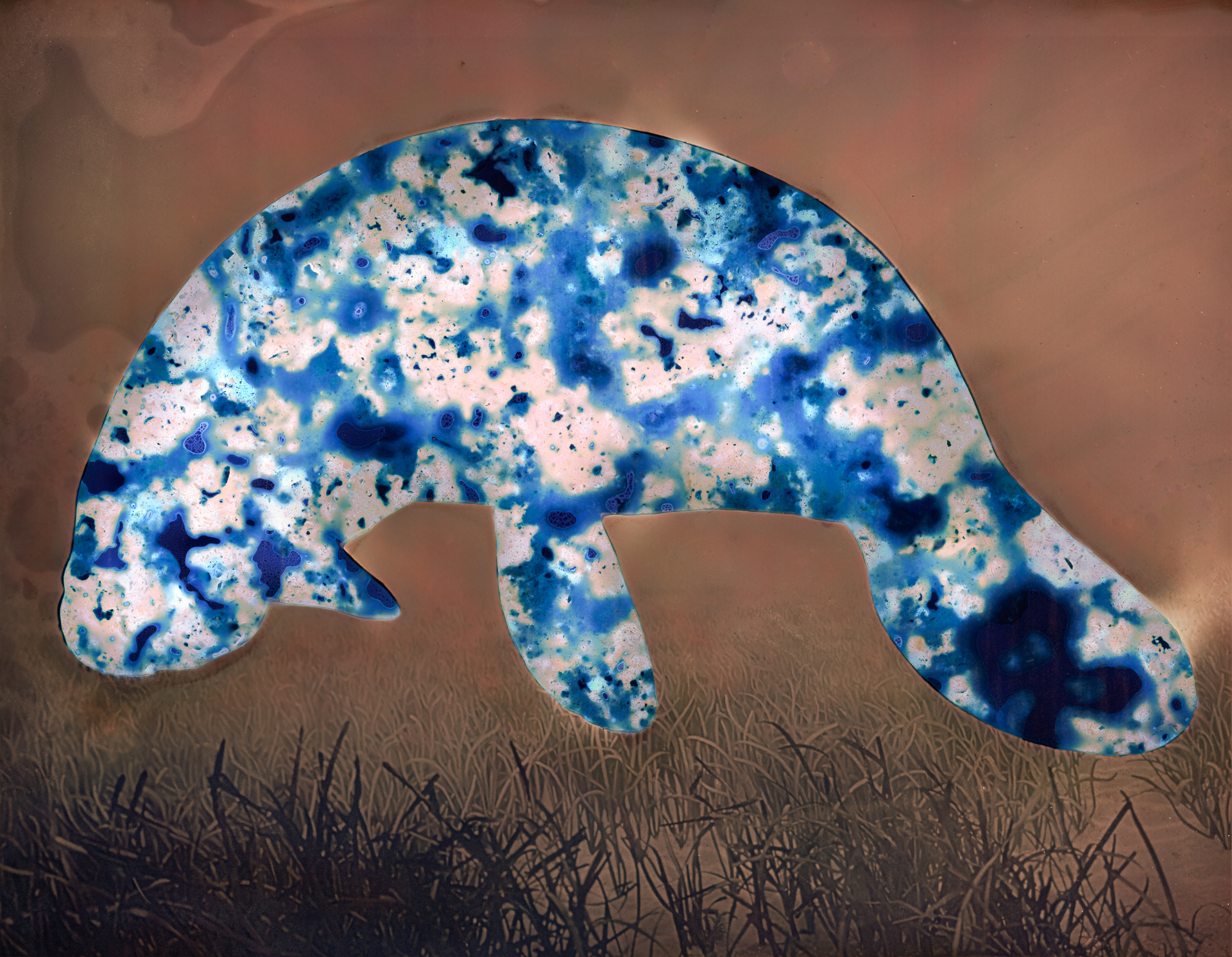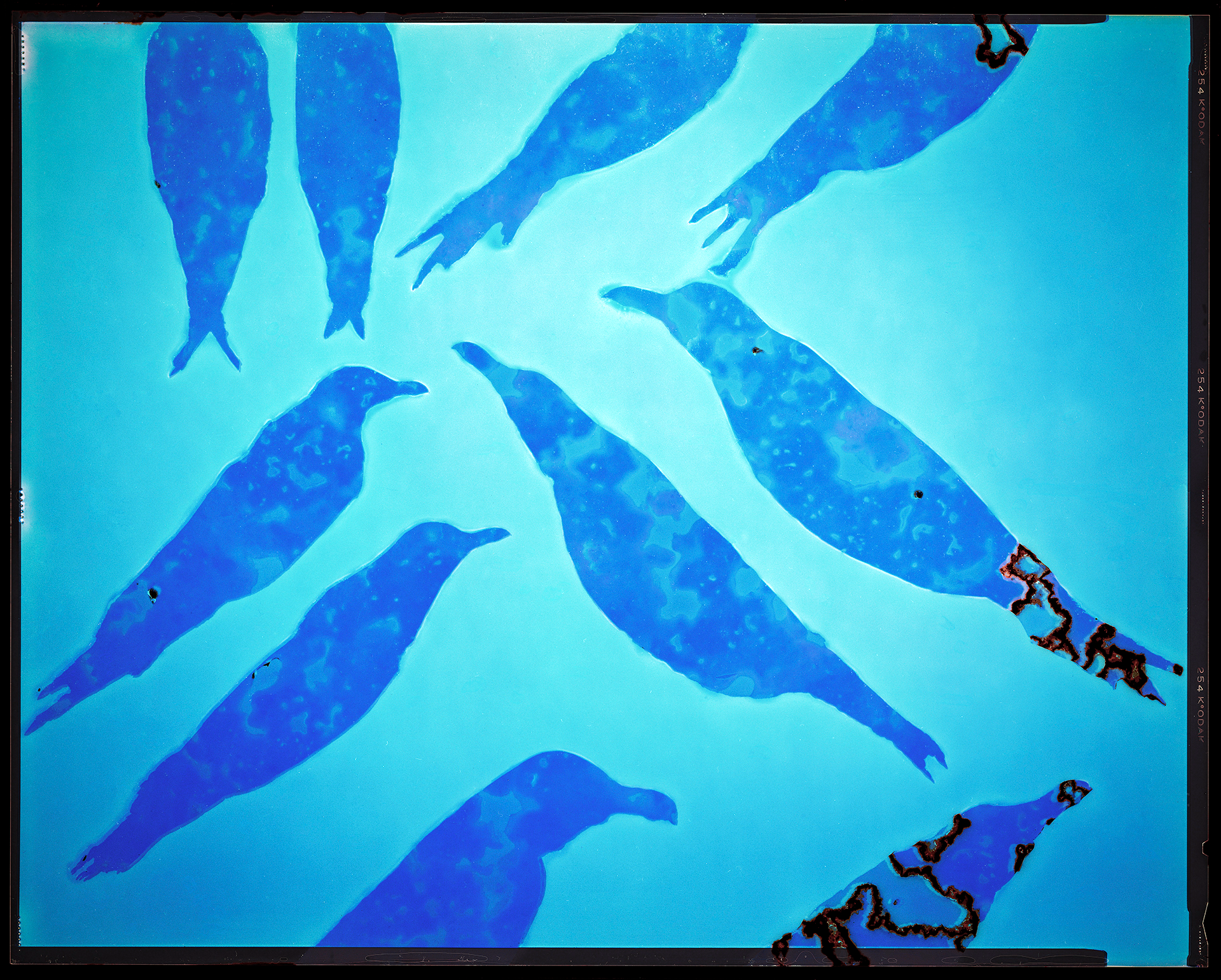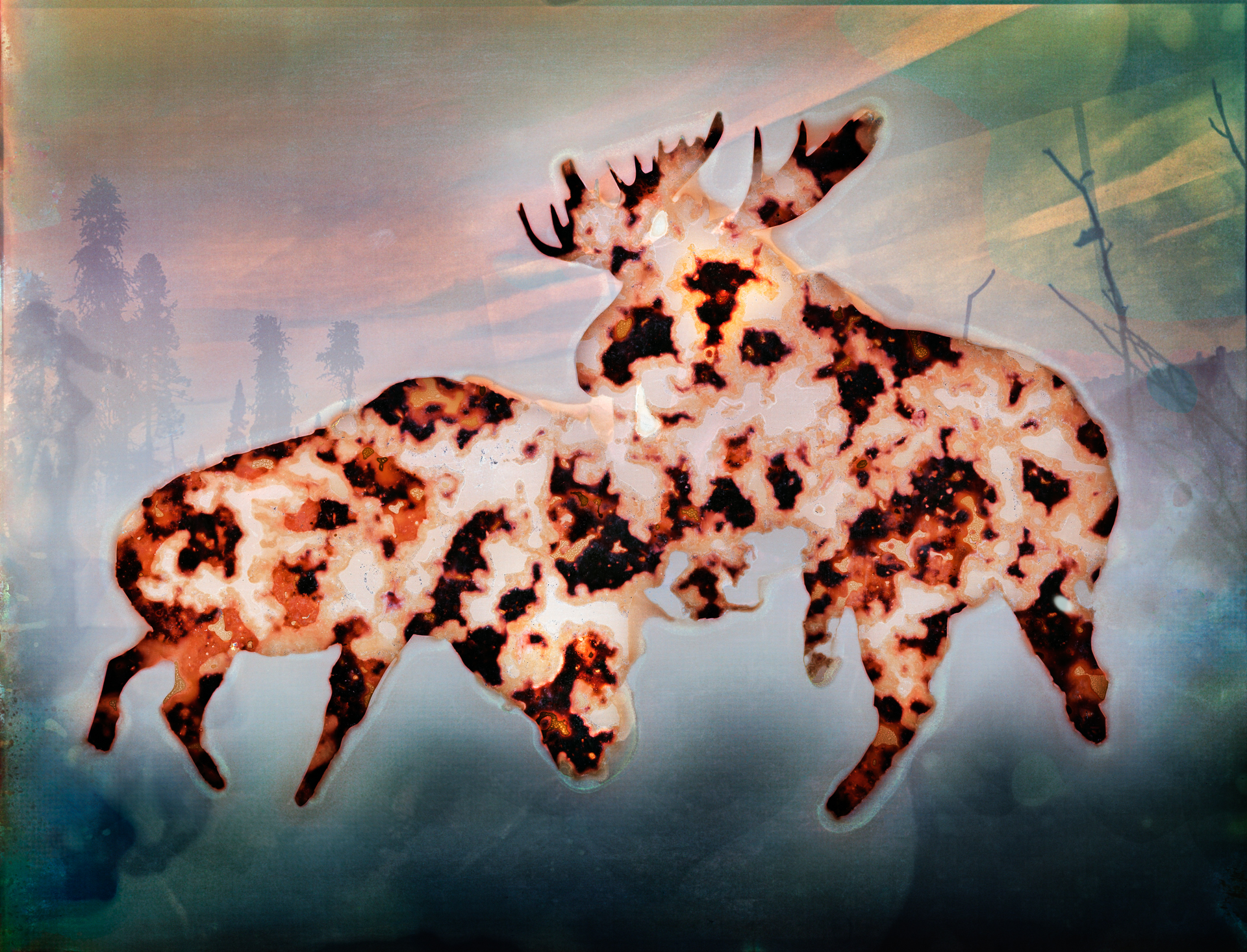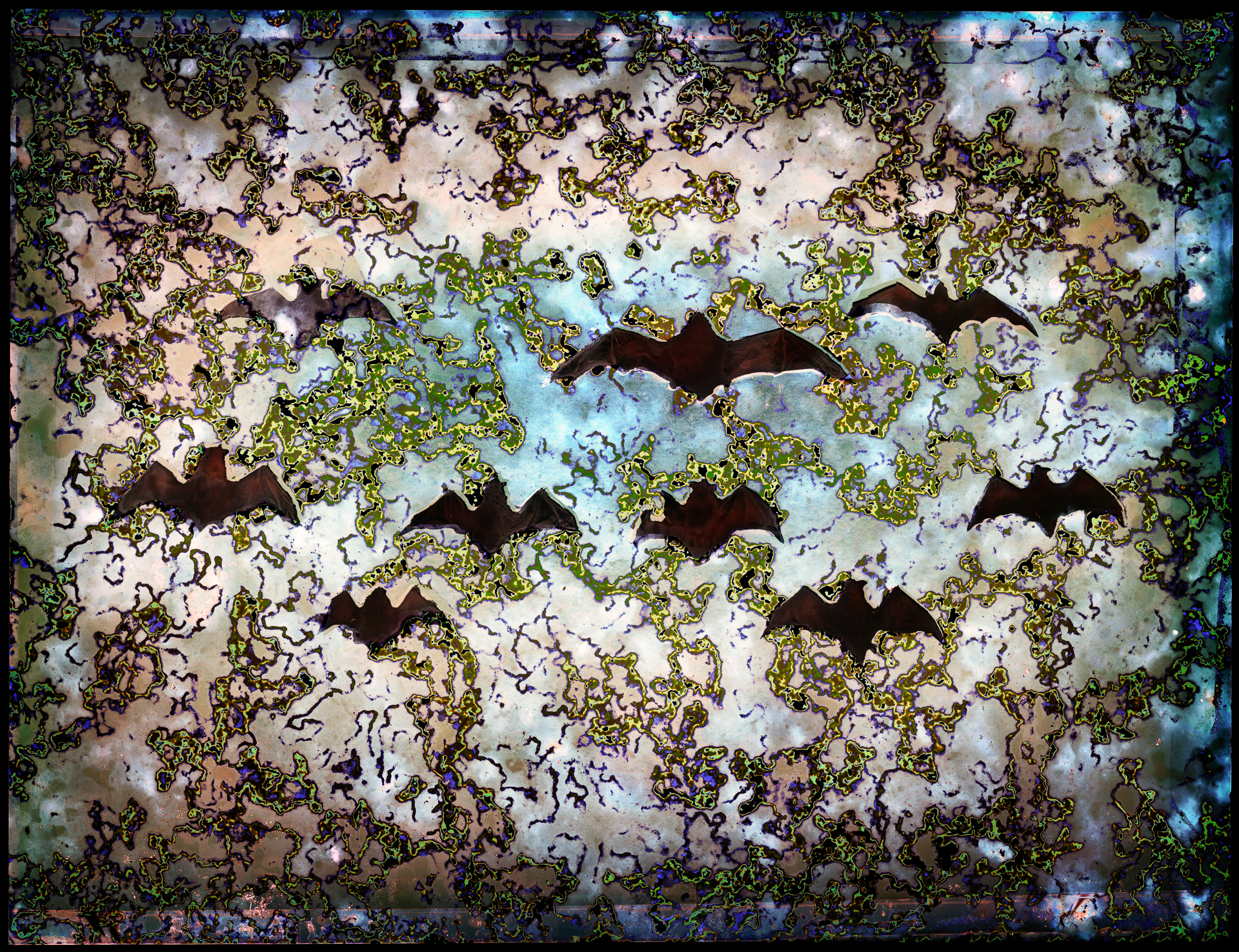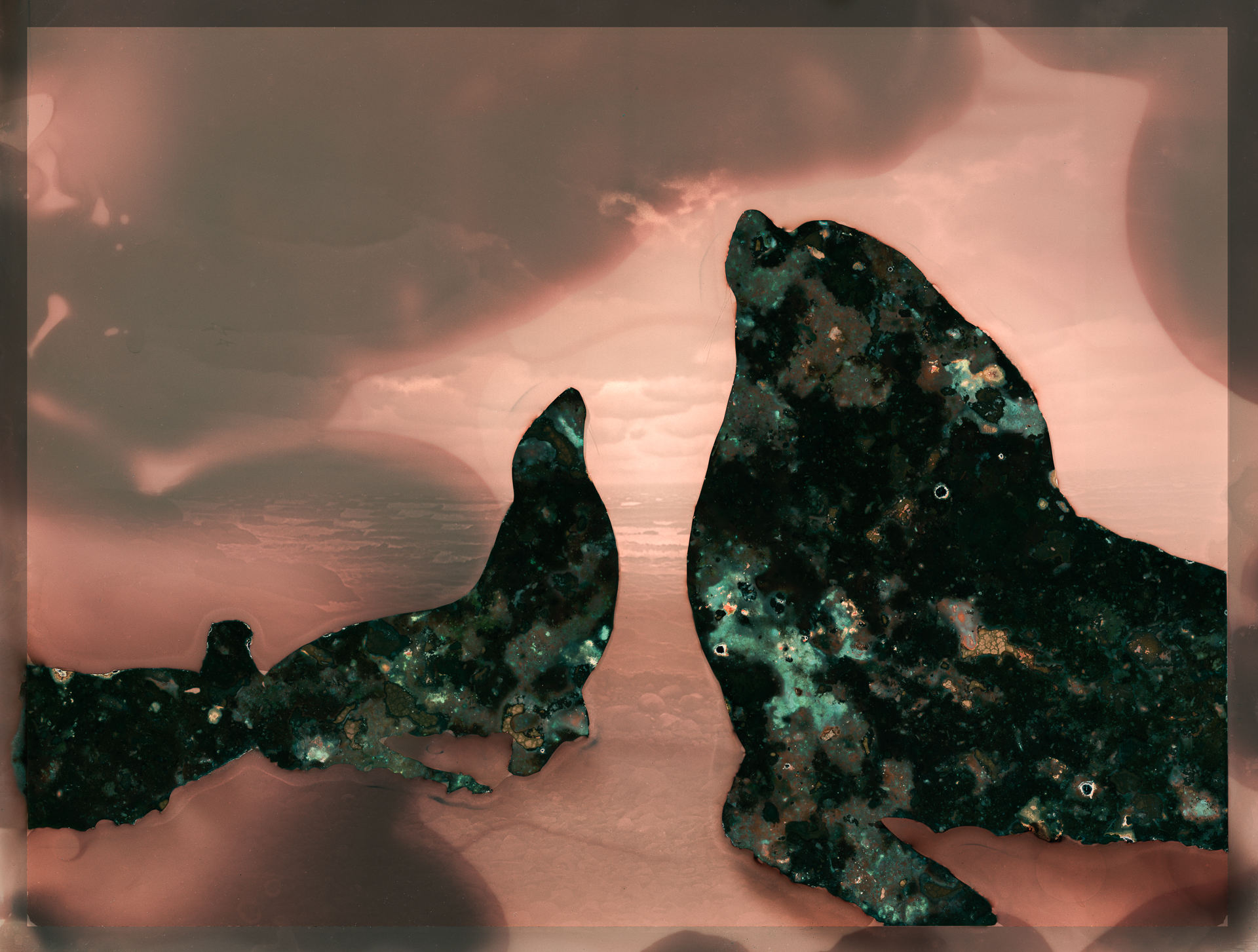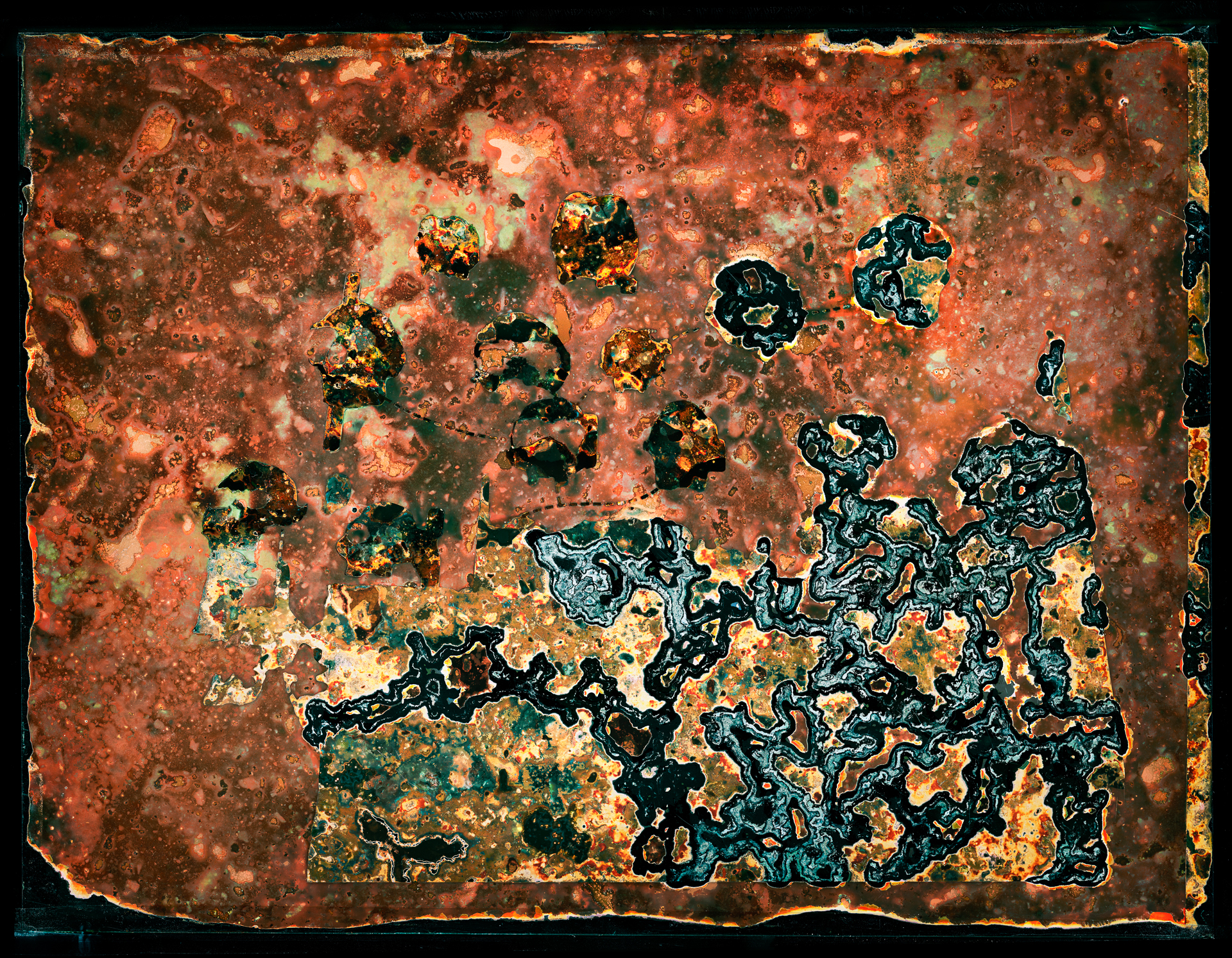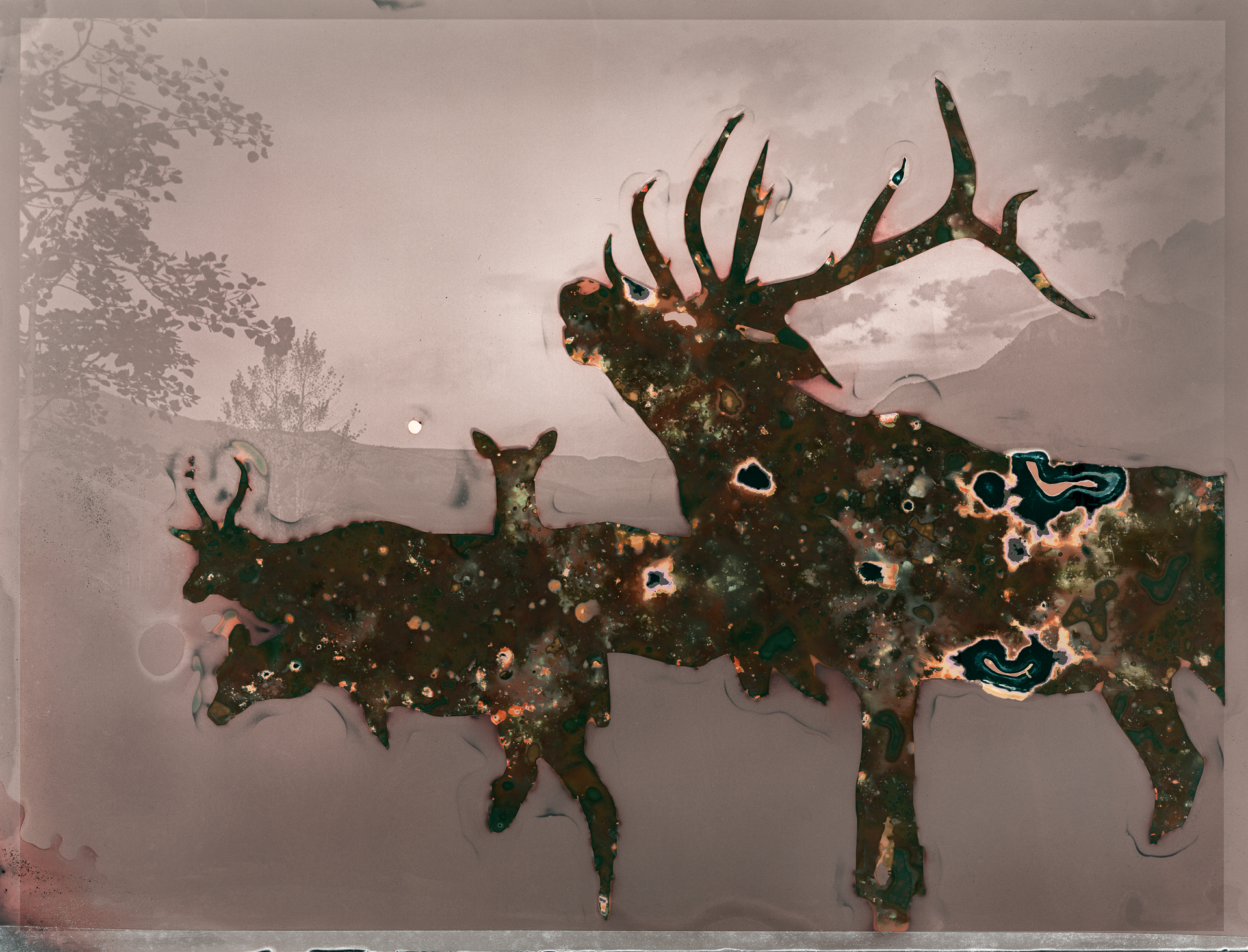
World of Disappearing, The Collective Memory of Wild Things (2020–) begins in the particular silence of natural history museum dioramas — rooms where mounted skins and fur are held in permanent mid-gesture, perpetually alive in the moment before disappearing.
The work begins by photographing these scenes, then subjects the negatives to biological processing with earth, introducing the logic of transformation into the act of preservation. What results are image memory objects: works that carry both the museum’s impulse to immortalize and the material world’s insistence on change.
Natural history collections were built on a specific belief — that holding the appearance of a thing is the same as holding the thing itself. These works press on that belief. What gets preserved in a diorama is not only the animal but the cultural moment of its making: the aesthetic choices, the narrative framing, the story a society tells about what it is losing. The image memory object doesn’t document a species. It documents the mythology of its disappearance — and makes that mythology visible as physical fact.
Editions & Print Sizes Archival Pigment Prints, mounted on Dibond, signed on verso.
Size I — 43.5 × 56.5 in (110 × 143 cm) — Edition of 5 + 2 AP
Size II— 31.5 × 41 in (80 × 104 cm) — Edition of 7 + 2 AP