Originals On film
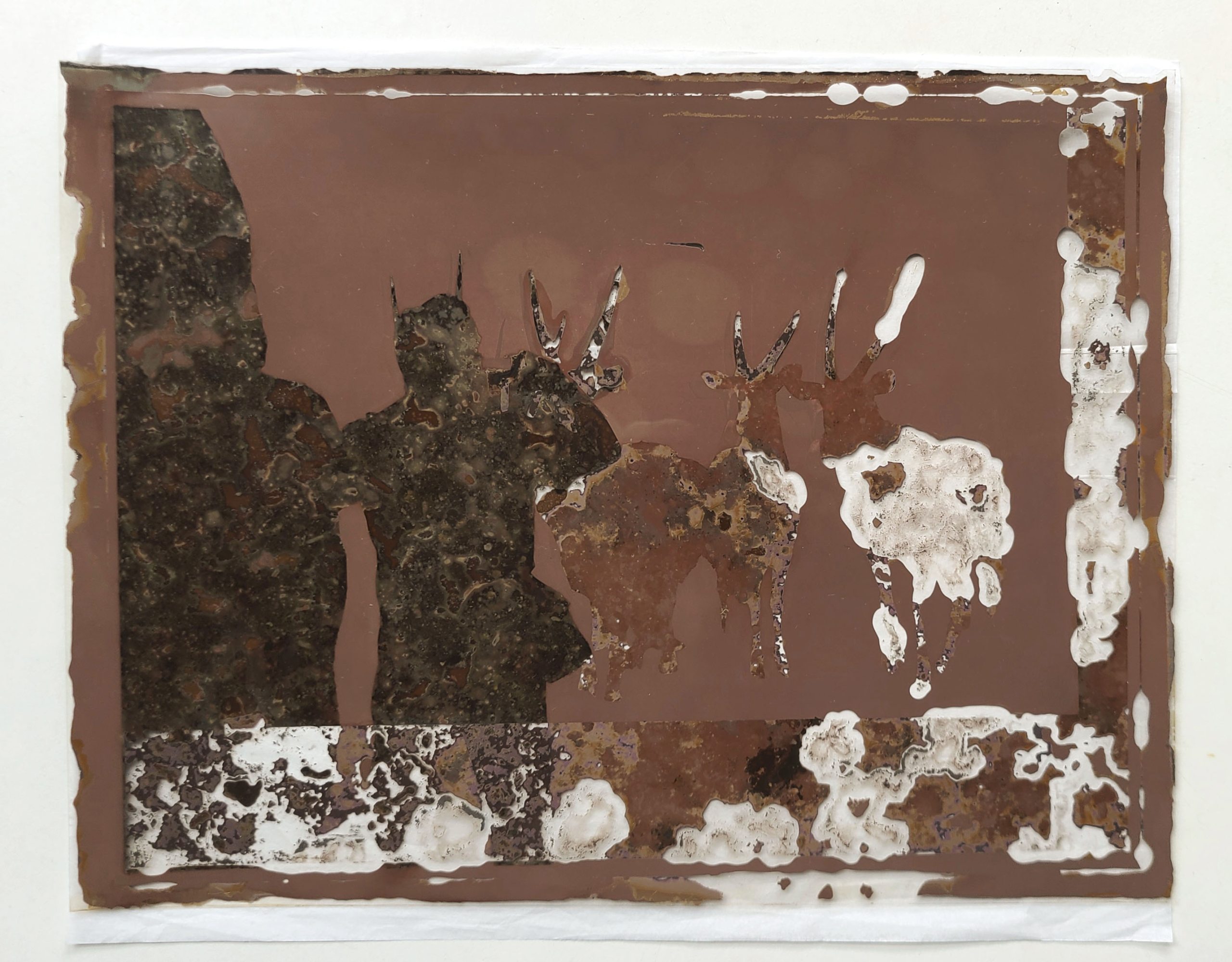
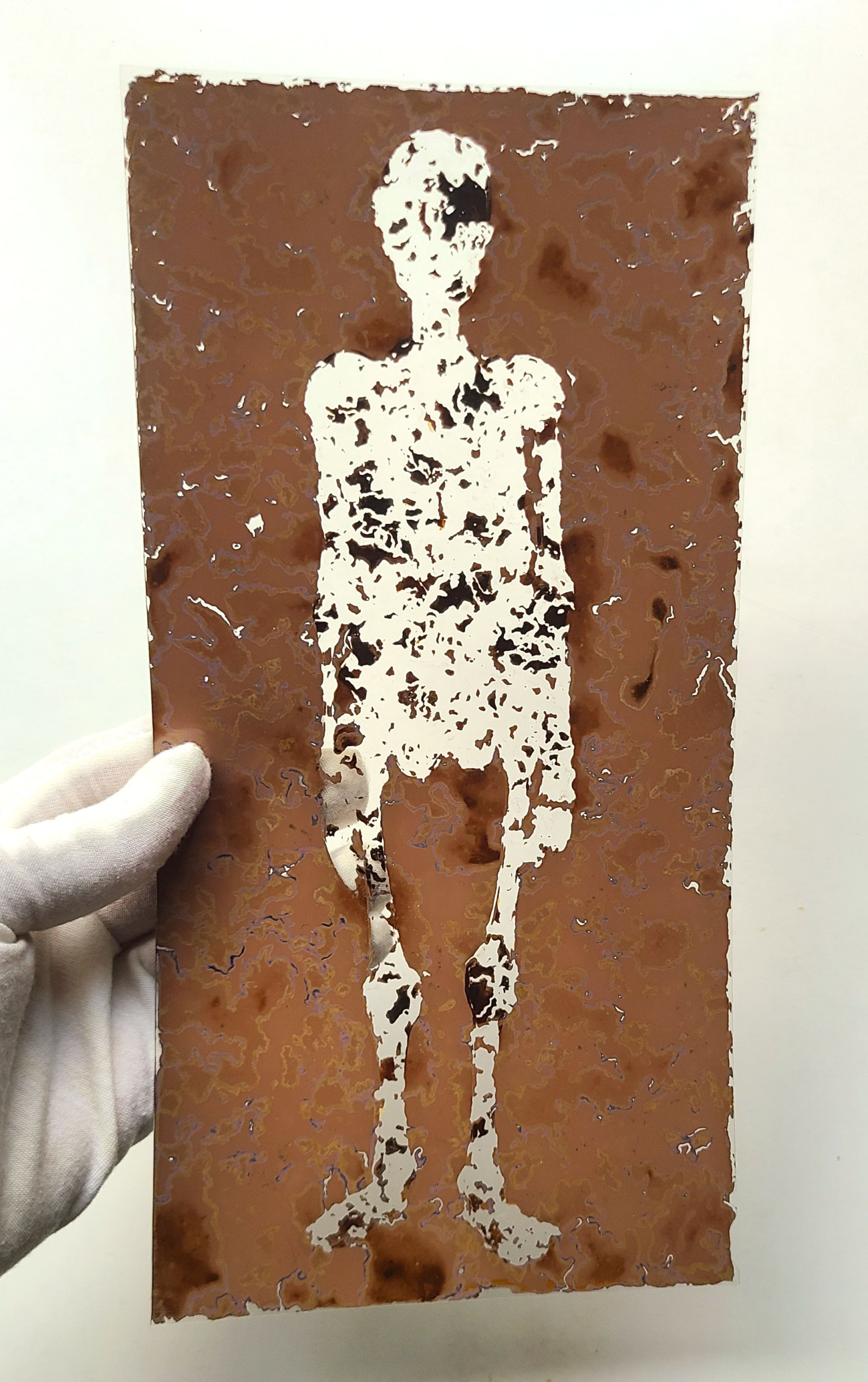
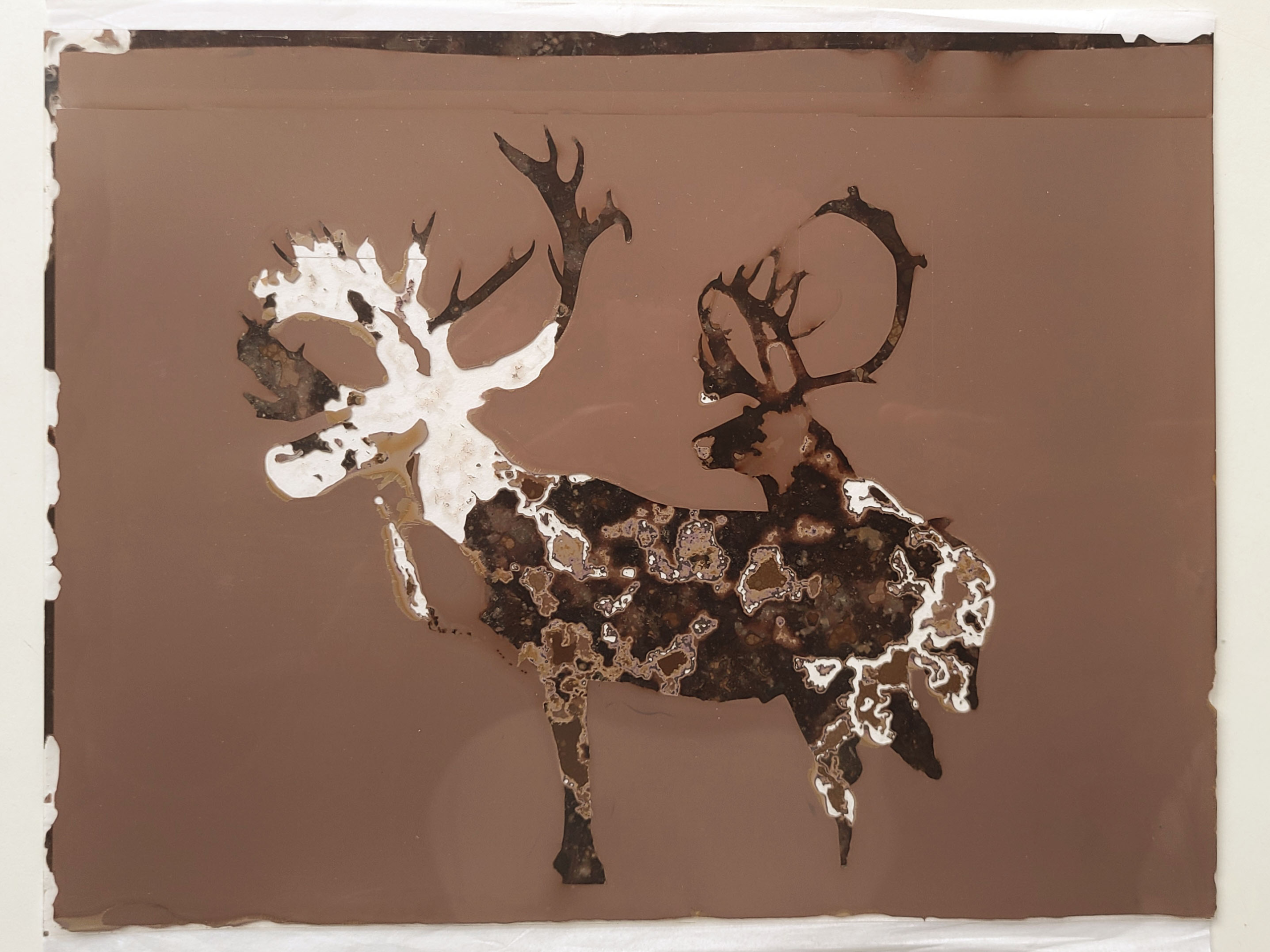
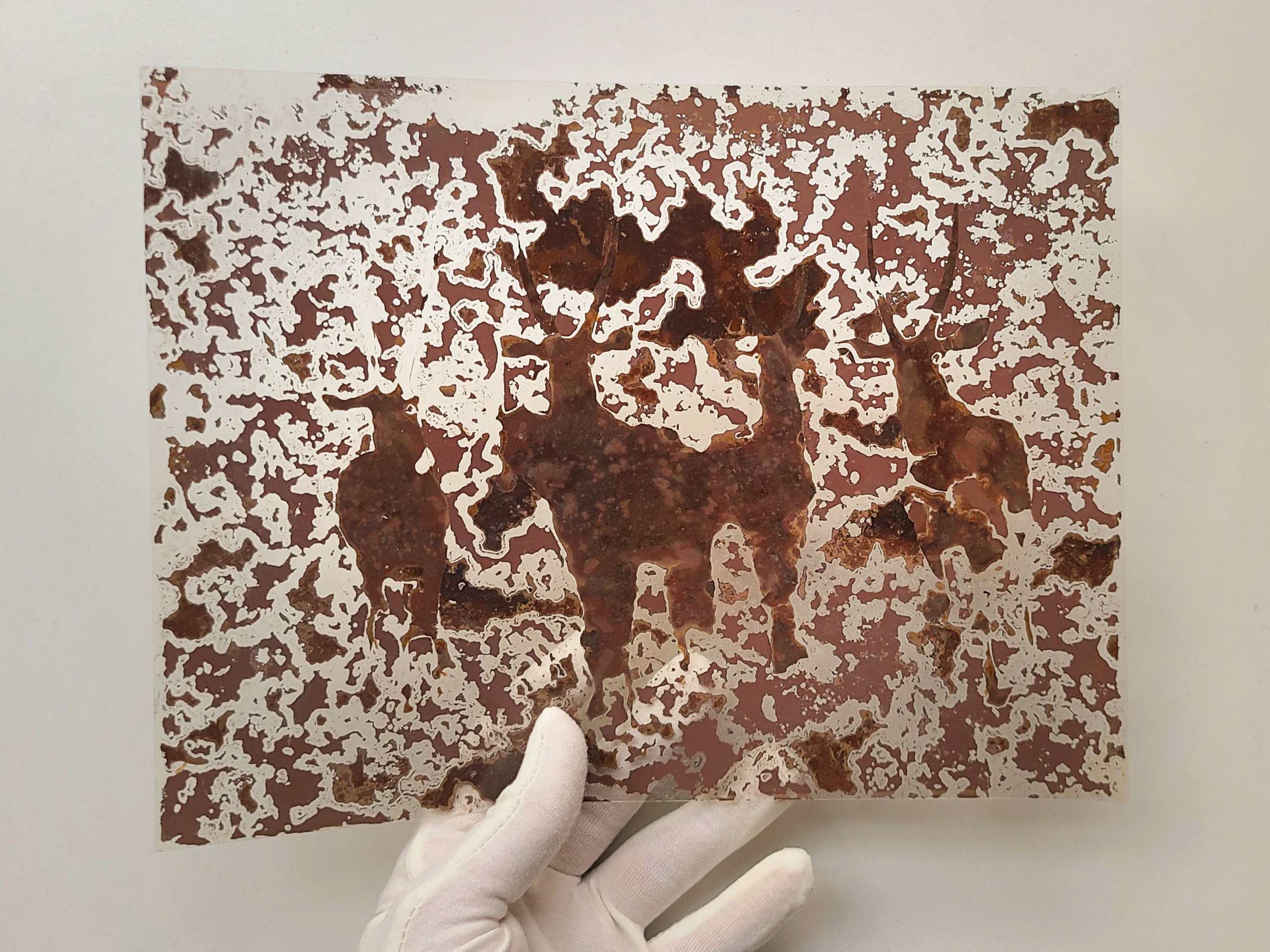
Unique originals from the process on film are what is sometimes left over from earth process imaging, and sometimes made as standalone pieces in their own right. In the biological processing, the emulsion is consumed unevenly — in places it survives as image, in places it’s eaten through entirely, leaving clear celluloid. Where that happens across a large enough area, the negative becomes something other than a negative: a unique object with its own transparency built in by the process itself, not added afterward. These pieces are mounted on front-surface mirror and matted, so the transparent areas open onto a reflective surface behind the film rather than a blank one — the viewer’s own presence enters the image through the same openings the process carved.