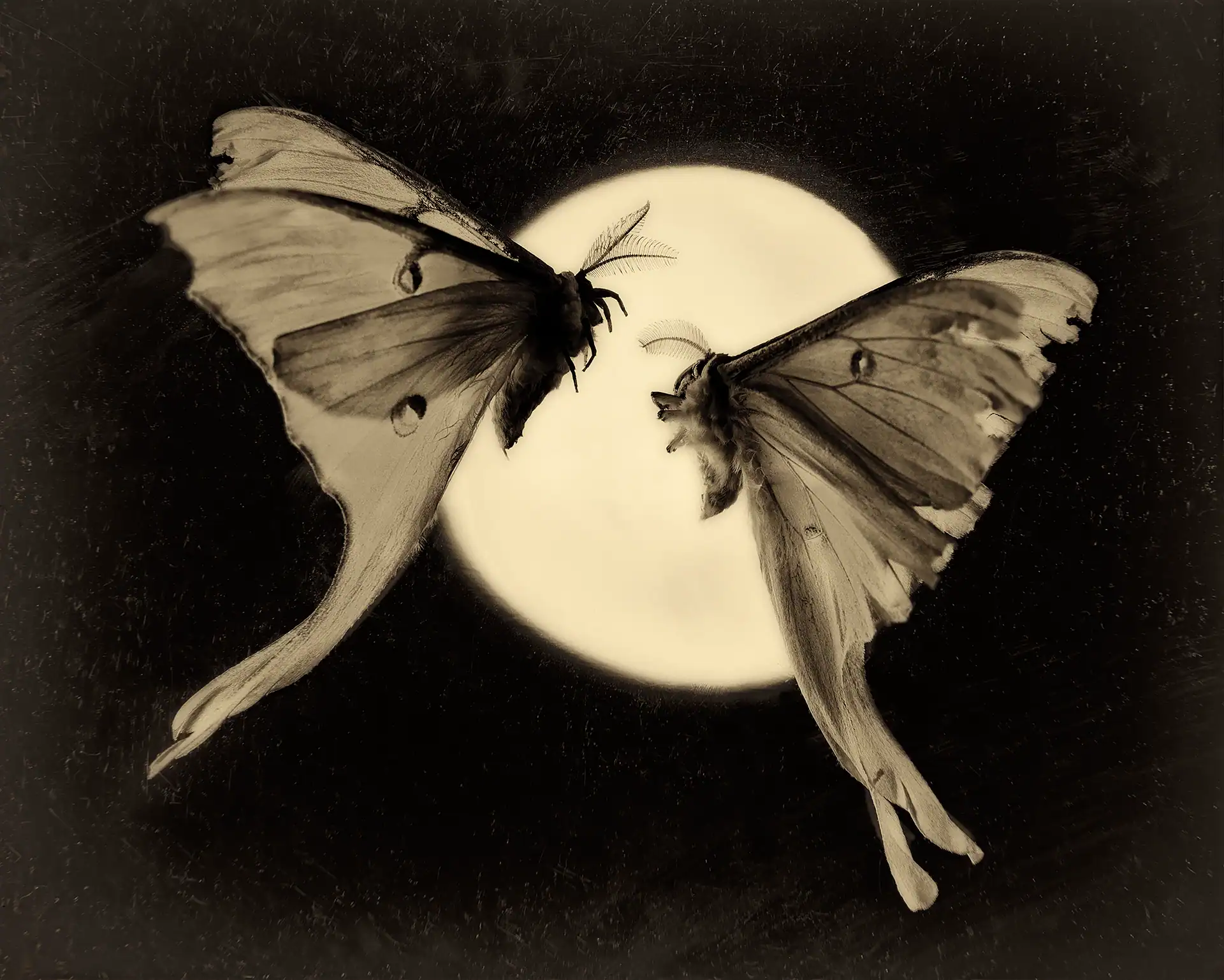
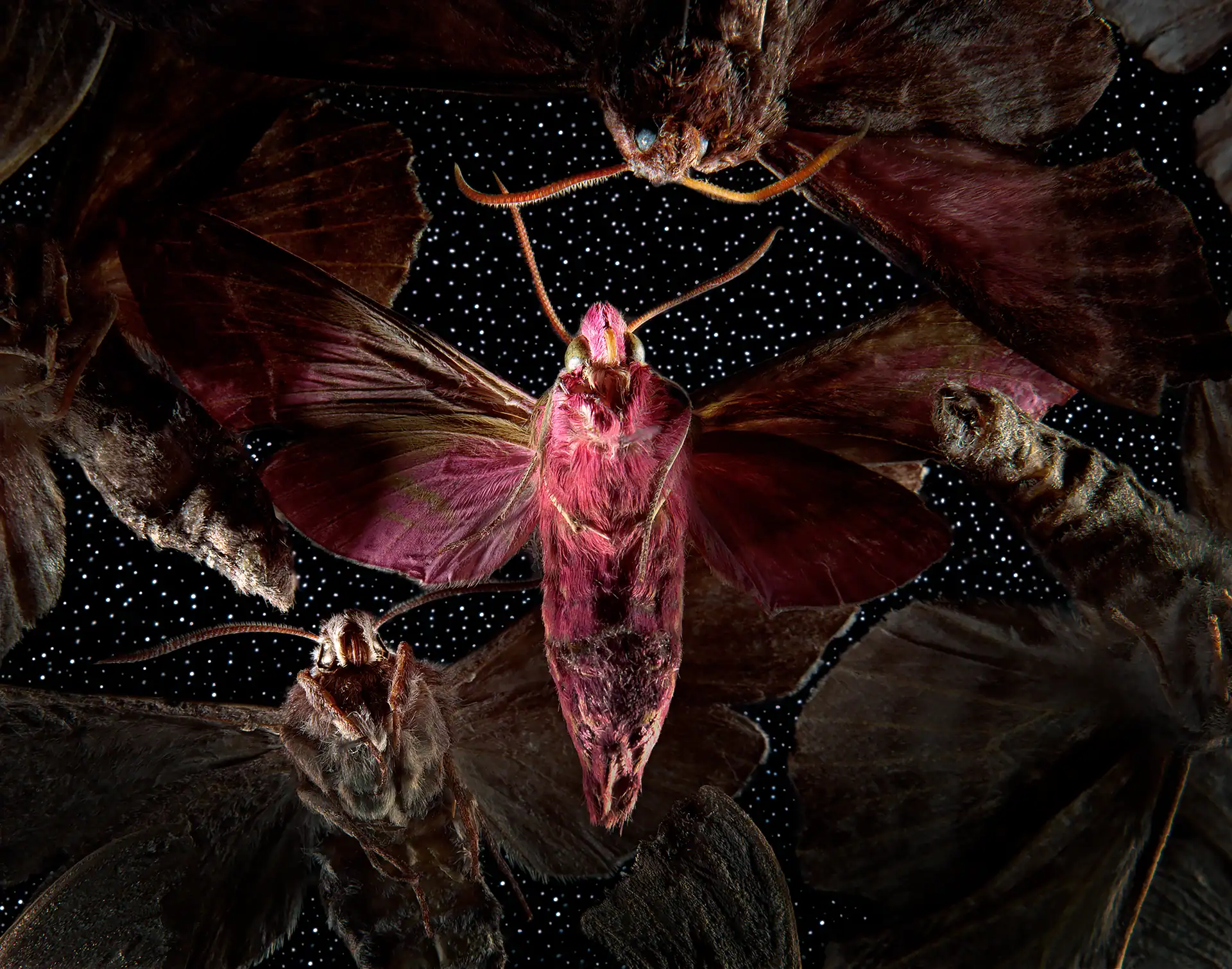
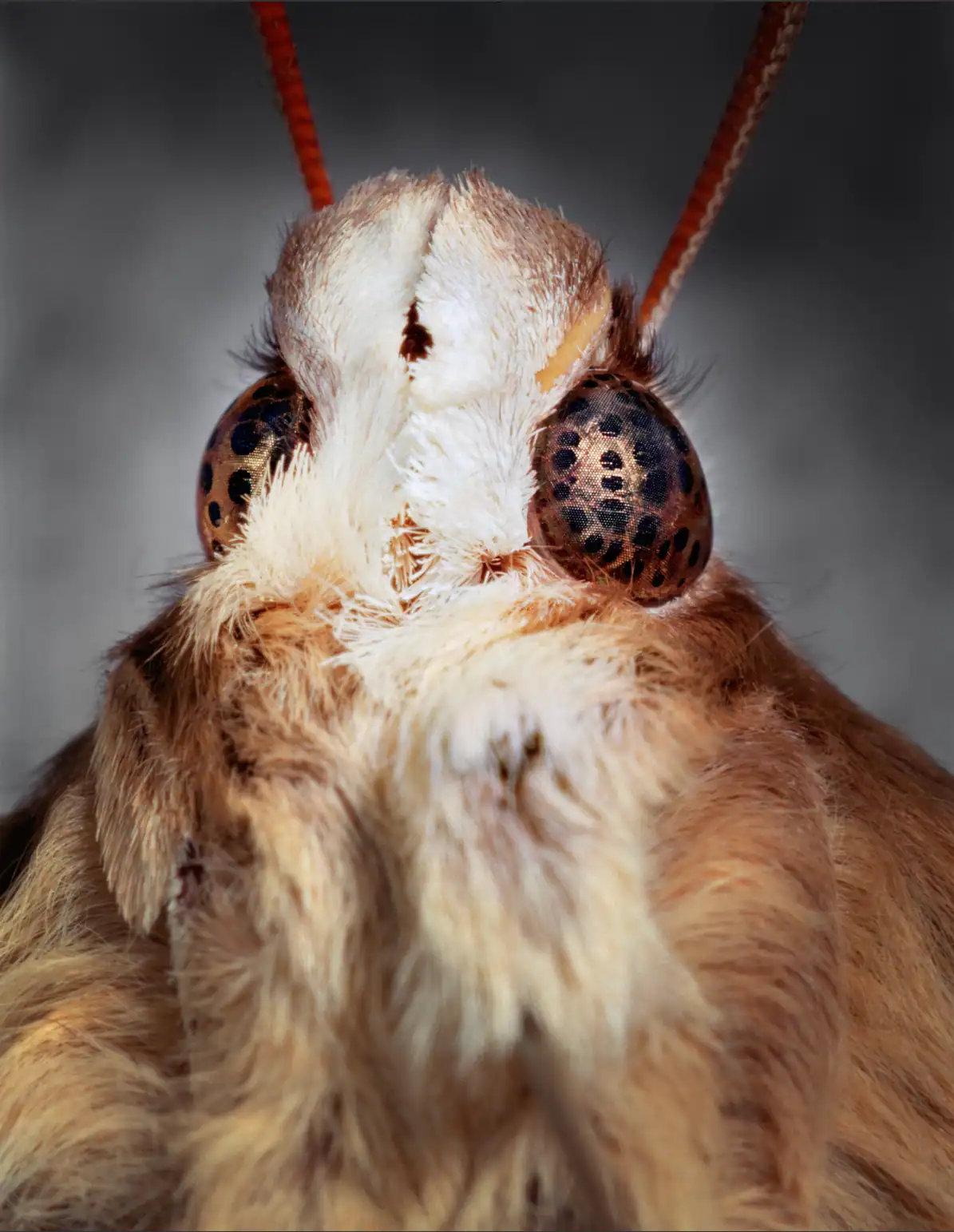
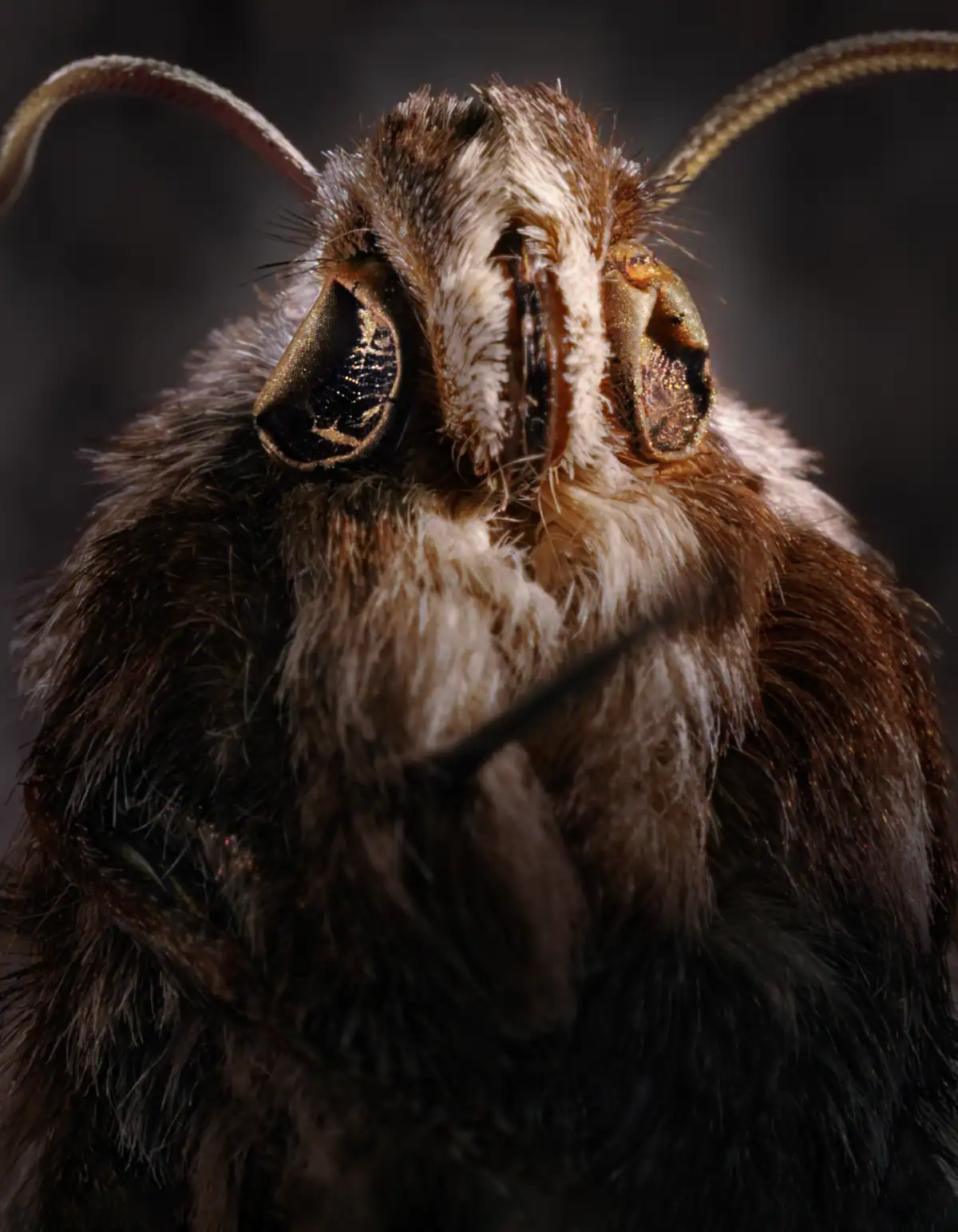
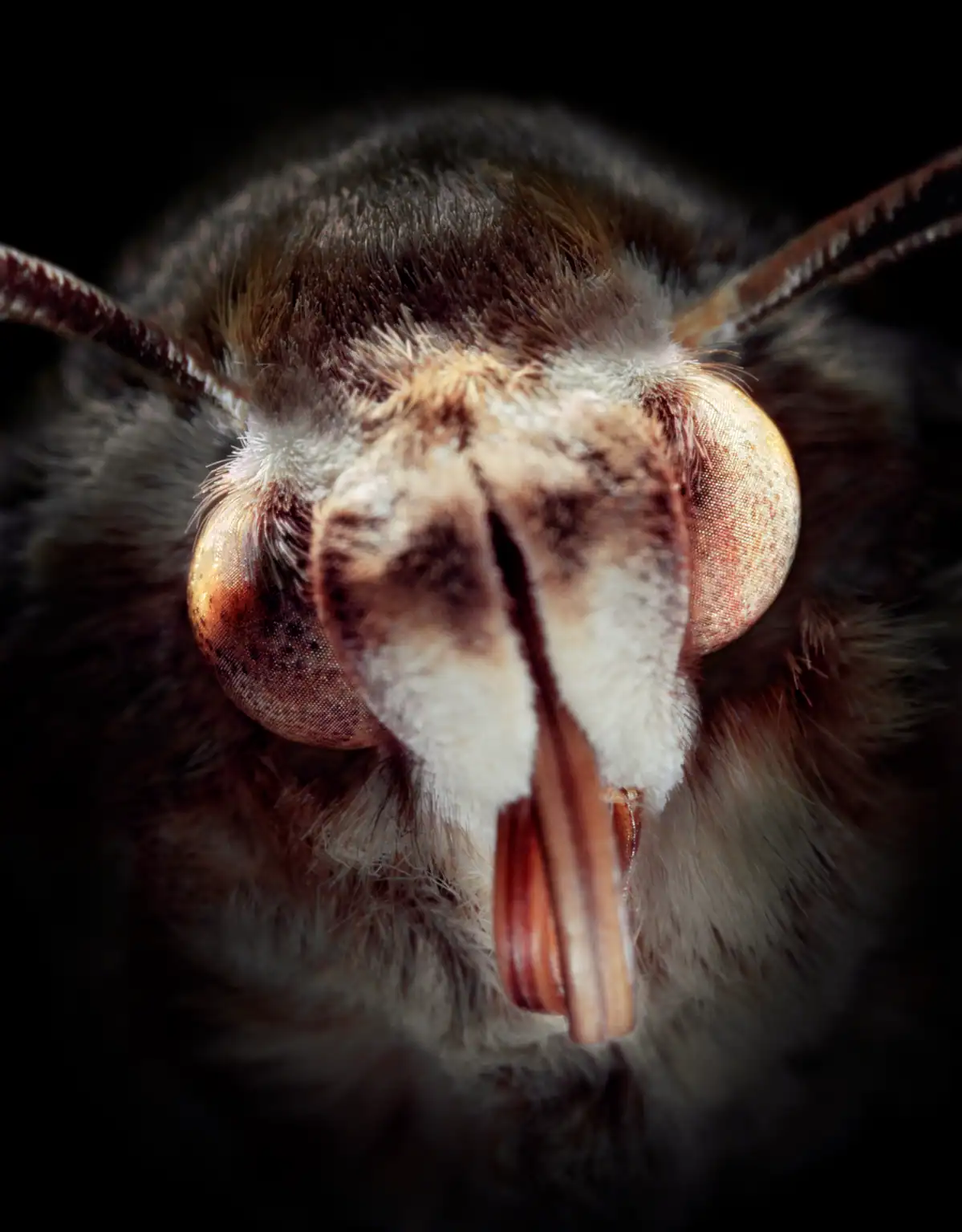
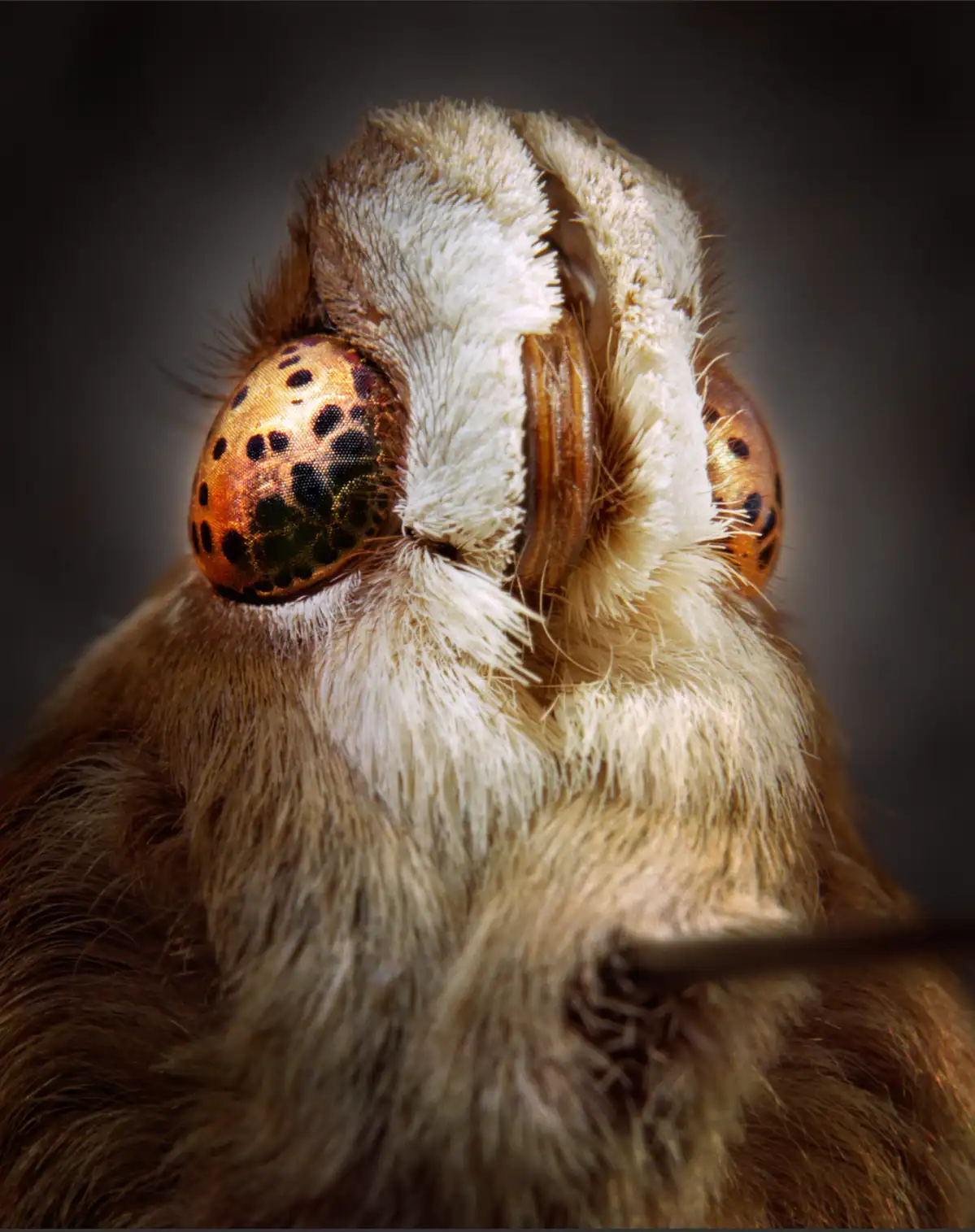
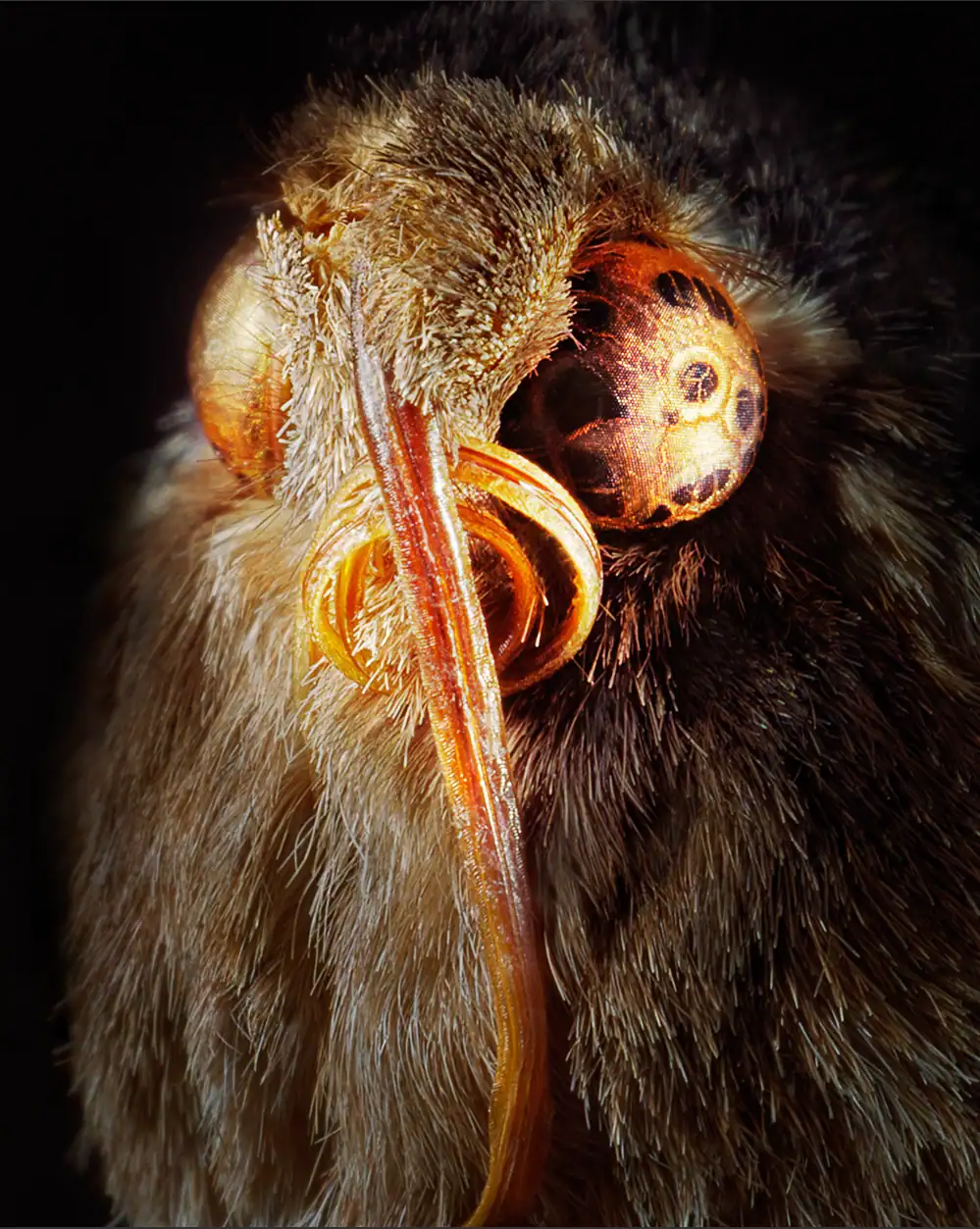
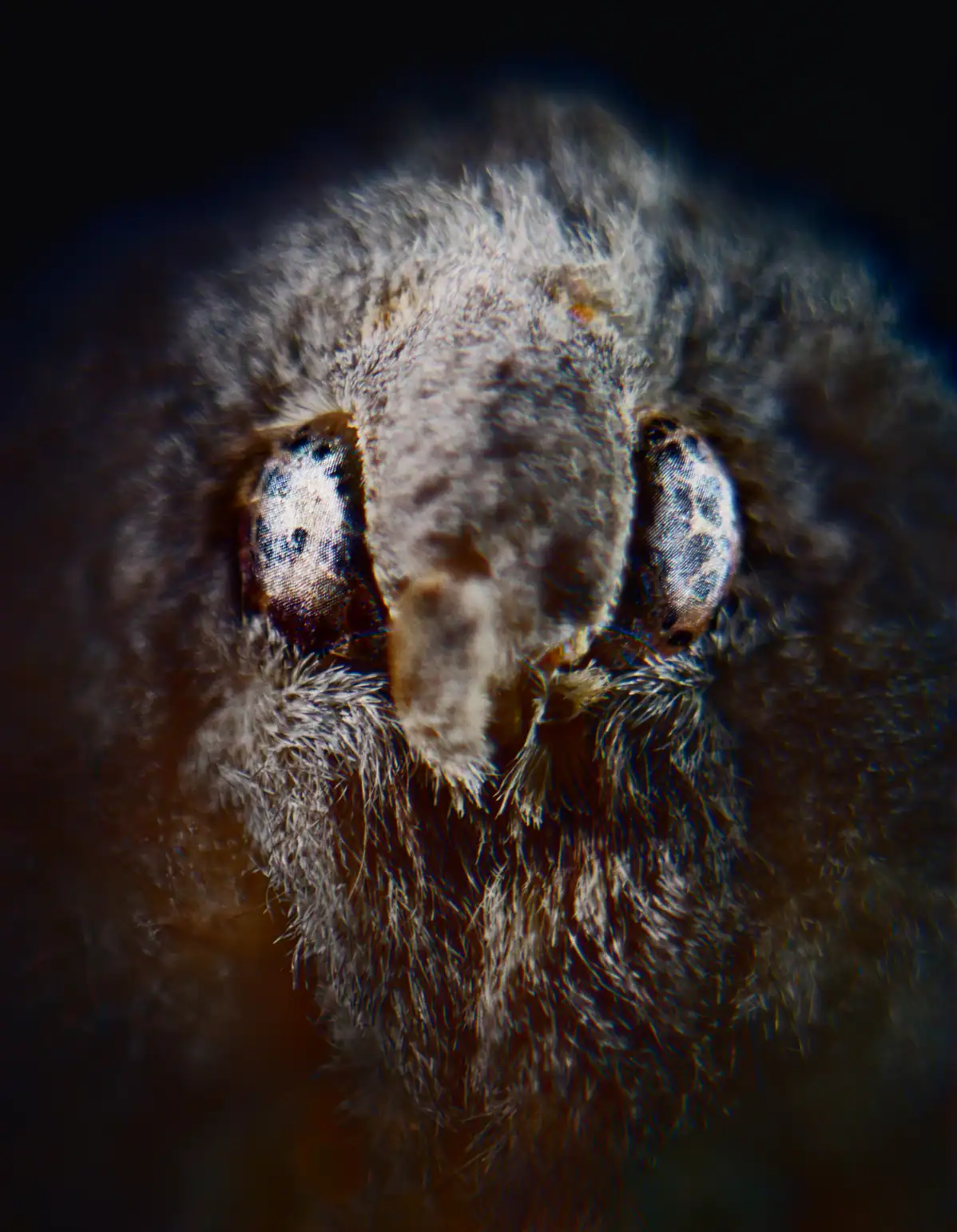
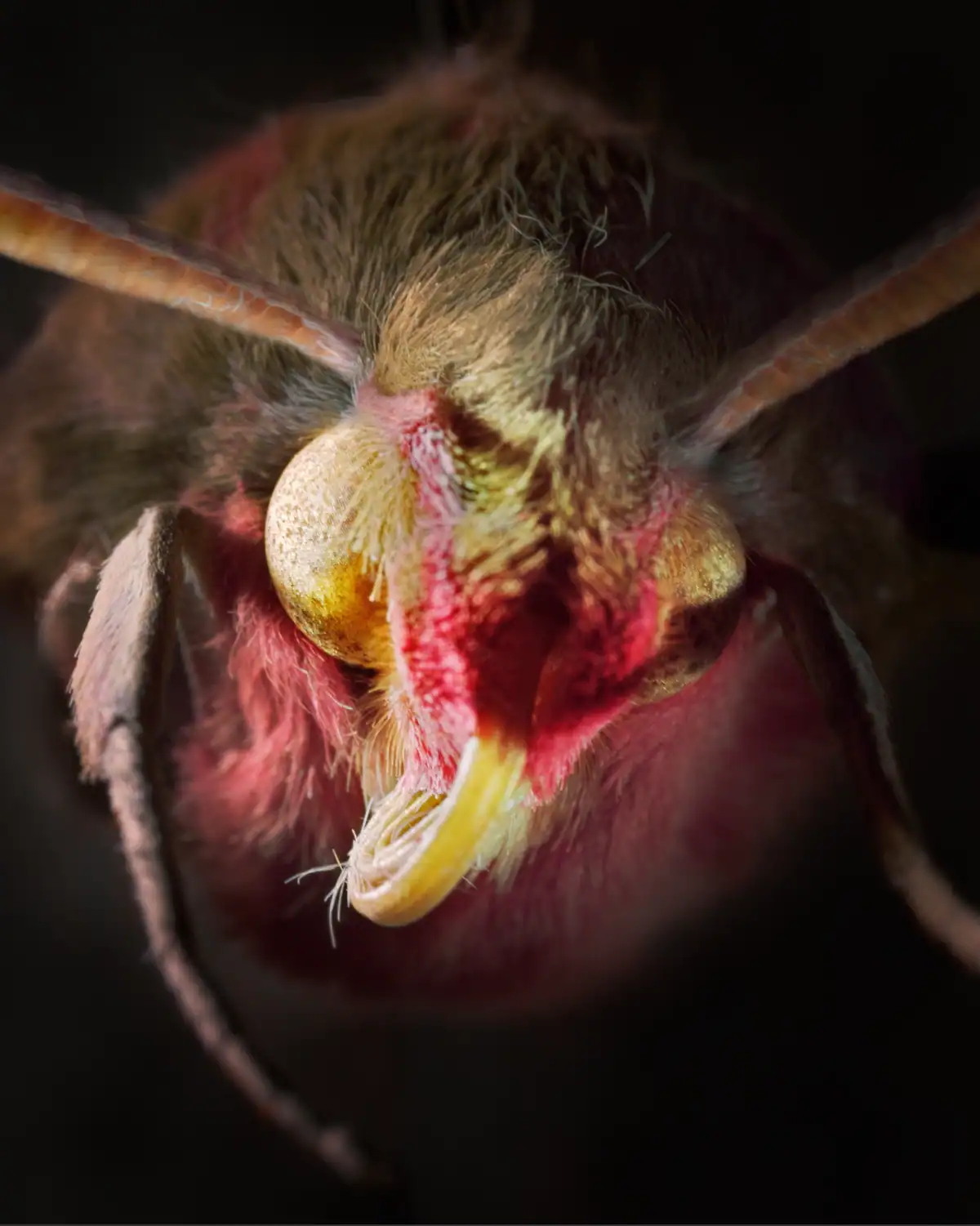
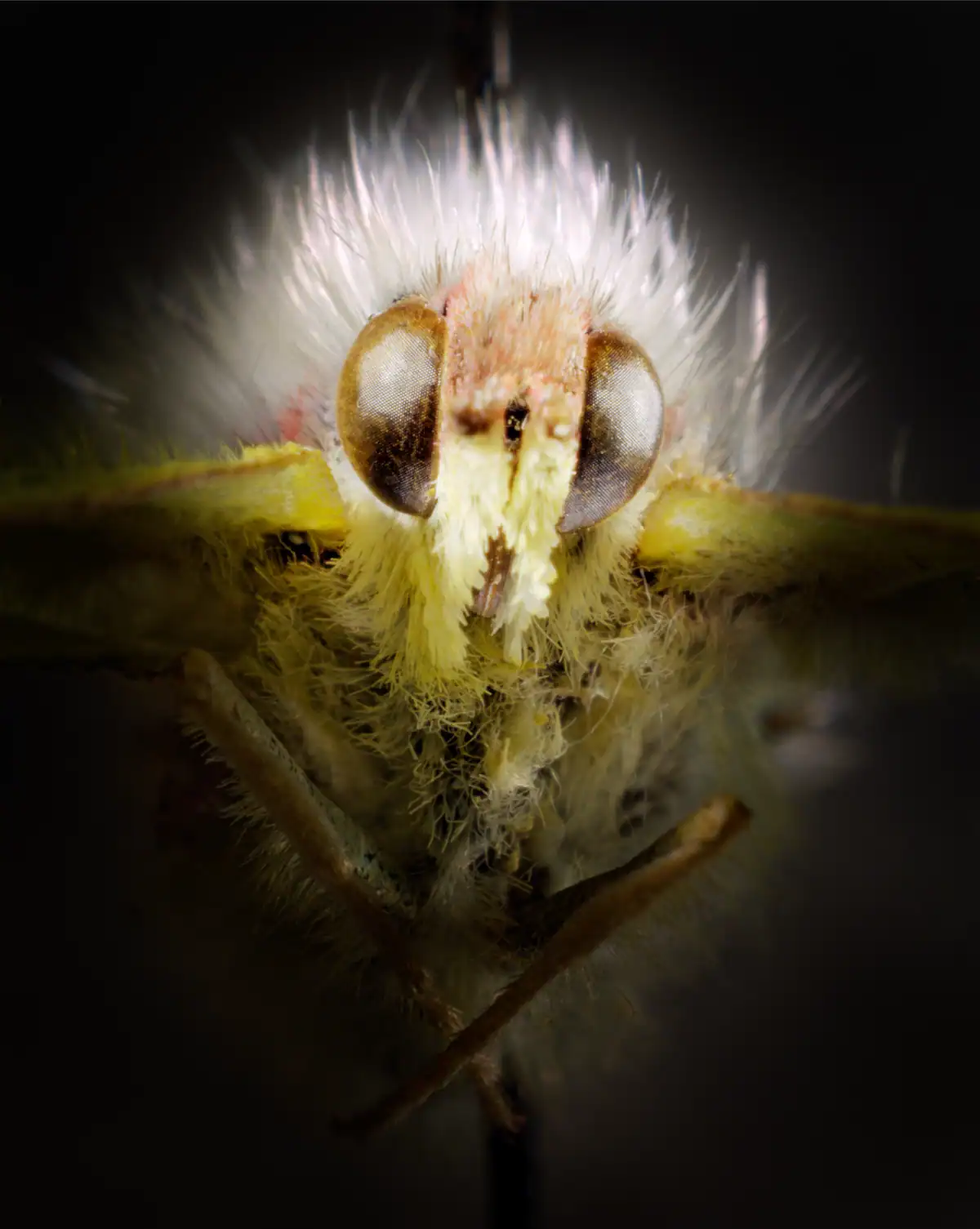
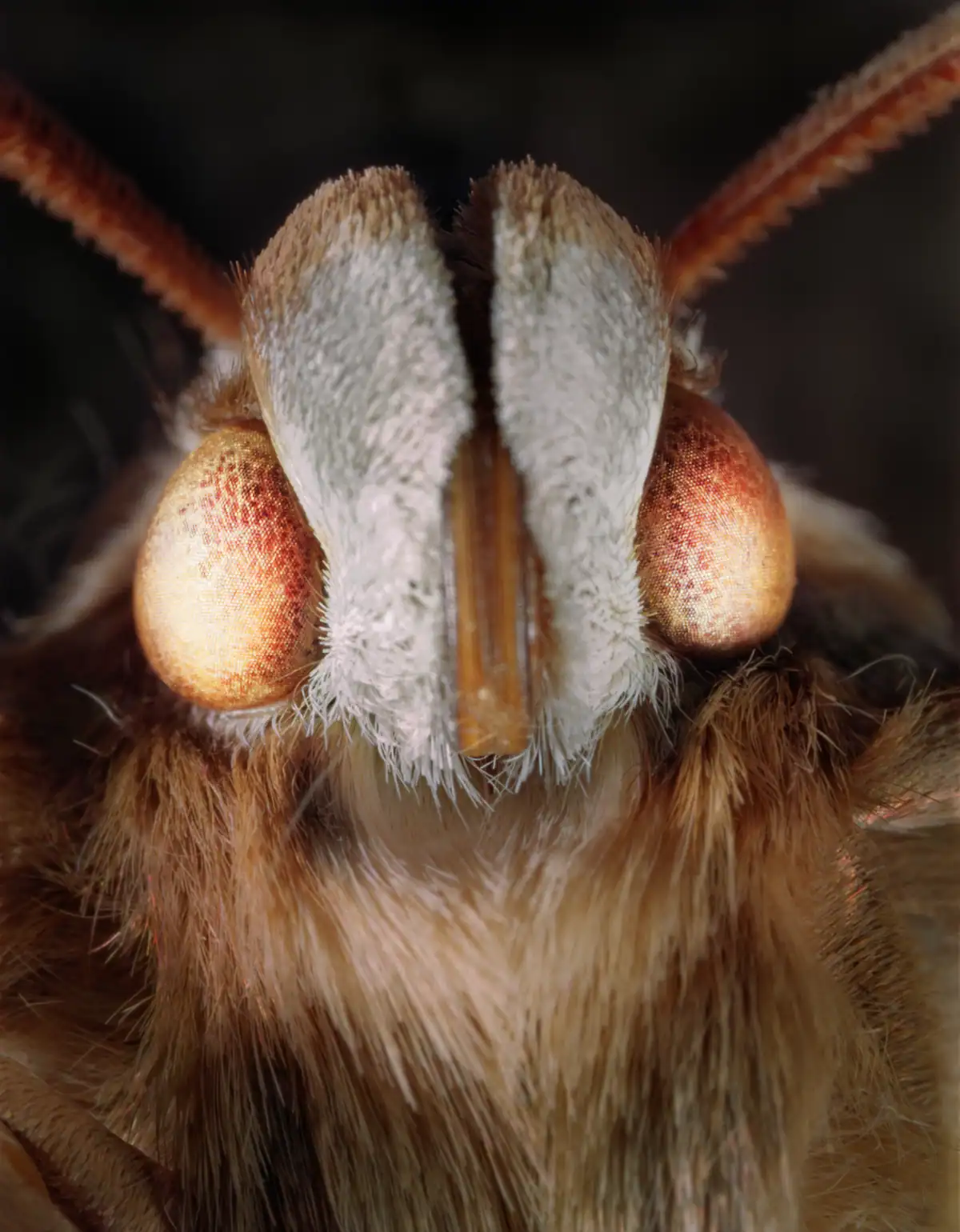
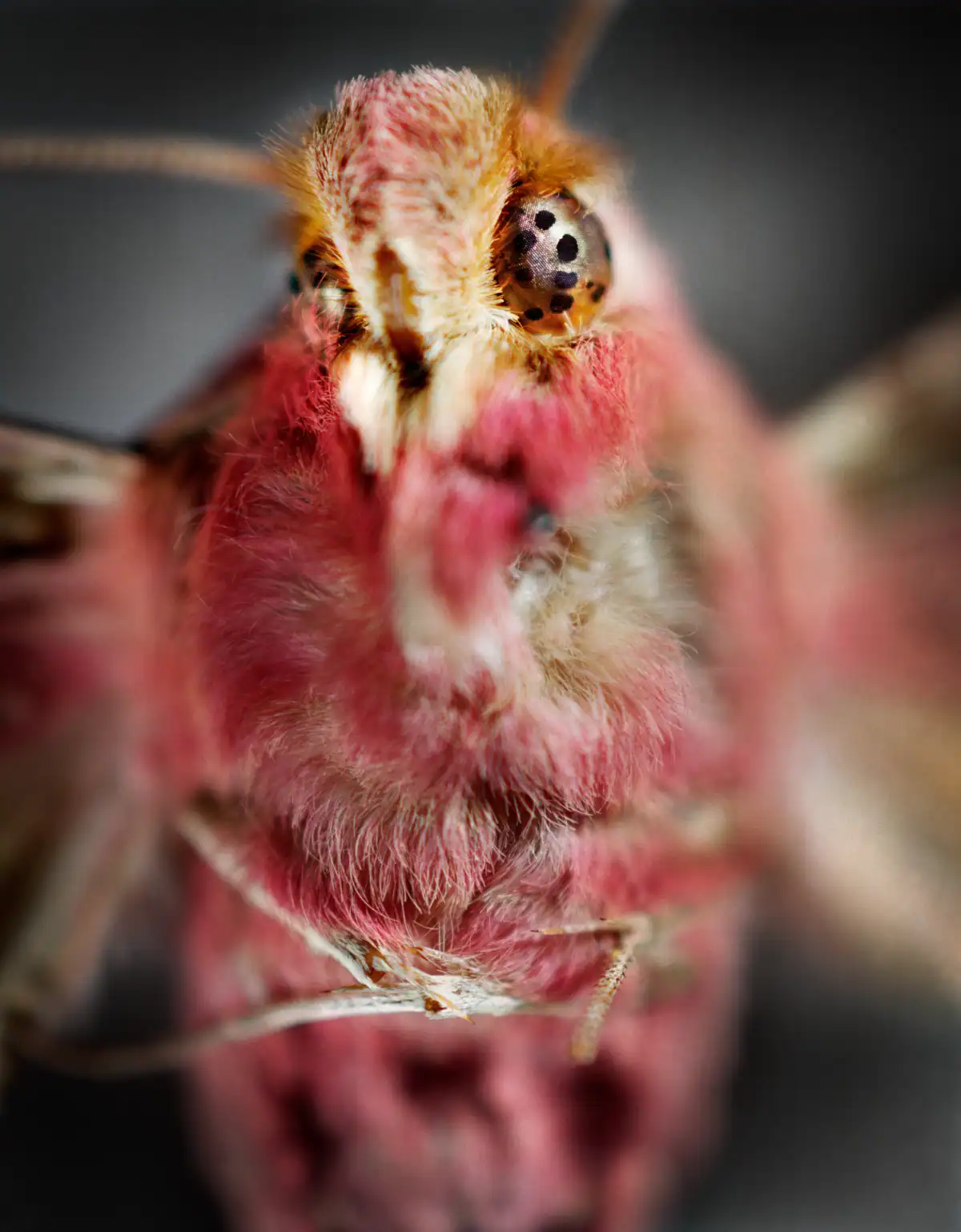
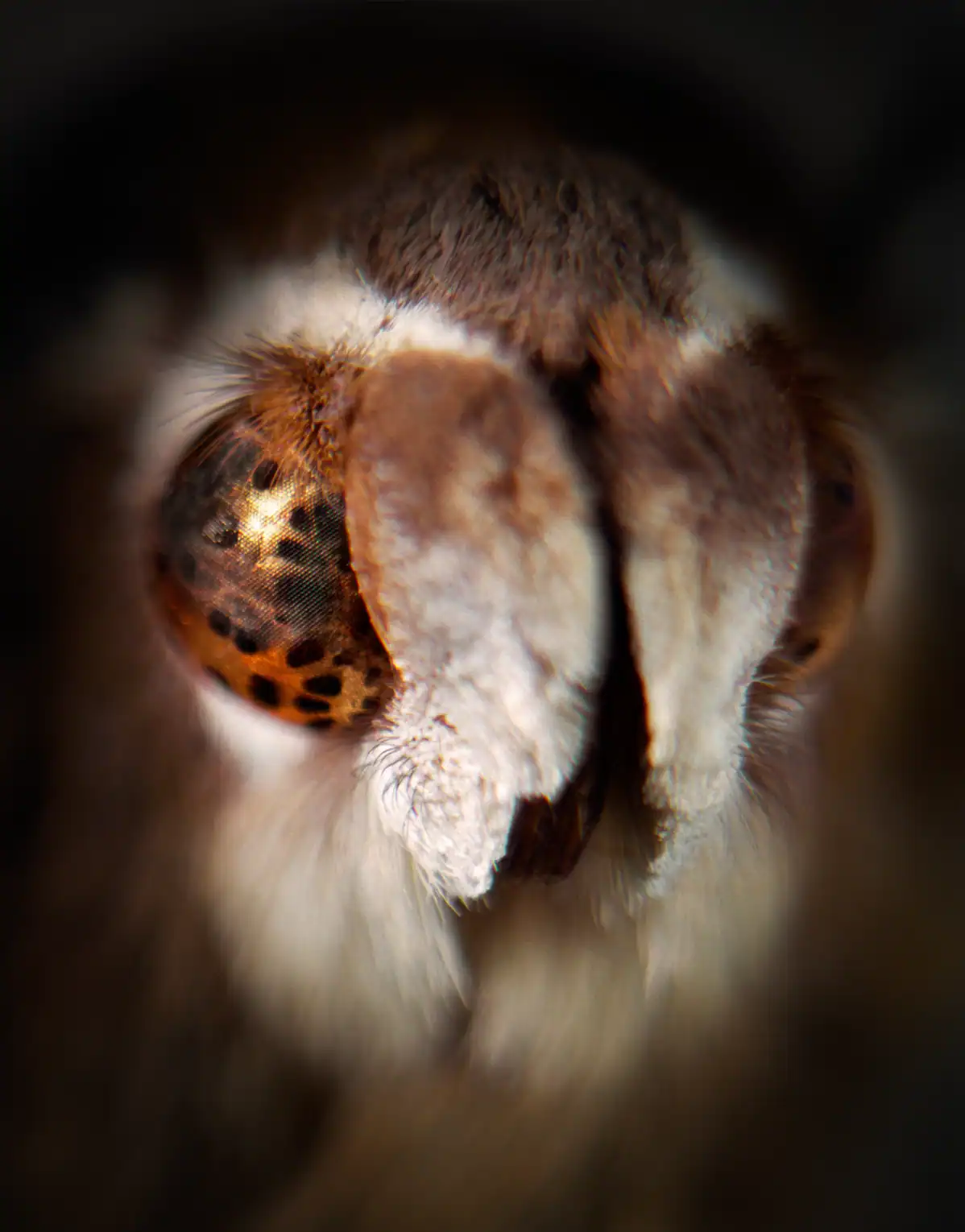
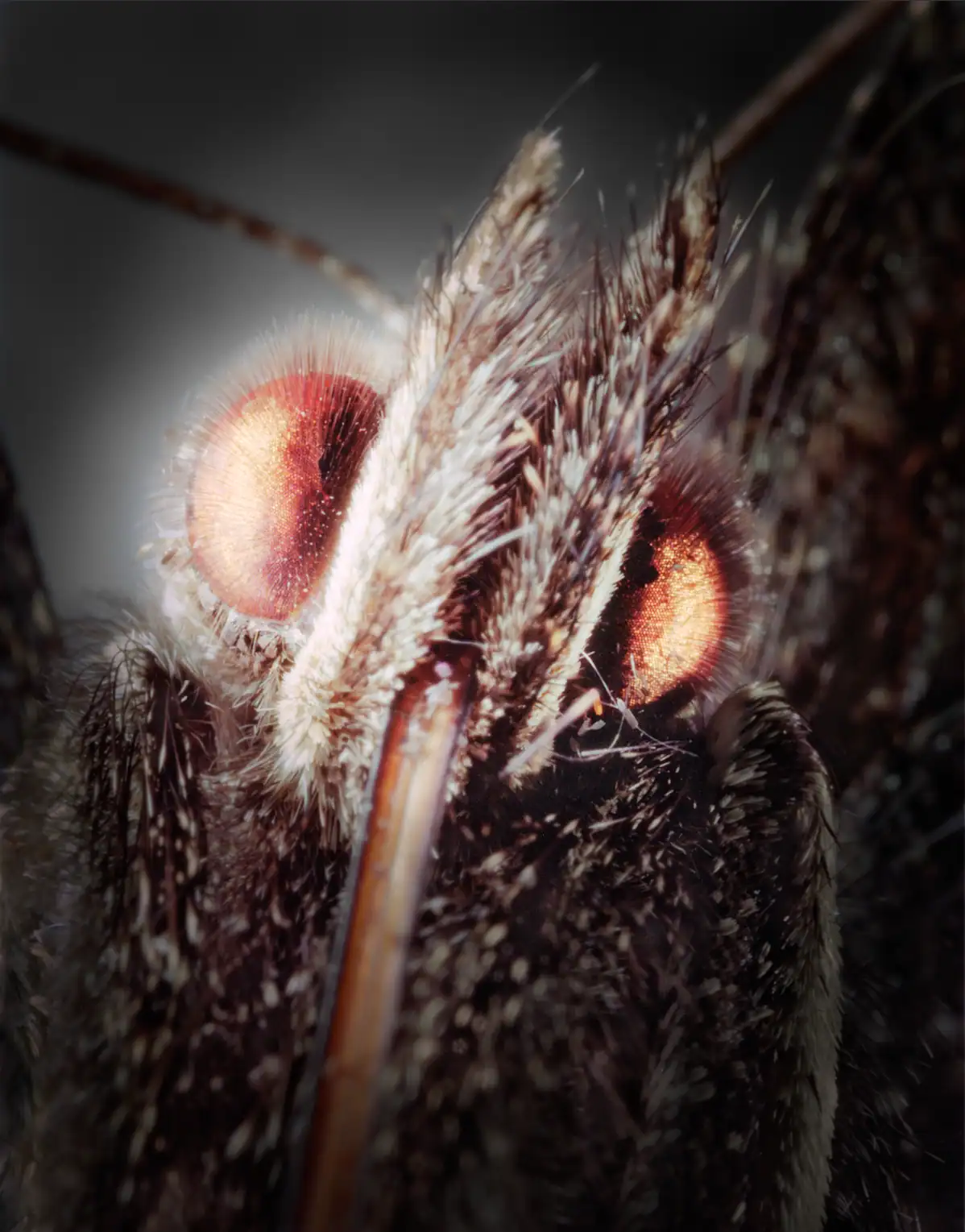
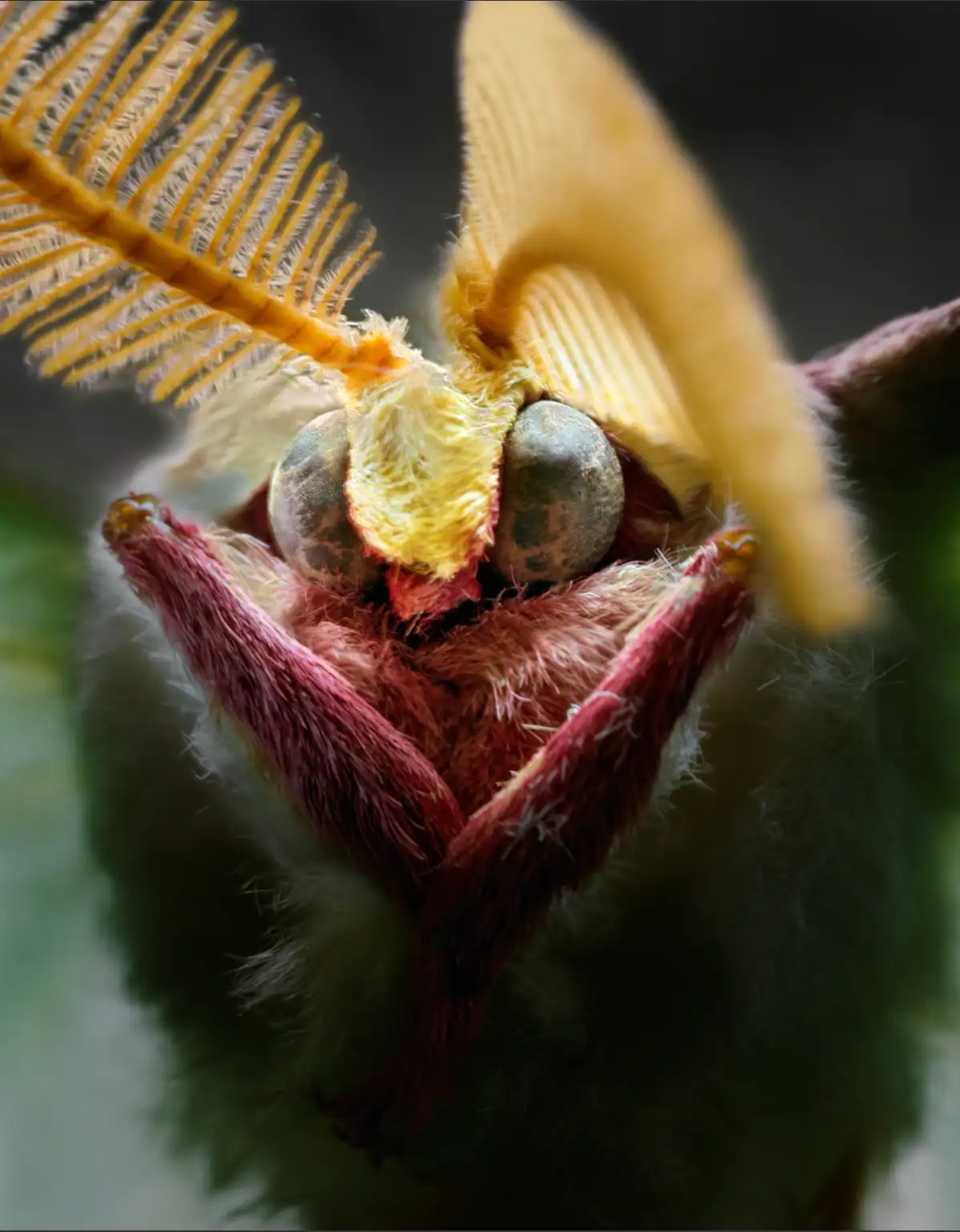
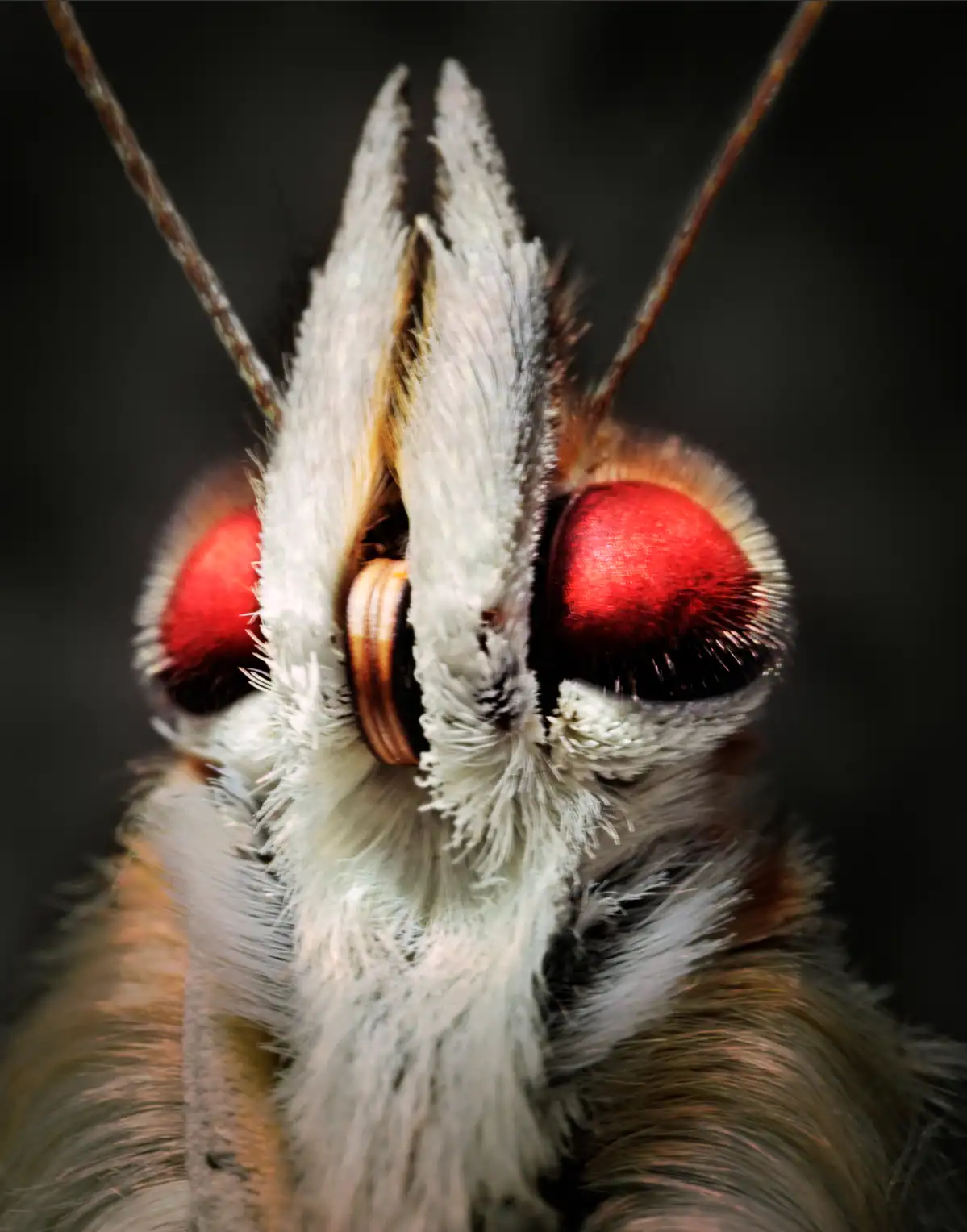
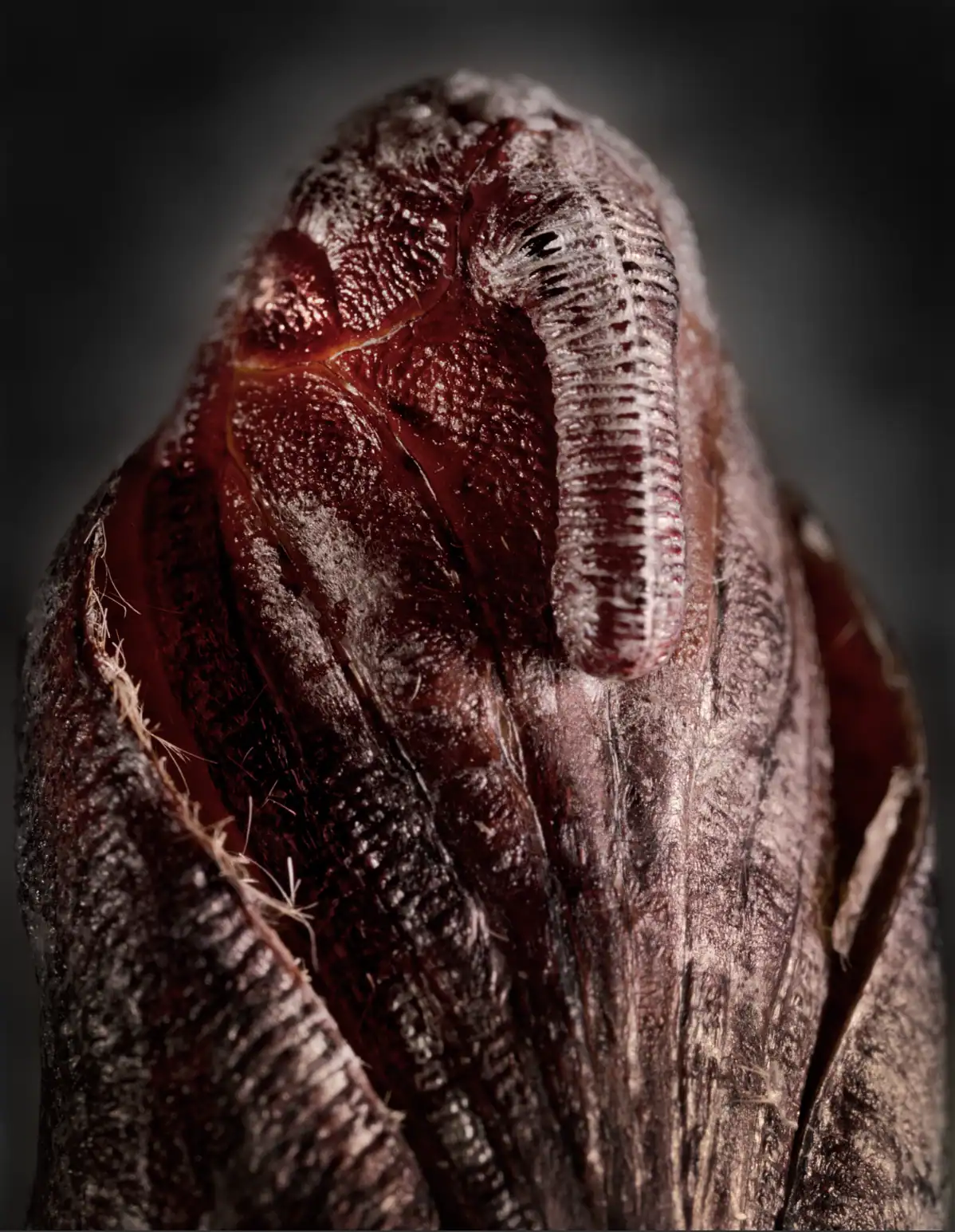
A Question of Butterflyness is a two-part sculpture installation paired with a series of photographic portraits — Anthropomorphizing Biological Other, Lepidoptera Portraits — of preserved butterflies and moths. Together they challenge the boundary between scientific specimen and artistic subject, between human and non-human consciousness, between childhood wonder and mature vision.
Part 1
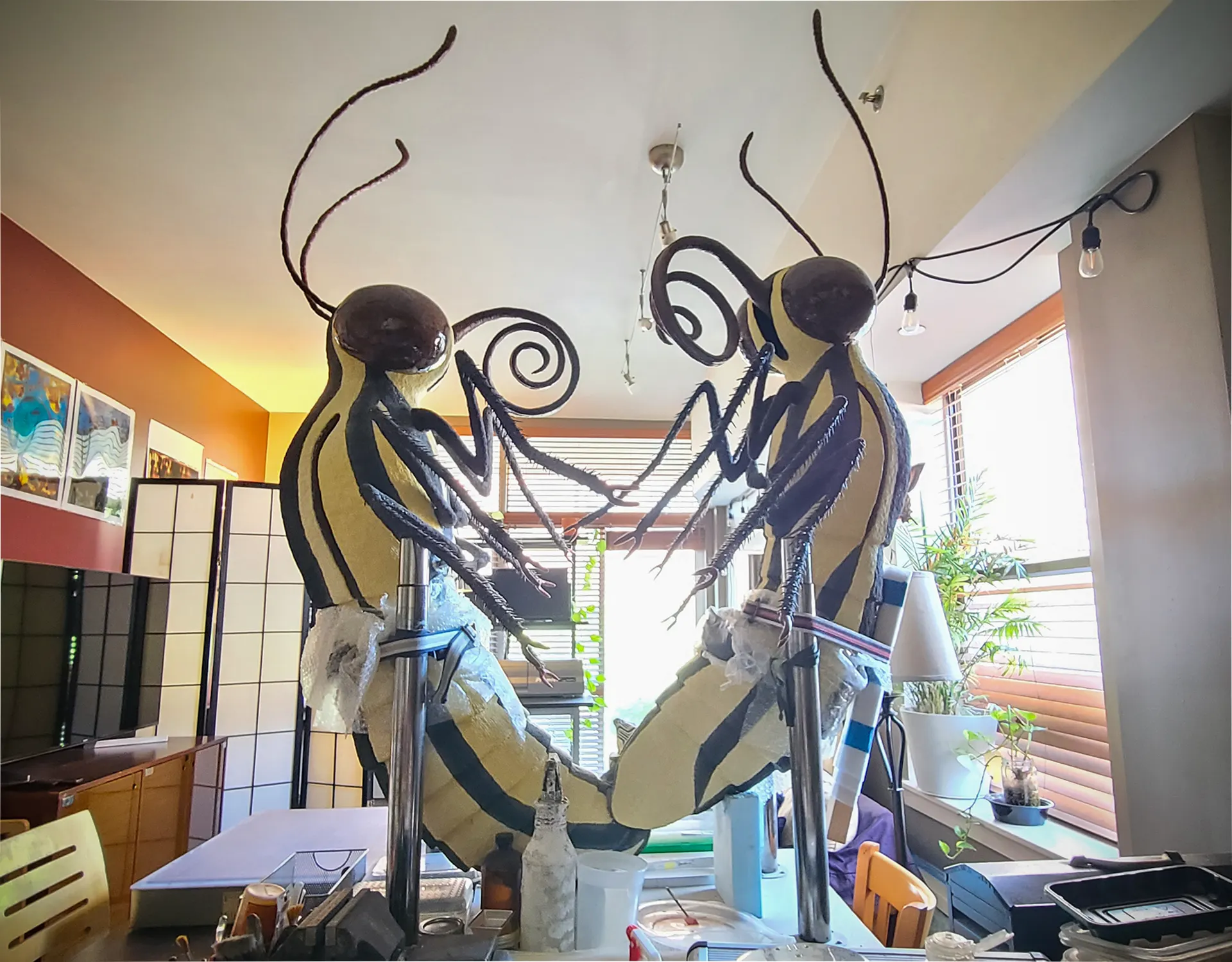
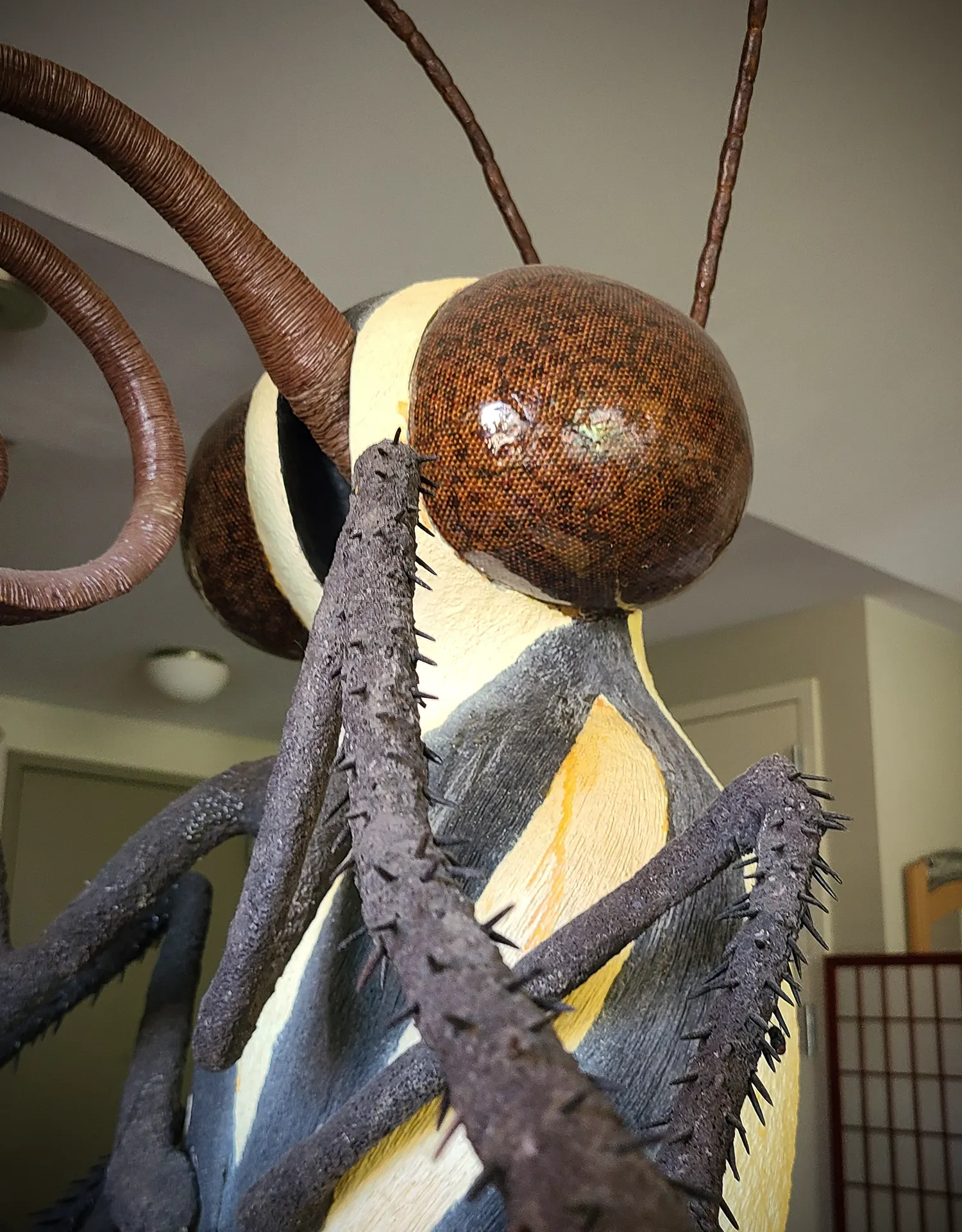
This in-progress sculpture depicts two mating swallowtail butterflies rendered at human scale, each head enclosing an actual specimen. Part representational, part aircraft-like mechanical structure, the piece renders a single moment of lepidopteran encounter at architectural scale. 12h × 14w × 14d ft (center element 64″ tall). Medium: UV-resistant pigmented polymer clay, aluminum, resin, pigment-print collage (compound eyes), two butterfly specimens.
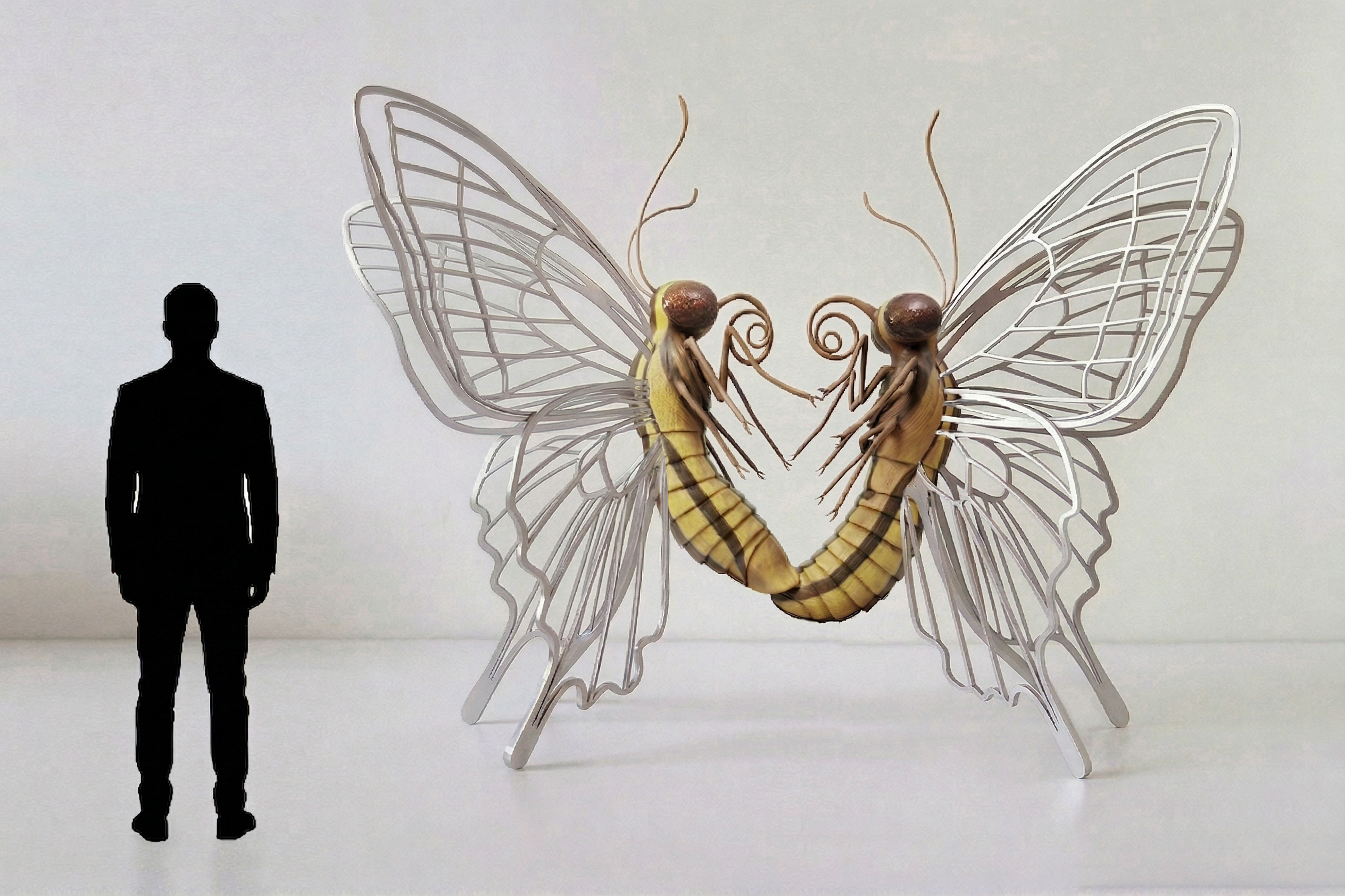
Question Of Butterflyness, 12x14x14 feet, UV resistant pigmented polymer clay, aluminum, resin, pigment print collage (compound eyes), two butterflies. Preview image. The center part of the sculpture is a finished real object. The aluminum wings are a simulated 3d model.
Part 2 — The Flight Suits
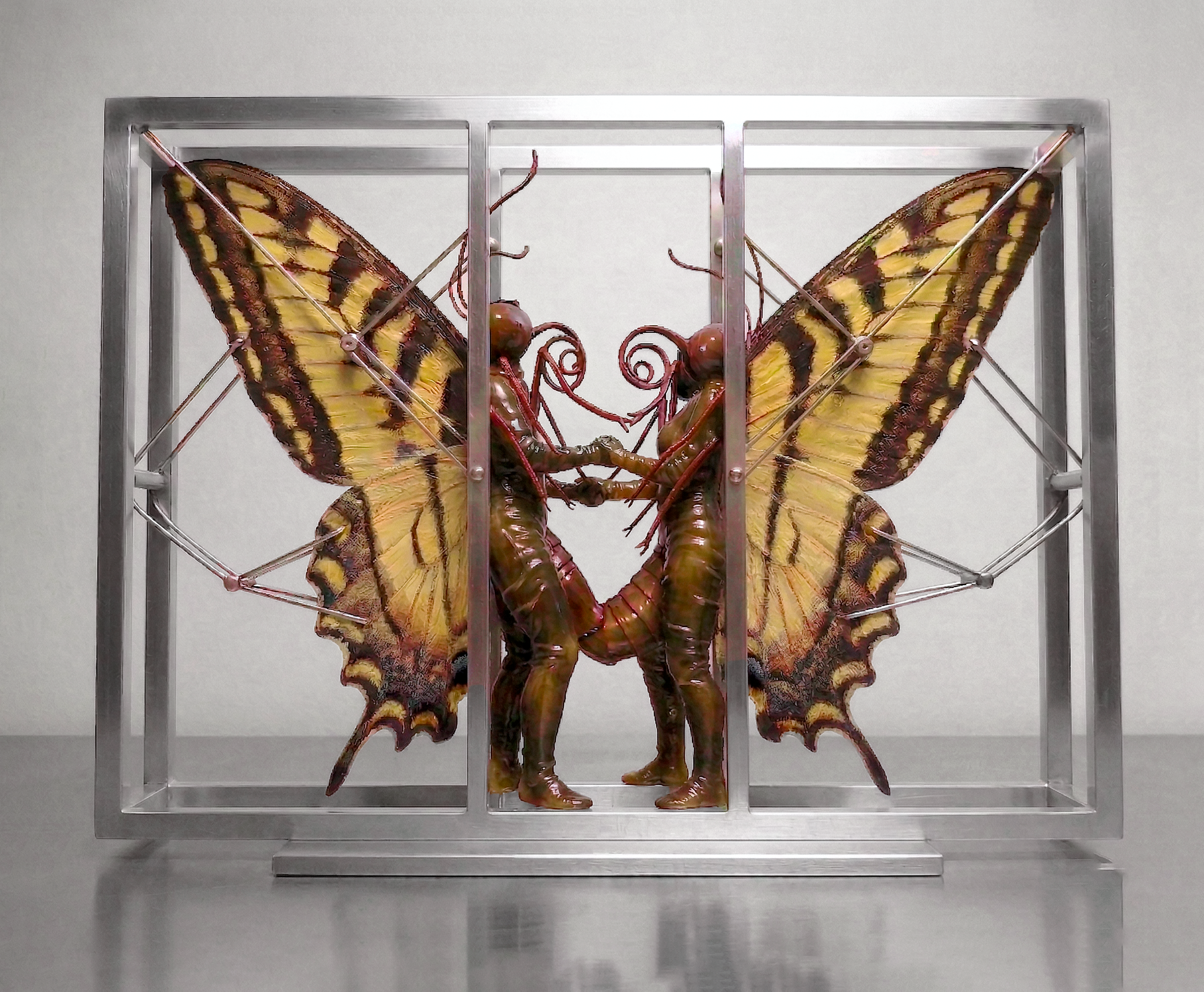
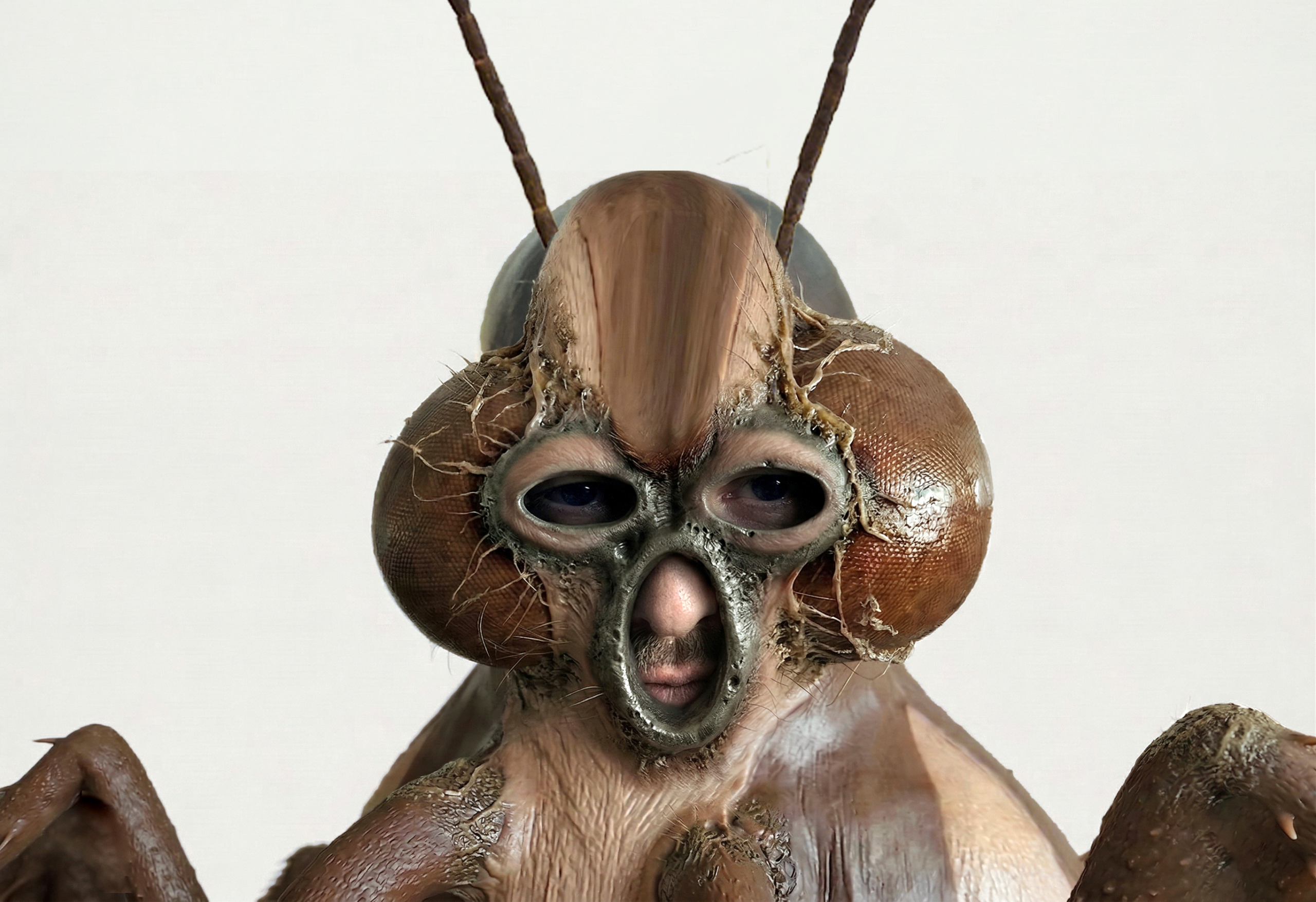
A second component consists of two flight suits built to be worn — the viewer’s body entering the form and looking out through the butterfly’s head toward the other. Housed together in an aluminum docking-station frame, the two parts stage an encounter that is at once intimate and monumental: the viewer becomes both observer and participant, positioned inside the logic of another species.
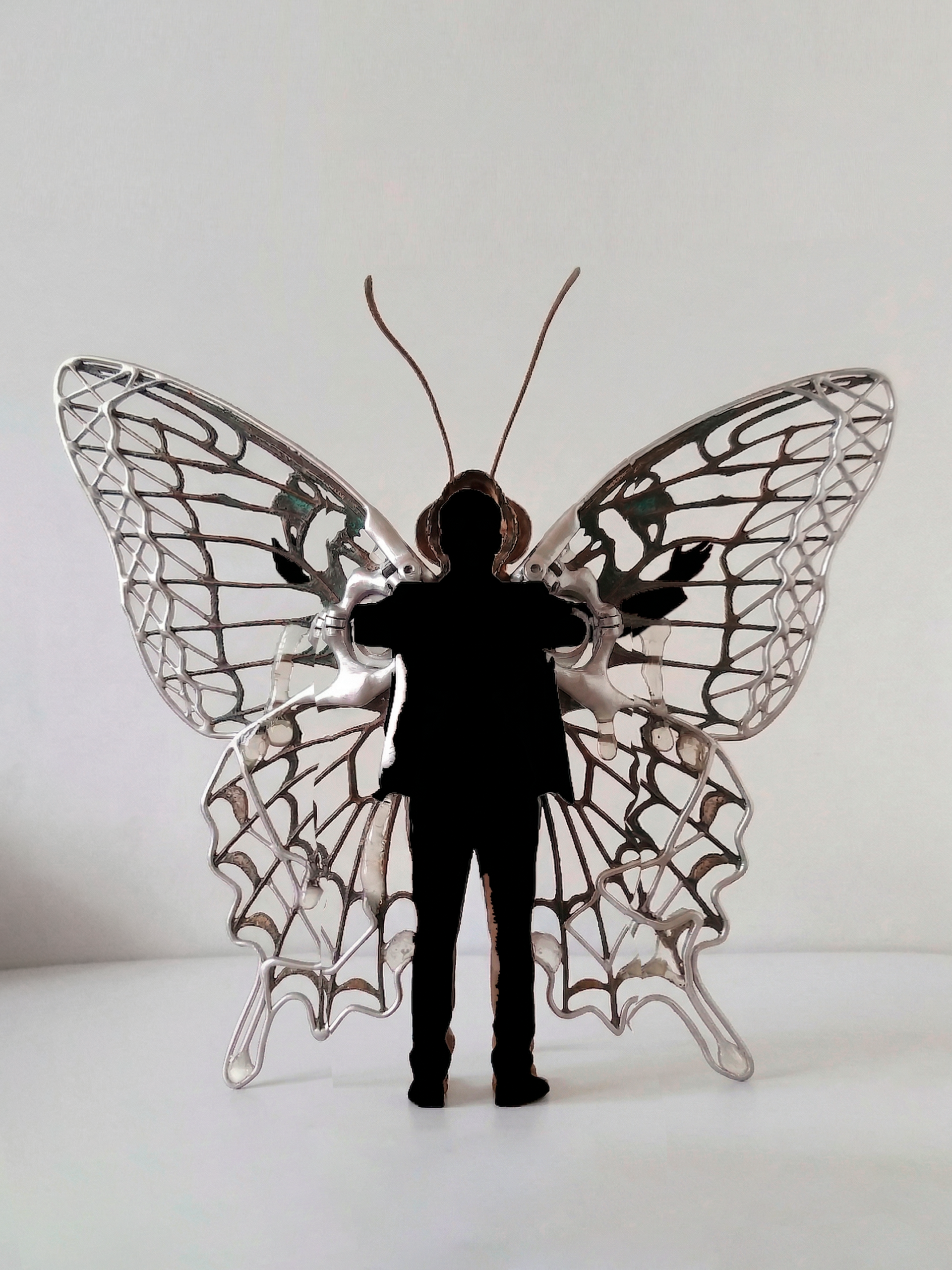
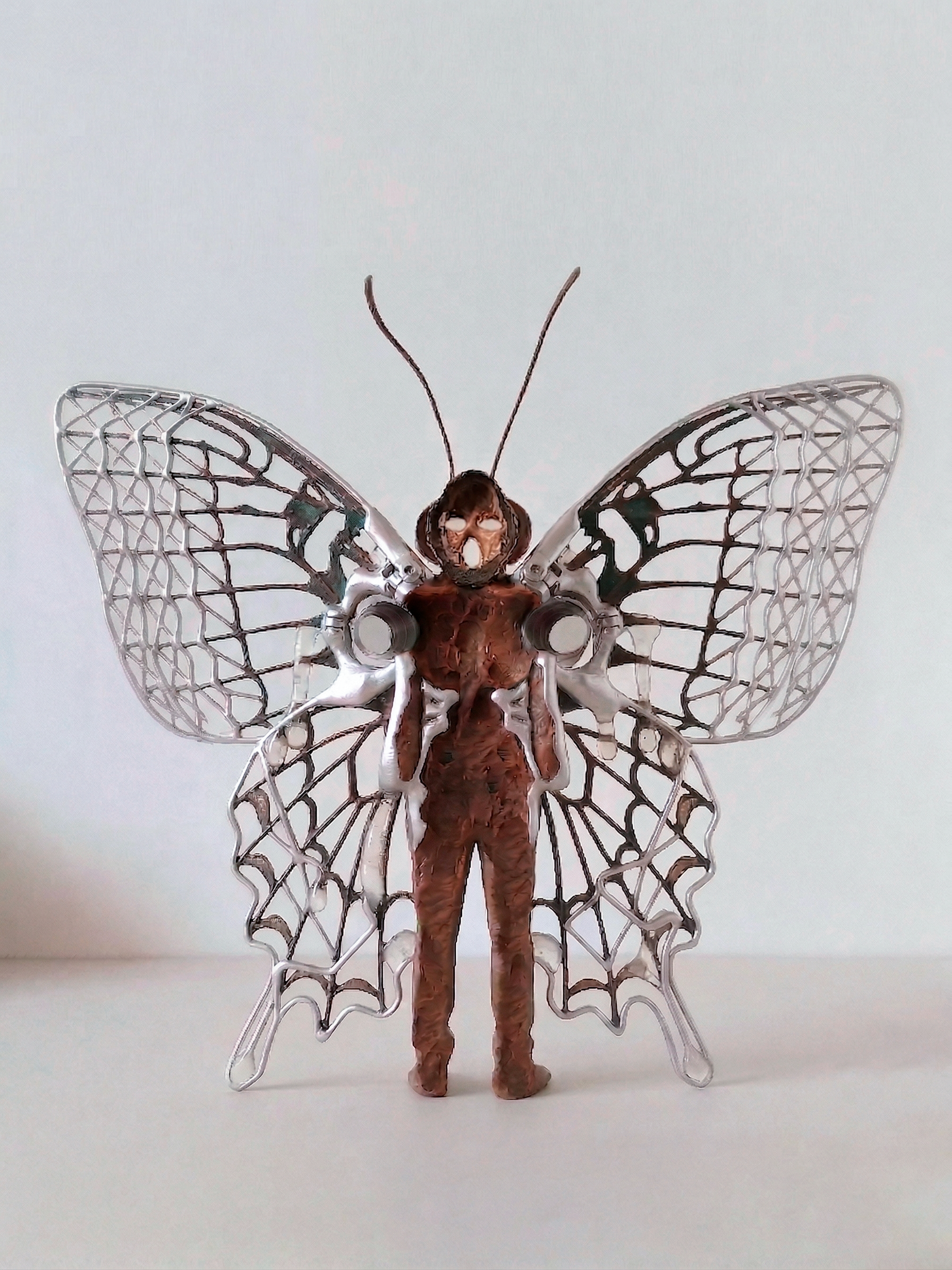
Two versions are planned. A 90% biological–10% mechanical version favors an embodied, creaturely presence — something that feels alive. A 20% biological–80% mechanical version inverts that logic: the form abstracts into a legible mechanical exoskeleton, with the human pilot more visible inside it. Together the two versions frame a question about the threshold at which something stops being an animal and becomes a machine — or a suit.
12h × 14w × 18d feet (docking station). Latex rubber, urethane foam, aluminum, resin, pigment-print wings.

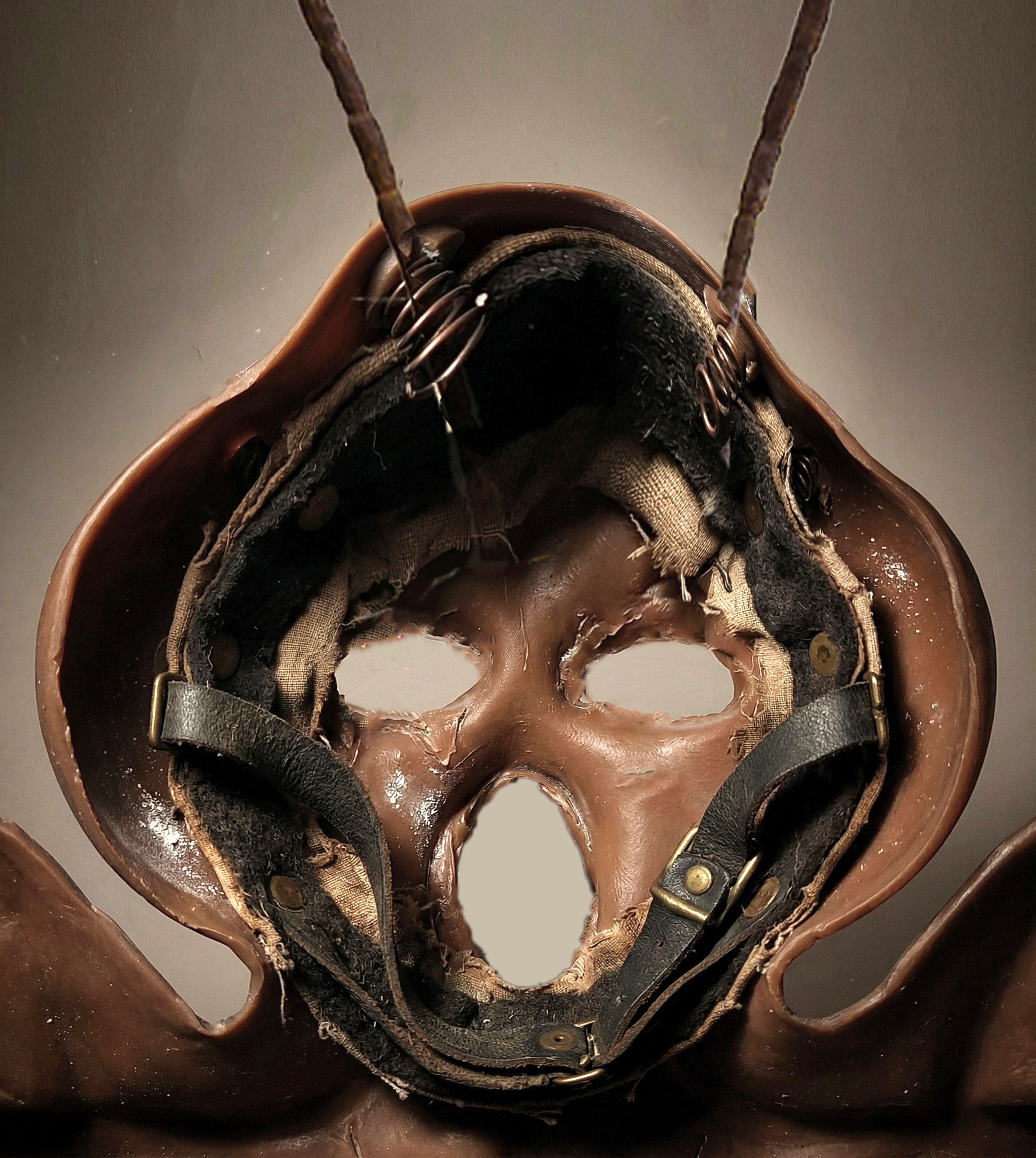
A Question Of Butterflyness, Flight Suit, For Human Male. Mask interior 
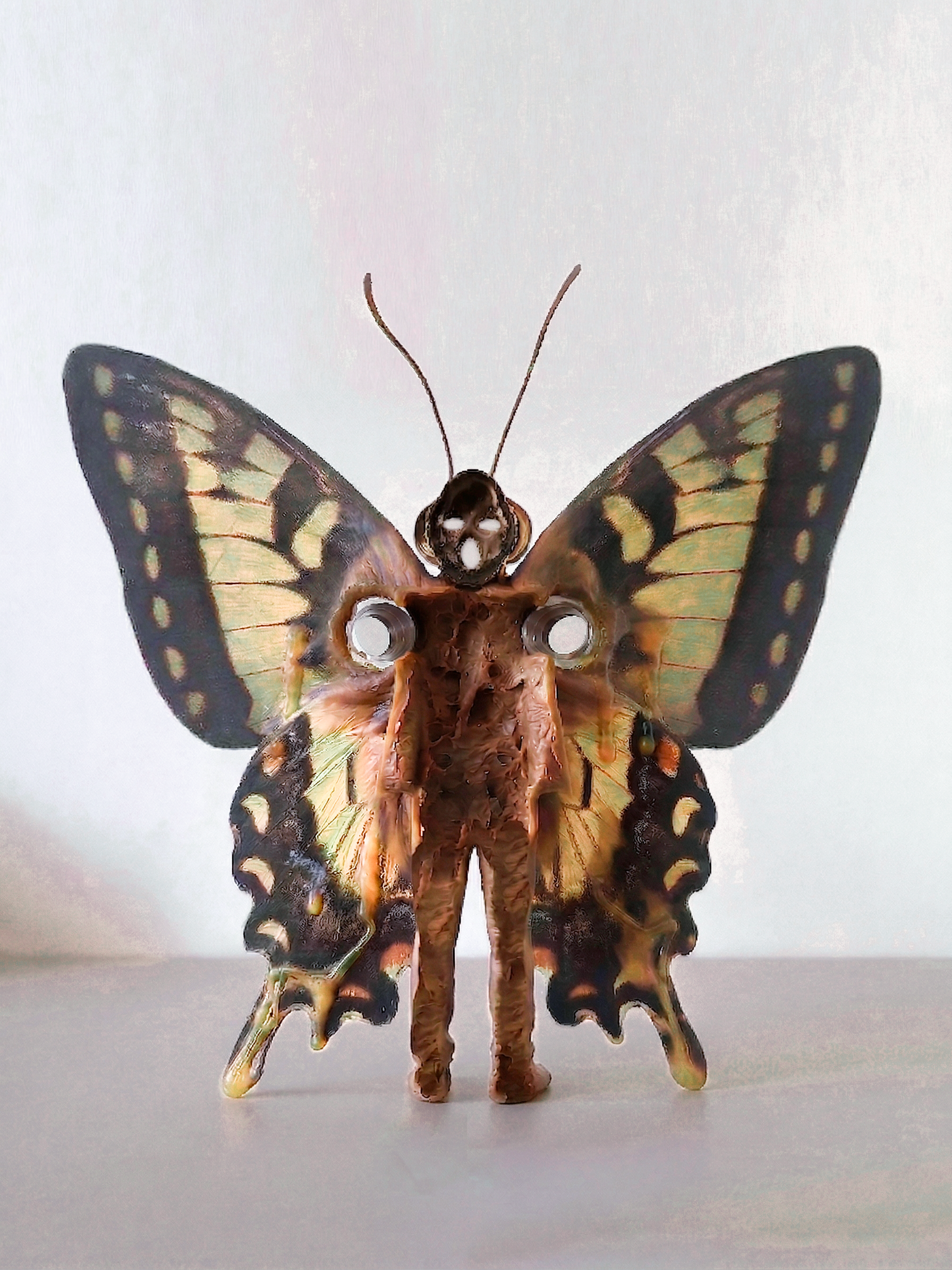
A Question Of Butterflyness, Flight Suit For Human Male, 90% biological -10% Mechanical and Flight Suit For Human Female, 90% biological -10% Mechanical, docking station view simulation, 12 × 14 × 18 ft (H × W × D) 
A Question Of Butterflyness, Flight Suit, For Human Male, 90%biological-10% Mechanical. (Back view) A Question Of Butterflyness, Flight Suit For Human Male, 20% biological - 80% Mechanical. (Pilot Inserted simula A Question Of Butterflyness, Flight Suit, For Human Male, 20% biological - 80% Mechanical. (Back view simulation) 
A Question Of Butterflyness, Flight Suit For Human Male, 90%biological-10% Mechanical. (Front view Simulation) 
A QUESTION OF BUTTERFLYNESS SCULPTURE Process Image #6 
A QUESTION OF BUTTERFLYNESS SCULPTURE Process Image #7
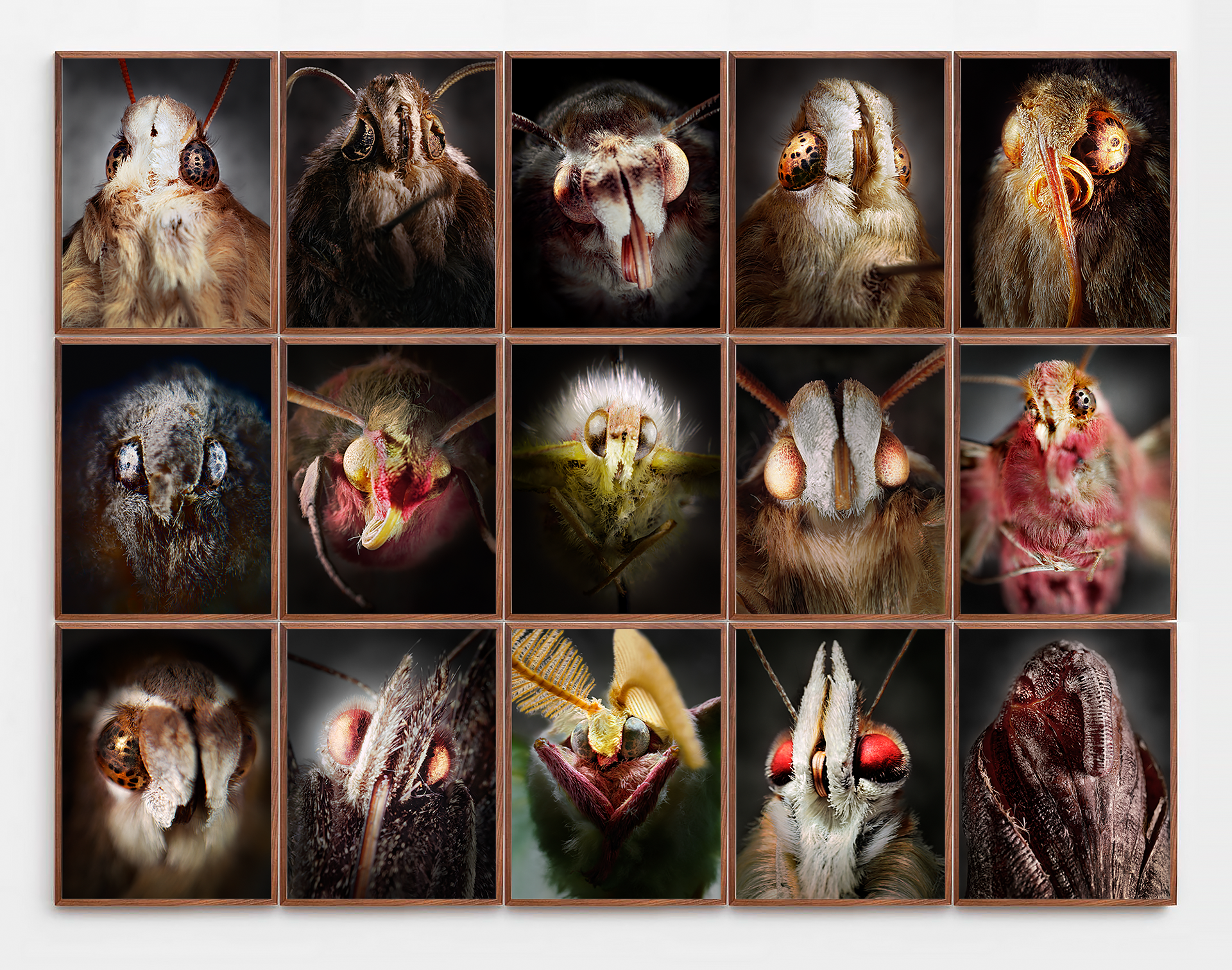
Lepidoptera Portraits, Archival Pigment Prints, 10 x 8 1/2 / 16 x 12 inches each
1×2 Sphinx pinastri no.3, 1999
1×5 Sphinx ligustri no.1, 1999
2×2 Deilephila elpenor no.3, 2002
2×3 Gonepteryx rhamni no.1, 2002
2×5 Deilephila porcellus no.1, 1999
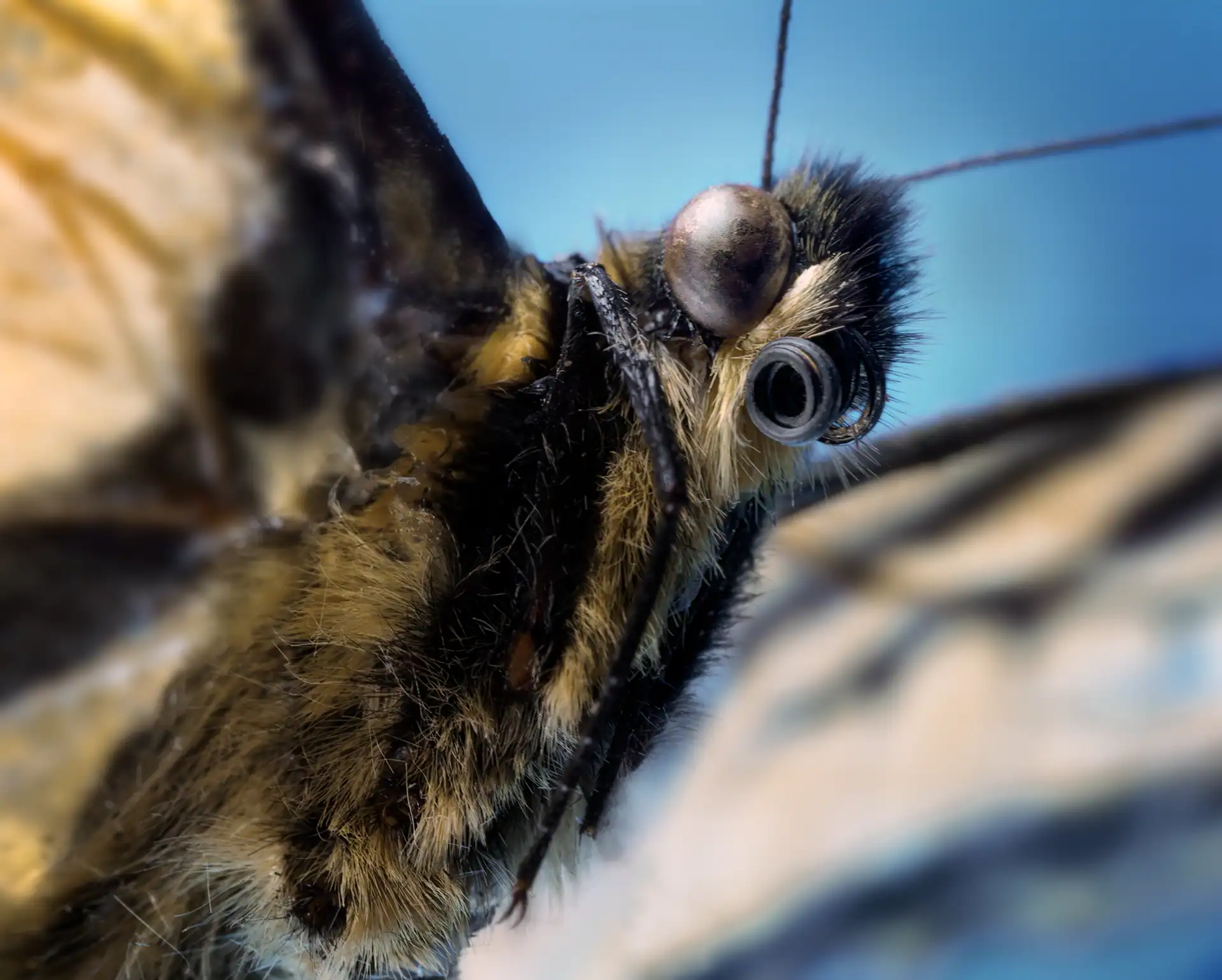
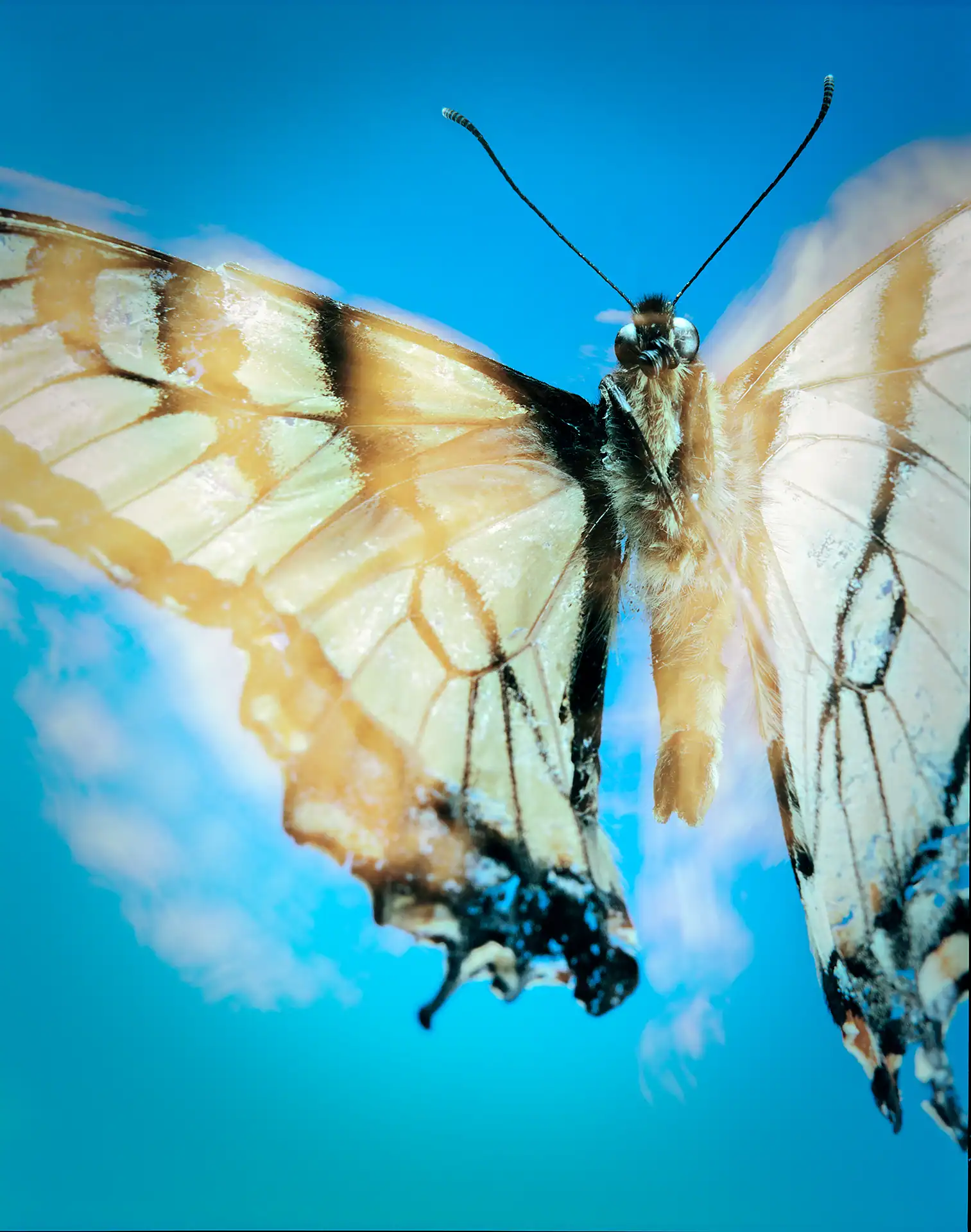
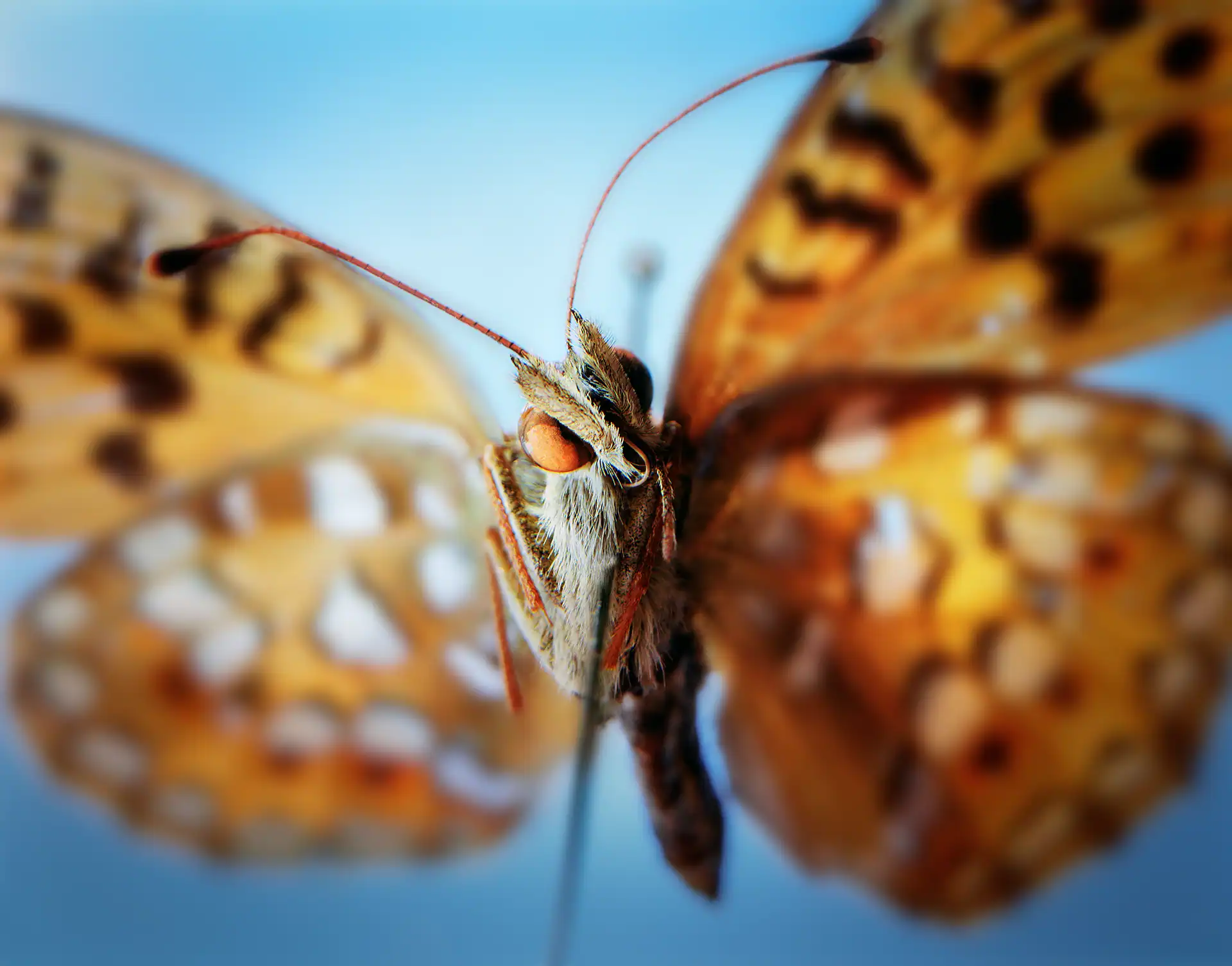
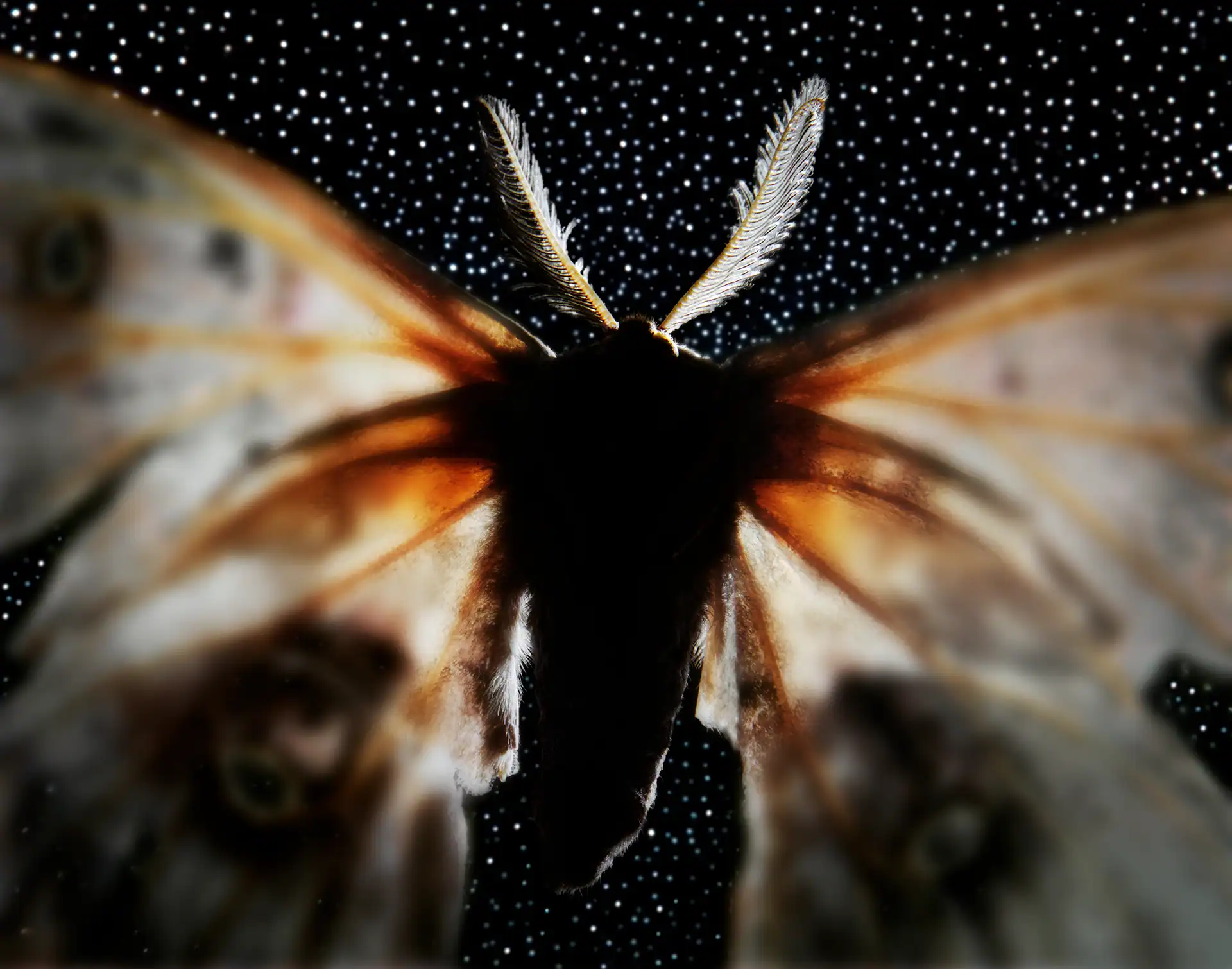
Anthropomorphizing Biological Other, Lepidoptera Portraits explores a reimagining of how we perceive butterflies and moths, moving beyond traditional natural history documentation to anthropomorphize these biological others through the lens of human portraiture. This series employs the aesthetic language and technical approaches typically reserved for photographing people, revealing the remarkable facial expressions and emotional depth of these creatures.
By magnifying these subjects to an extraordinary scale and applying dramatic lighting and composition techniques inside the miniature portrait studio, each image transforms anonymous specimens into distinct individuals with seemingly unique personalities. The resulting portraits evoke a range of emotional responses—some subjects appear wise and contemplative, others fierce or mysterious, while still others possess an almost whimsical charm that challenges our preconceptions about insect consciousness and character.
The intricate details revealed through this macro approach—the fur-like textures of scales, the complex architecture of compound eyes, the delicate mechanics of antennae—create encounters that feel genuinely alien yet strangely familiar. This work serves as both artistic exploration and speculative training, preparing viewers for potential future encounters with “insect sapiens” alien species by expanding our capacity for observation beyond the human-centric realm.
When Kallio was in his early teens he joined a science club in the local natural history museum and started to collect butterflies and moths. The collected specimens were mounted and preserved in display cases. Kallio was fascinated by the beauty and complexity of butterfly wing designs and the mysterious nocturnal habits of moths. Years later, as his ideas about how to look at nature evolved, he began to wonder about the meaning of this collection of dried and preserved specimens. These dusty boxes, preserved over the years and later rediscovered, found new life and purpose through this work. What began as childhood scientific curiosity has evolved into a meditation on the profound complexity of life forms that exists at scales beyond our normal perception.
This project ultimately challenges the boundaries between scientific specimen and artistic subject, between human and non-human consciousness, and between childhood wonder and mature artistic vision. Through this work, viewers are invited to a thought experiment, encountering these creatures not as objects of study, but as individuals.

Papilio glaucus no.1, 2008 
Papilio glaucus no.2, 2008 
Mesoacidalia aglaja no.1, 2007 
Antheraea polyphemus no.3, 2007 
Actias luna no.2, 2007 Deilephila elpenor & group, 2008