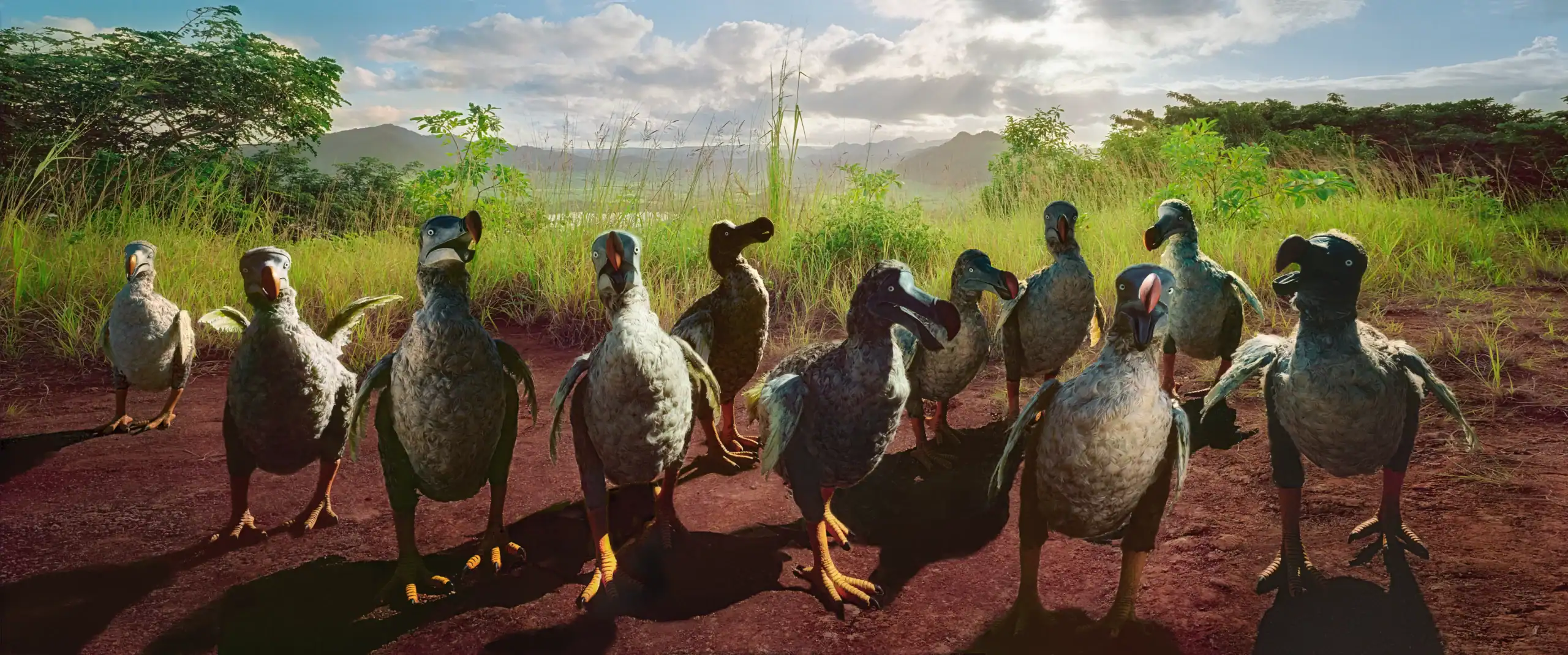
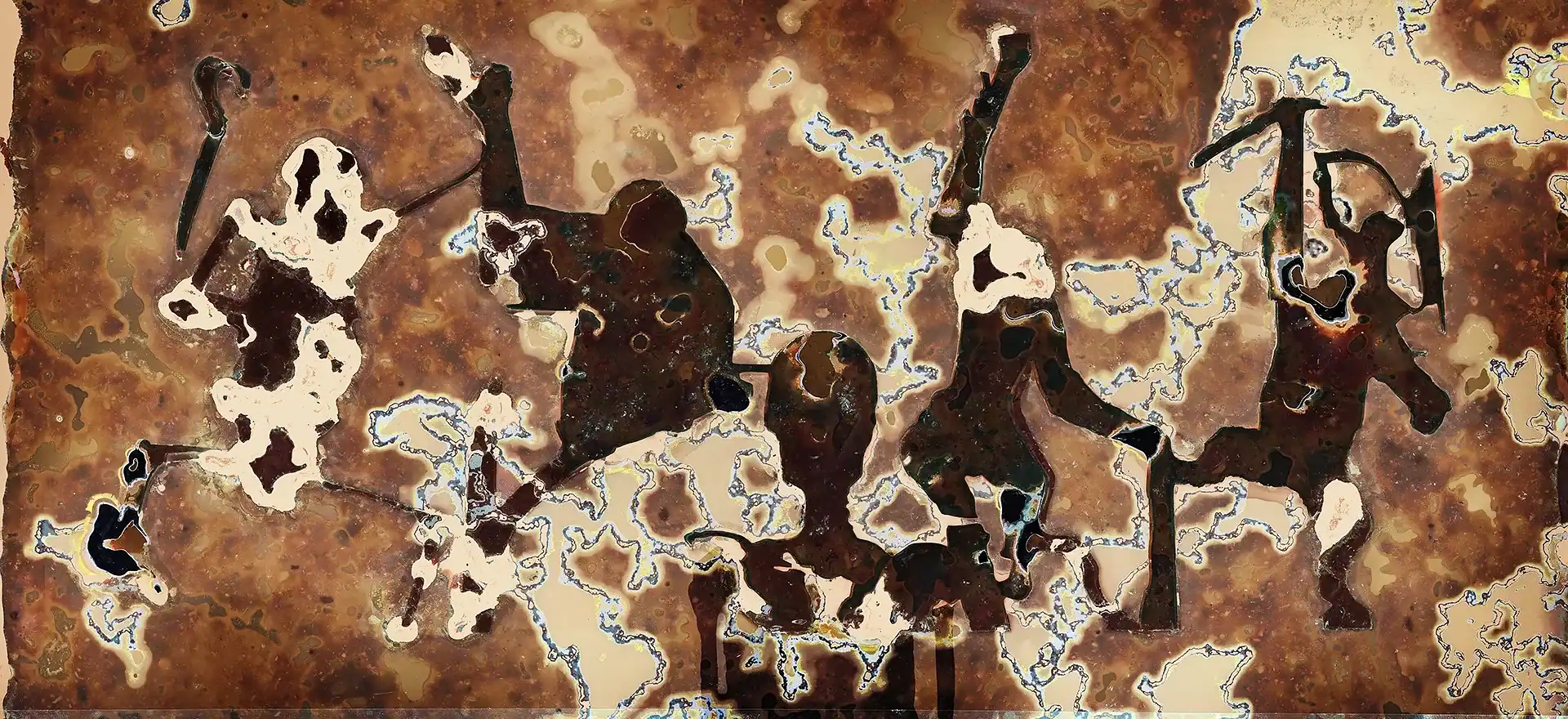
Harri Kallio (b. 1970), originally from Finland, he has lived and worked in New York City since 2001. Kallio’s work exists in a space where Irrevocable change becomes image, image becomes ritual, and ritual becomes a technology of remembering. Across photography based biological Imaging with earth, pigment print mosaics and sculpture, Kallio constructs speculative ecologies and temporal interfaces that ask what it means to be a species in the act of vanishing. His past project—The Dodo and Mauritius Island: Imaginary Encounters and ongoing new work, World of Disappearing, non-Geometric Observer, and Biomorphic Alphabet—form a Entropic Imaginarium, constellation of inquiry into memory, myth, and the collapsing boundary between the natural and the simulated.
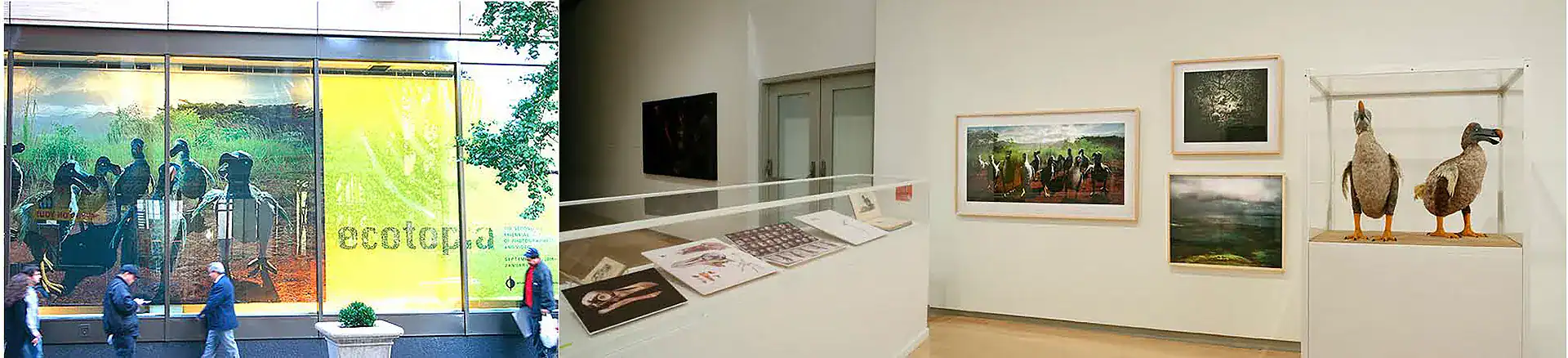
ICP, International Center of Photography, “Ecotopia”, Triennial, NYC, 2006
Kallio’s most prominent project so far, The Dodo and Mauritius Island, Imaginary Encounters (2001–2004), used the extinct Dodo as a case study. This large-scale installation combined sculpture and large-format photography and was widely exhibited. His work has been featured at the Aperture Gallery, George Eastman House exhibition “Why Look at Animals” (2006), the International Center of Photography’s “Ecotopia: The Second ICP Triennial of photography and Video”, FotoFest 2006, Houston, Texas, Columbus Museum of Art (2007) and Bonni Benrubi Gallery, NYC (2006). His first monograph “The Dodo and Mauritius Island, Imaginary Encounters” was published in 2004 and won the The European Publisher’s Award for Photography. His work was also included in the Calouste Gulbenkian Foundation, “Photography and Engineering 1846-2006” exhibition in Lisbon, Portugal and Bozar, Brussels, Belgium. His work was also shown in “Rare Bird: John James Audubon and Contemporary Art” exhibition at the Berman Museum, in Collegeville, PA, (2016) and Whatcom museum Bellingham, WA (2018), titled “Endangered Species: Artists on the Front Line of Biodiversity”.
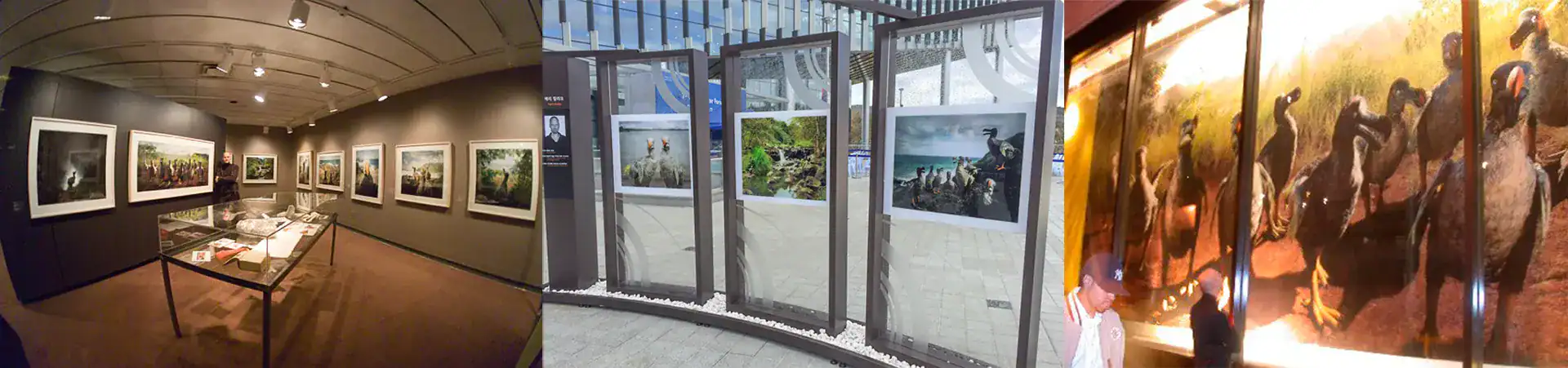
George Eastman House, “Why look at animals”, 2006 / “World Water Forum 2015”, South Korea- Seoul, 2015 / ICP Ecotopia, 2006, NYC
His work has appeared in numerous international publications including the New York Times, Wall Street Journal, Washington Post, Financial Times, The New Yorker, Harper’s Magazine, Aperture Magazine, Lapham’s Quarterly, Citizen K, Le Monde2, El Pais Semanal (Spain), Universum Magazin (Austria), DPI Magazine (Taiwan), Falter Magazine (UK), “사진”, Photography”, (South Korea). Parallax, by Sarah Bezan (2019), “Dodo Birds and the Anthropogenic Wonderlands of Harri Kallio”. He has received several awards and grants, including the Foto Finlandia Prize (2006) and grants from the Finnish Arts Council and Cultural Foundation. In 2007, he was an artist-in-residence at the Josef & Anni Albers Foundation.
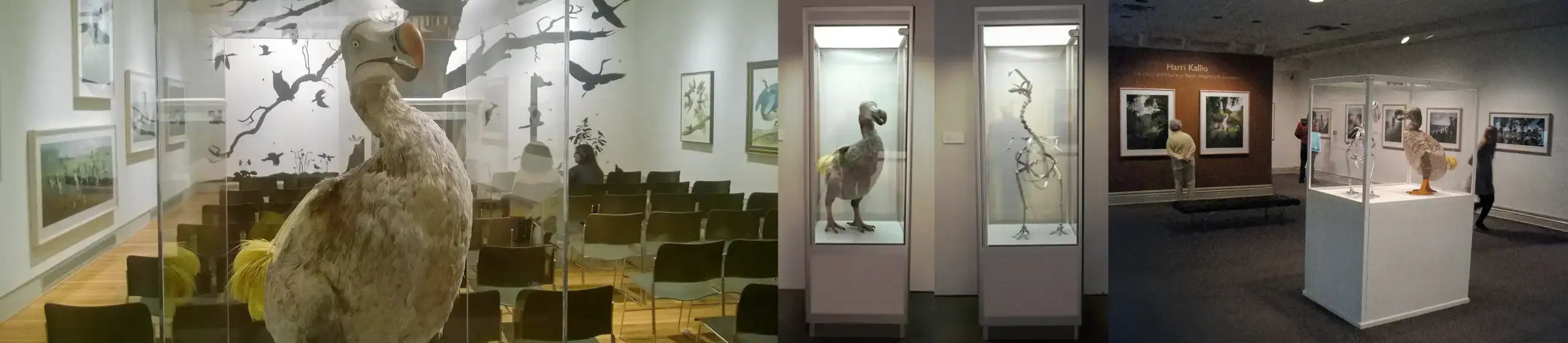
John James Audubon and Contemporary Art”, Berman Museum, 2016 / Hobart, Tasmania, Plimsoll Gallery, “Reconstructing the Animal”, 2011 / Columbus Museum of Art, 2007
Through entropy, myth, and observing the paradoxical relationship between biology and technology, Kallio creates a platform for ritual, and imagination; a trigger that make people question what they know, how they know it, and why it matters. It also operates as a bridge—inviting viewers to remember, and reimagine a different world. Humanity and the biosphere deserve a better story that is currently unfolding.
Origin Of Reason #1, 2024, Archival Pigment Print, 30 x 64 / 60 x 128 inches