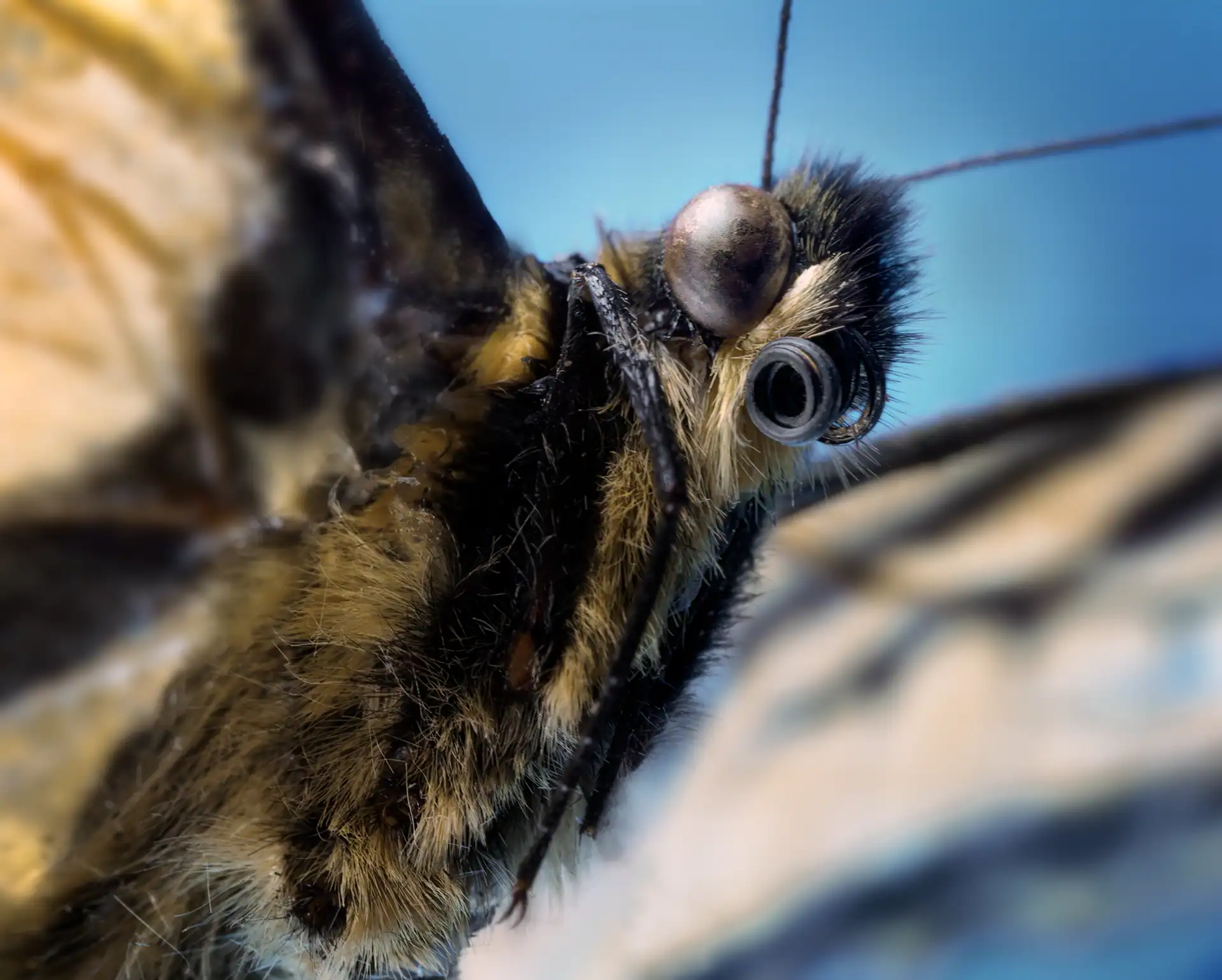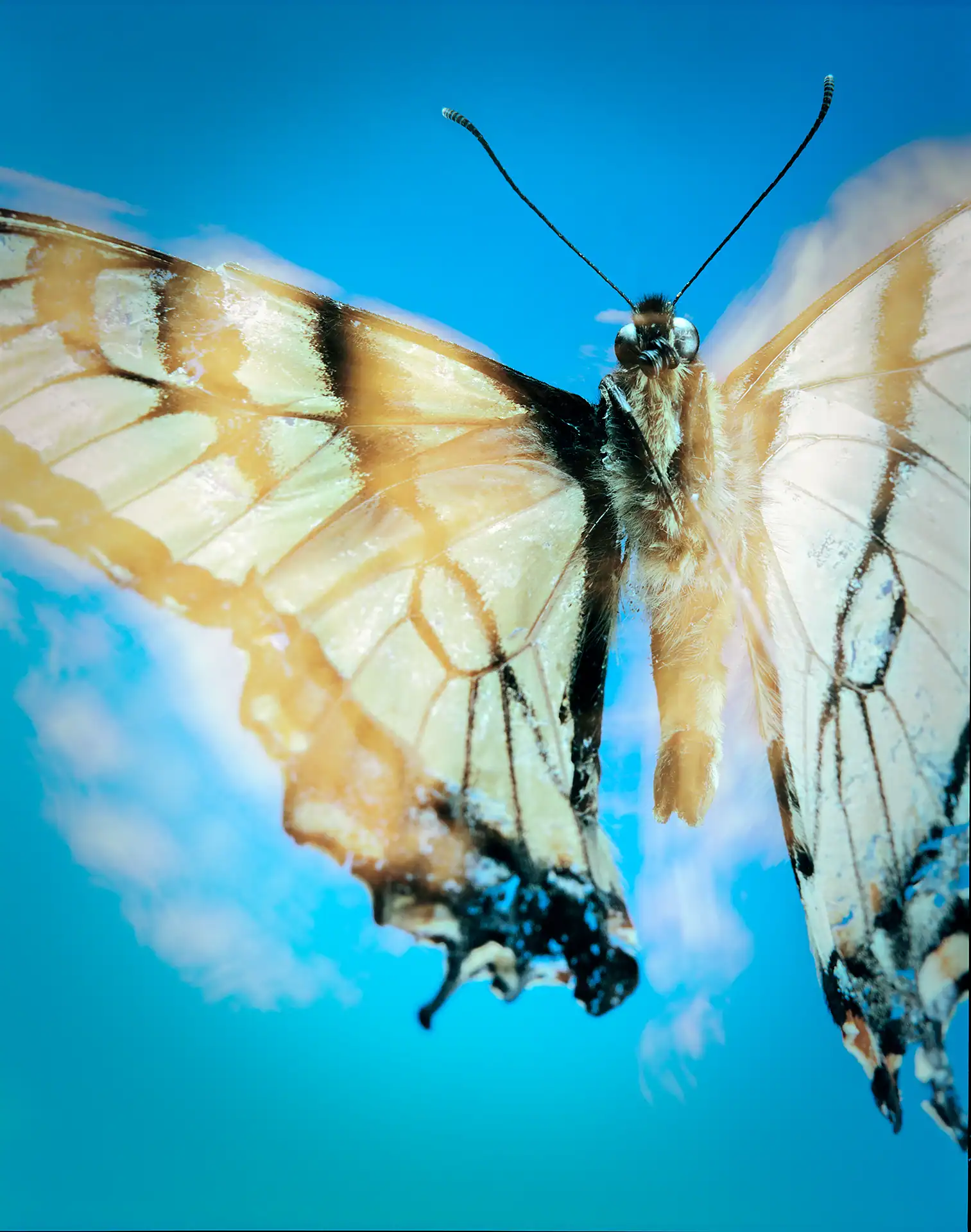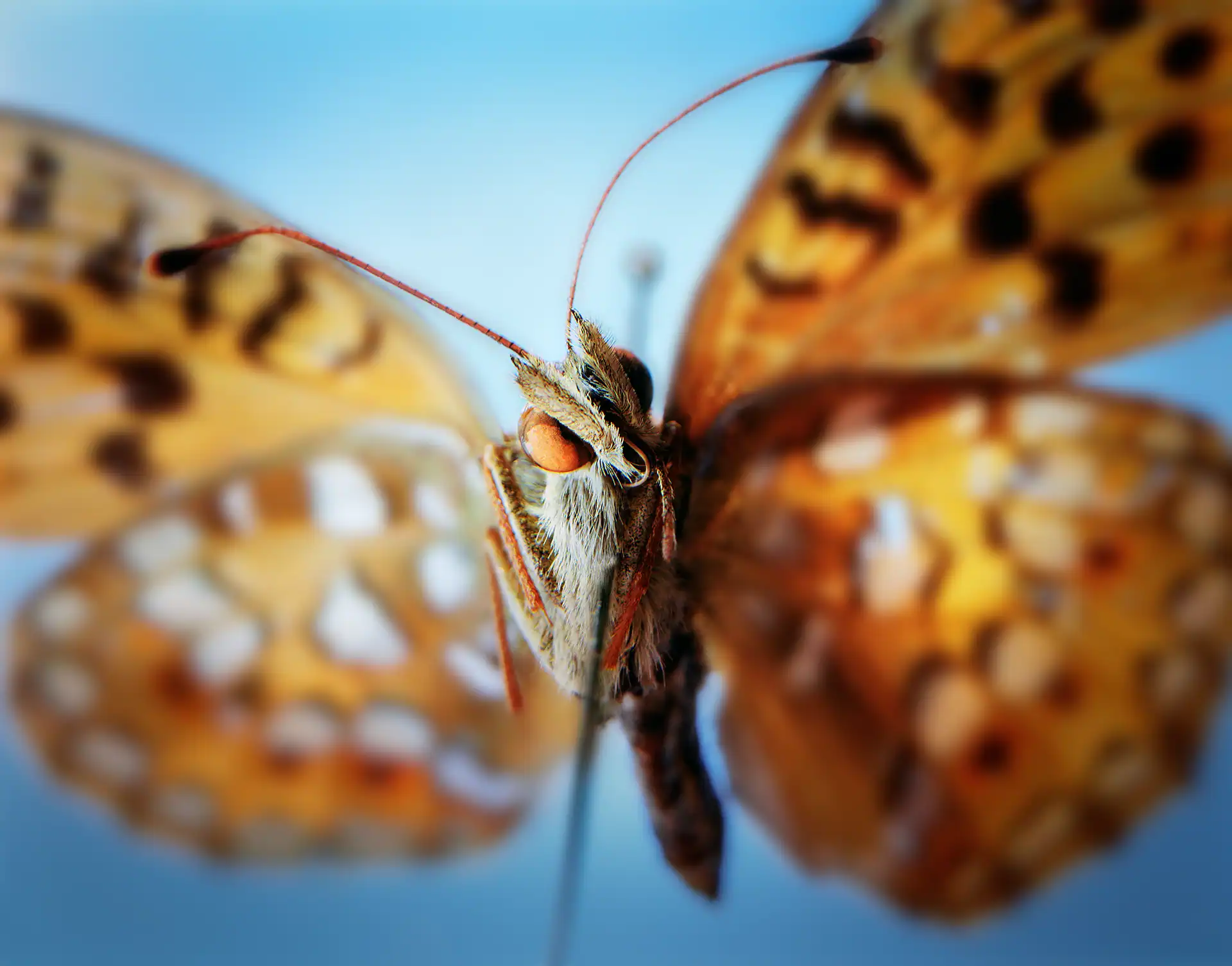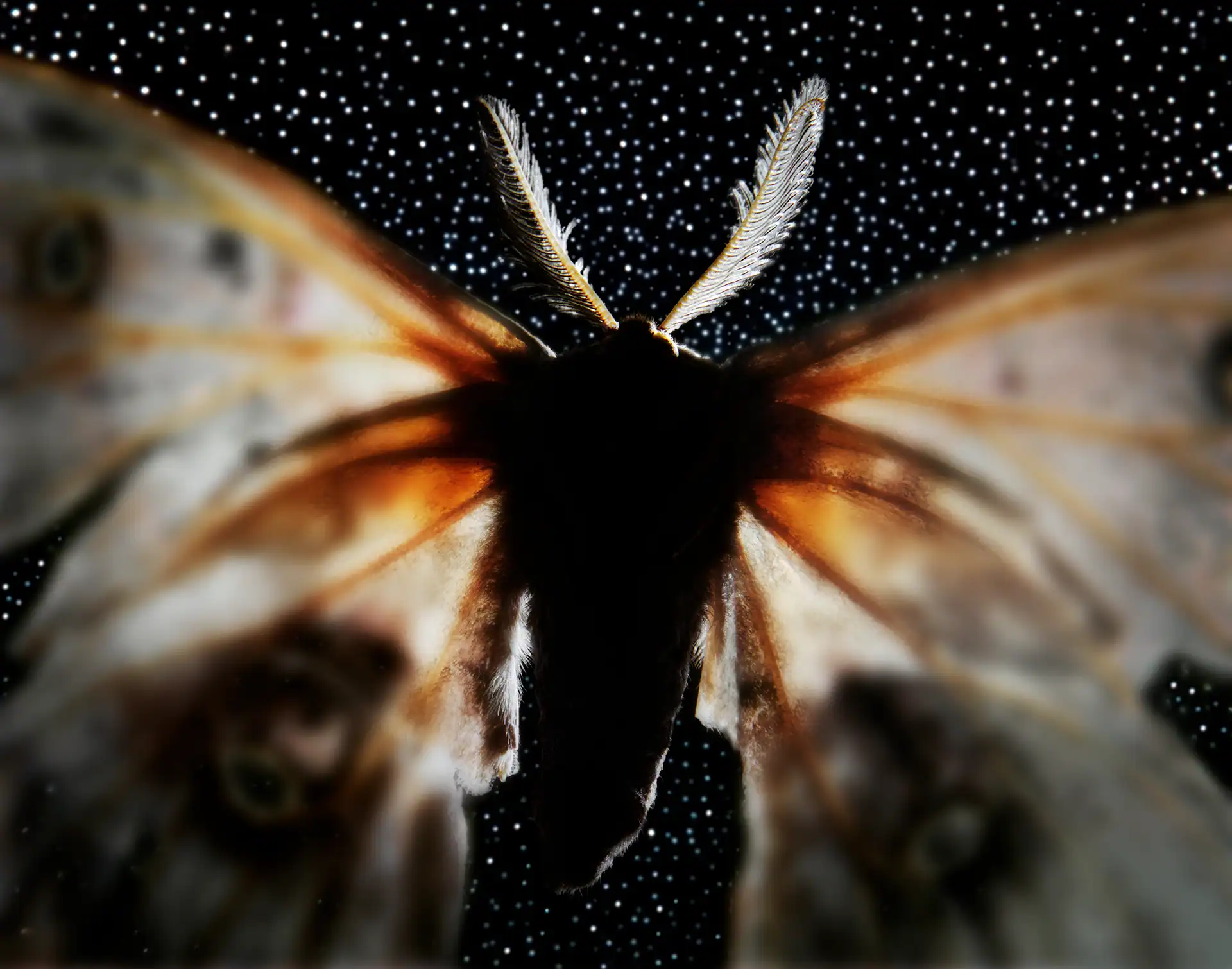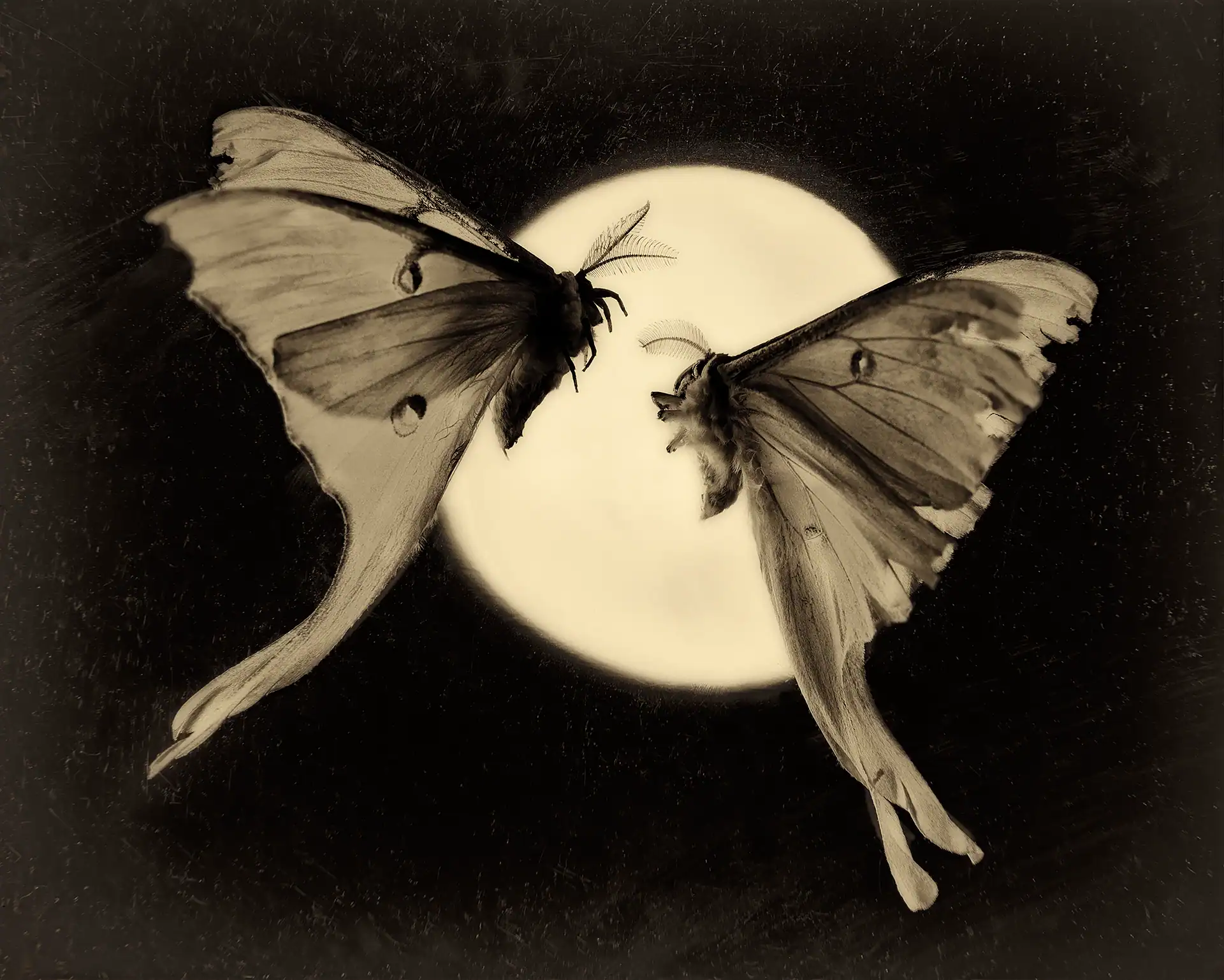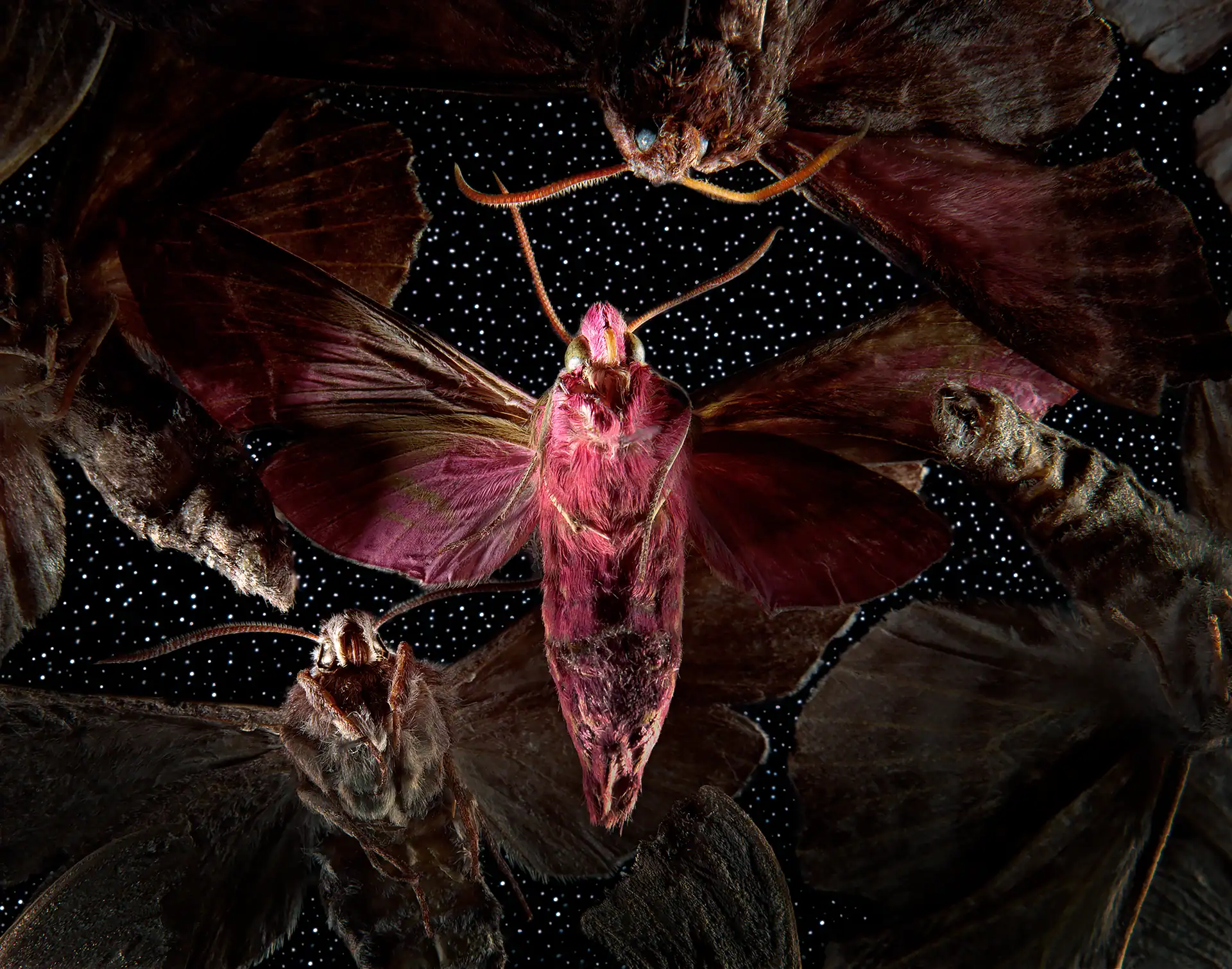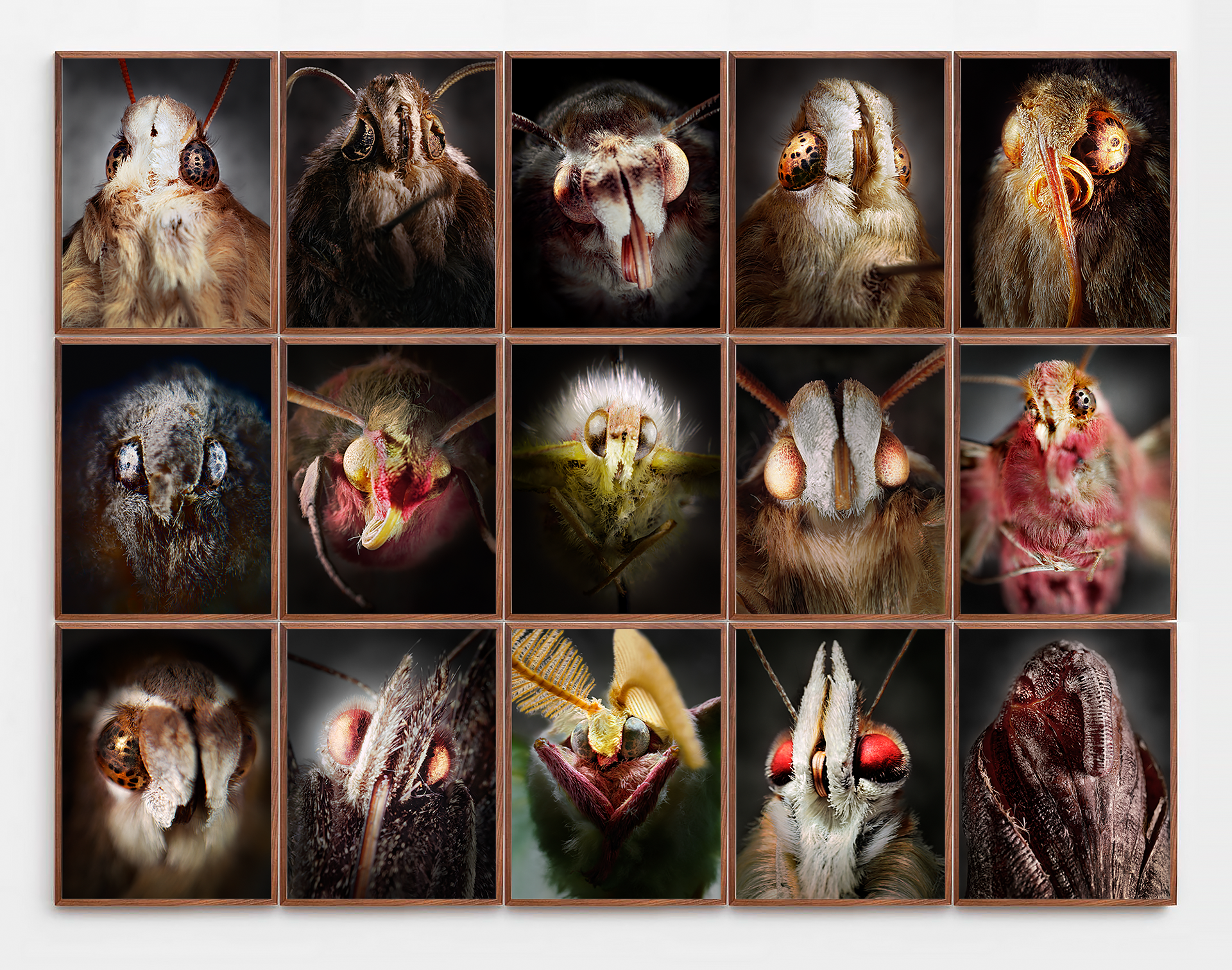
Lepidoptera Portraits, Archival Pigment Prints, 10 x 8 1/2 / 16 x 12 inches each
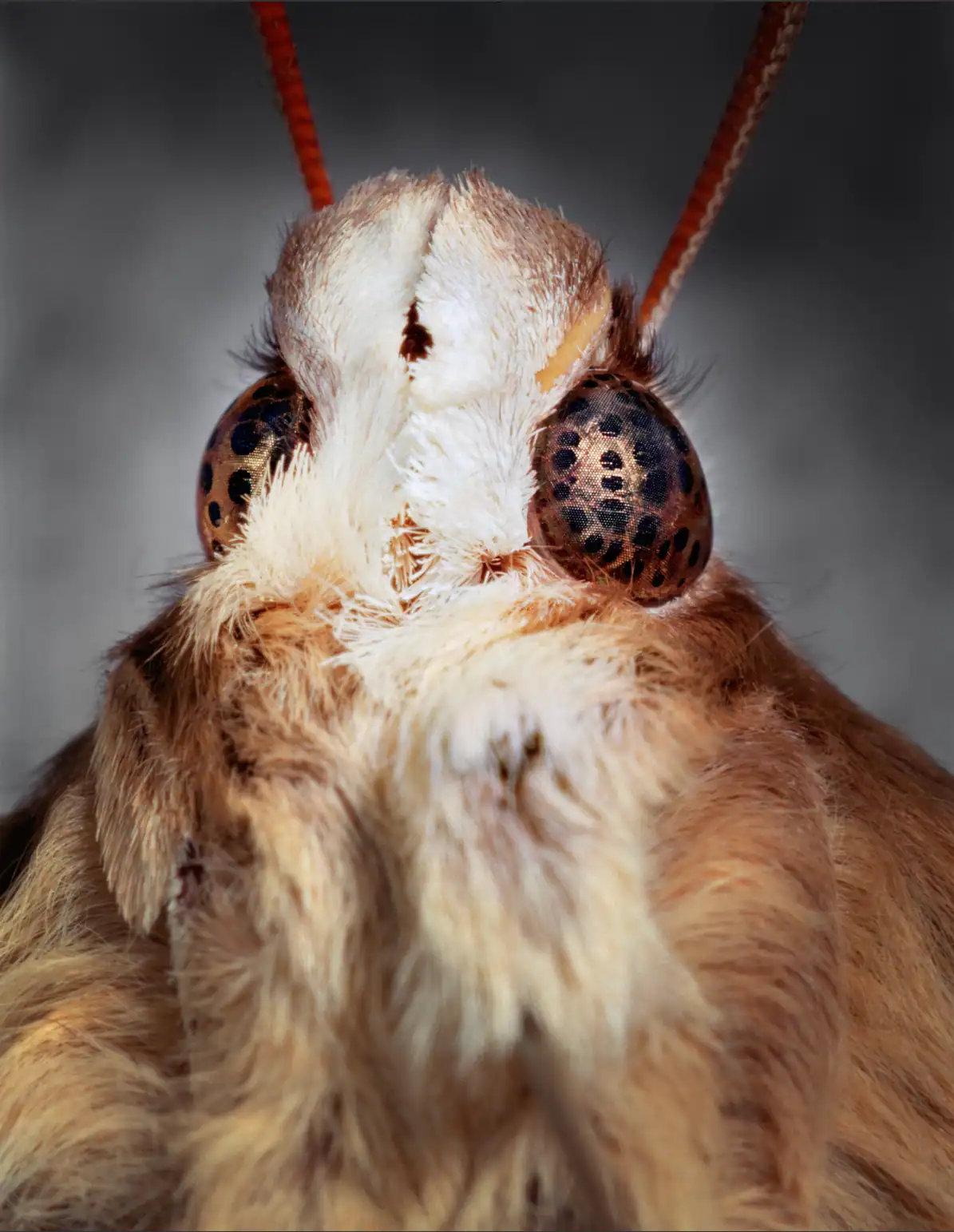
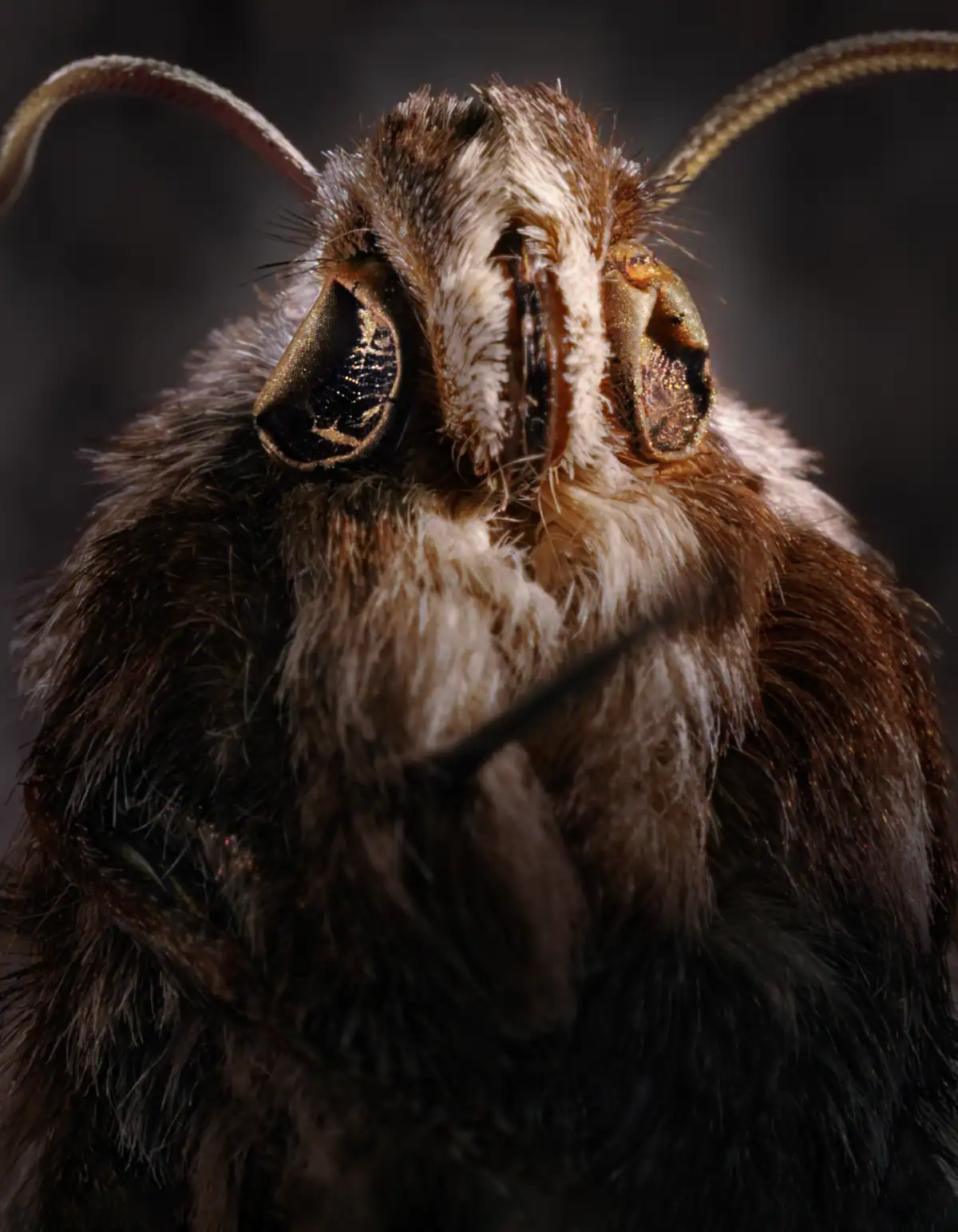
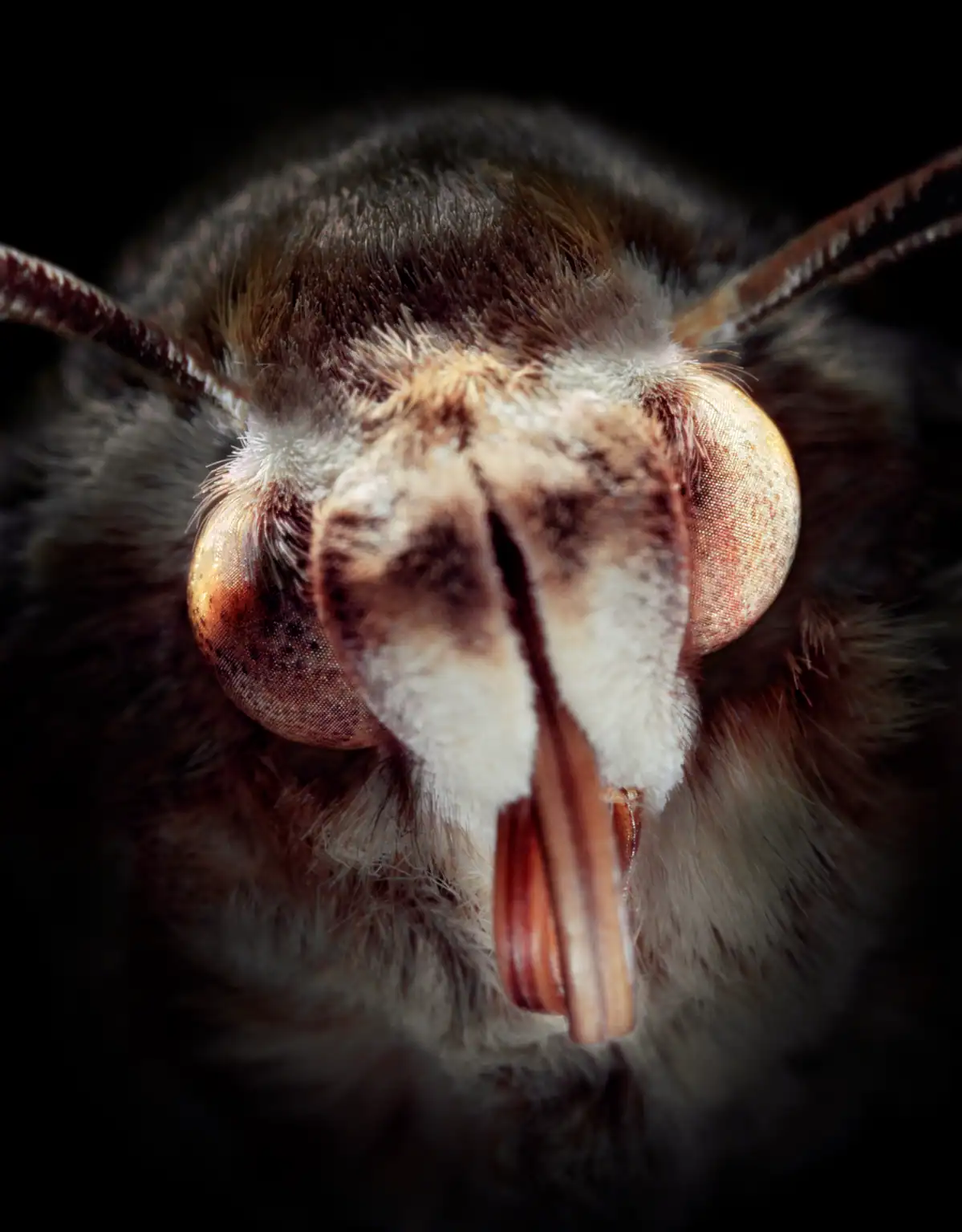
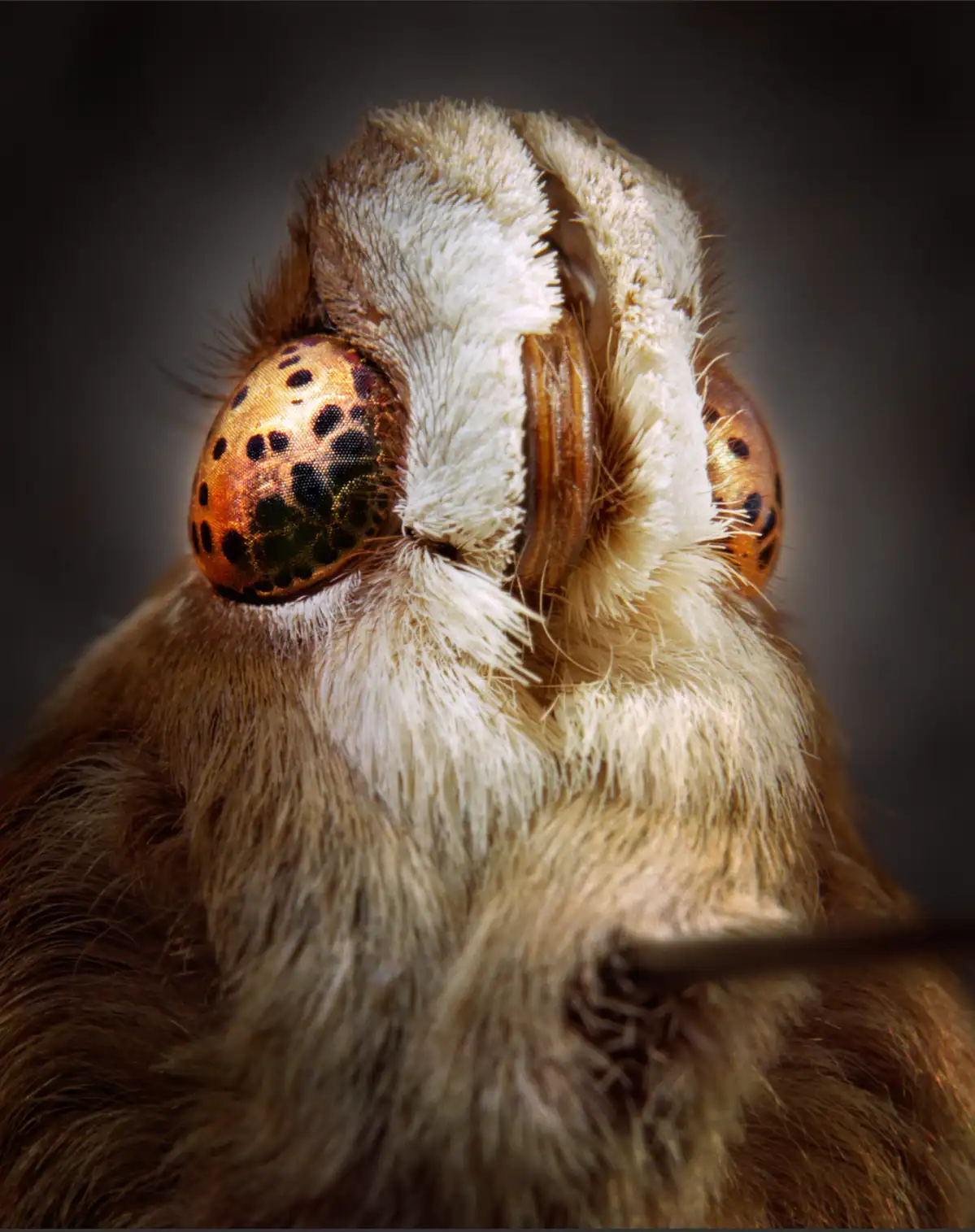
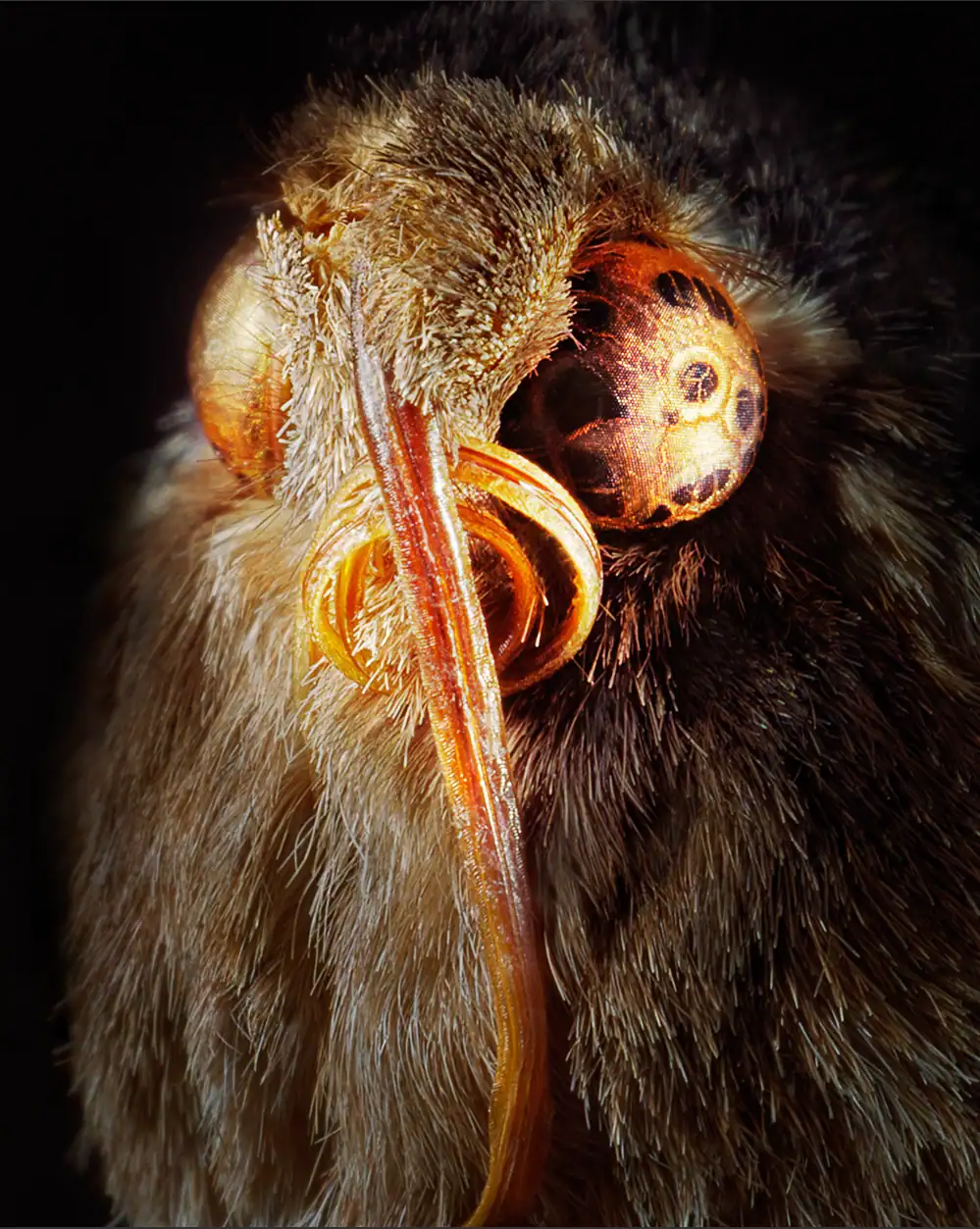
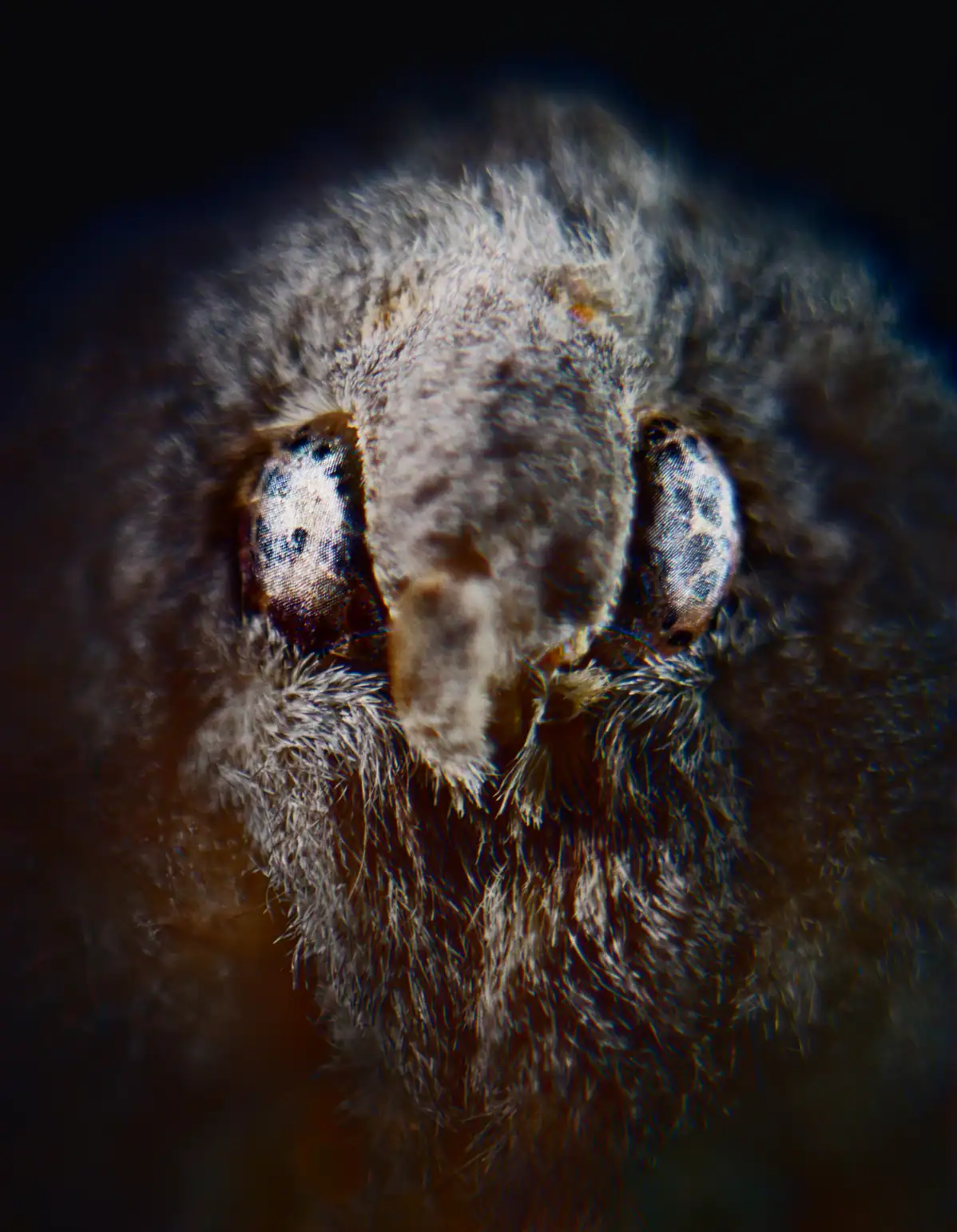
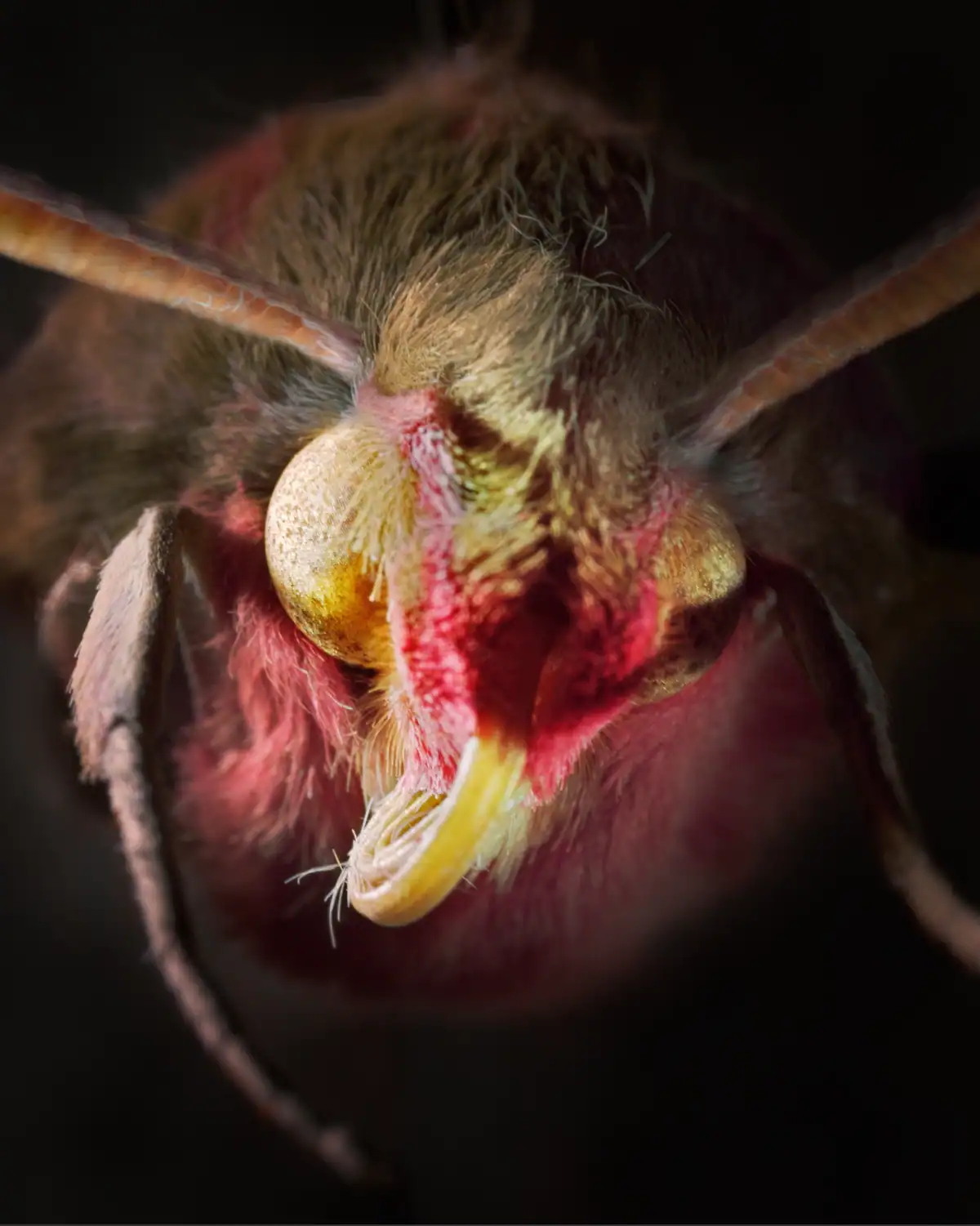
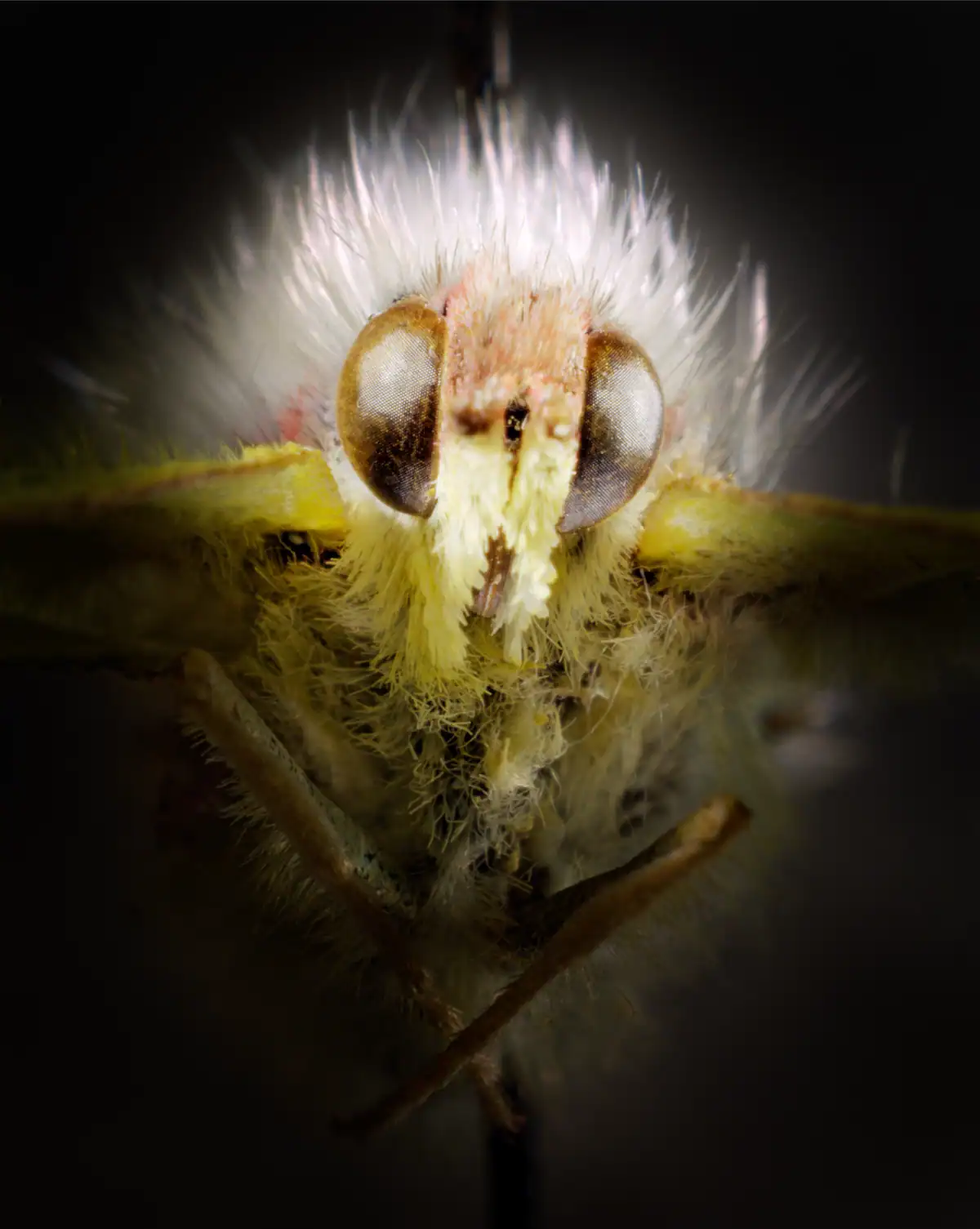
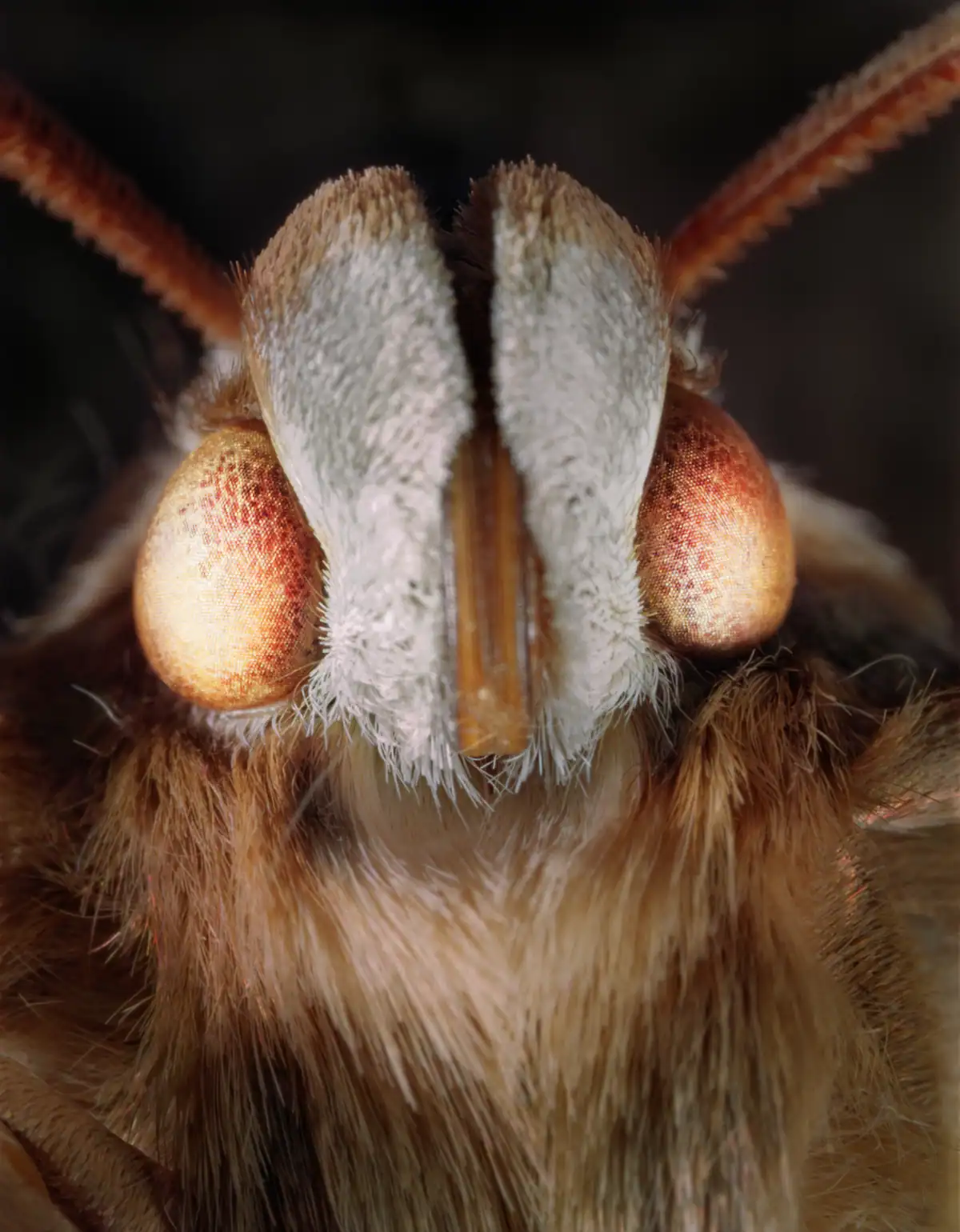
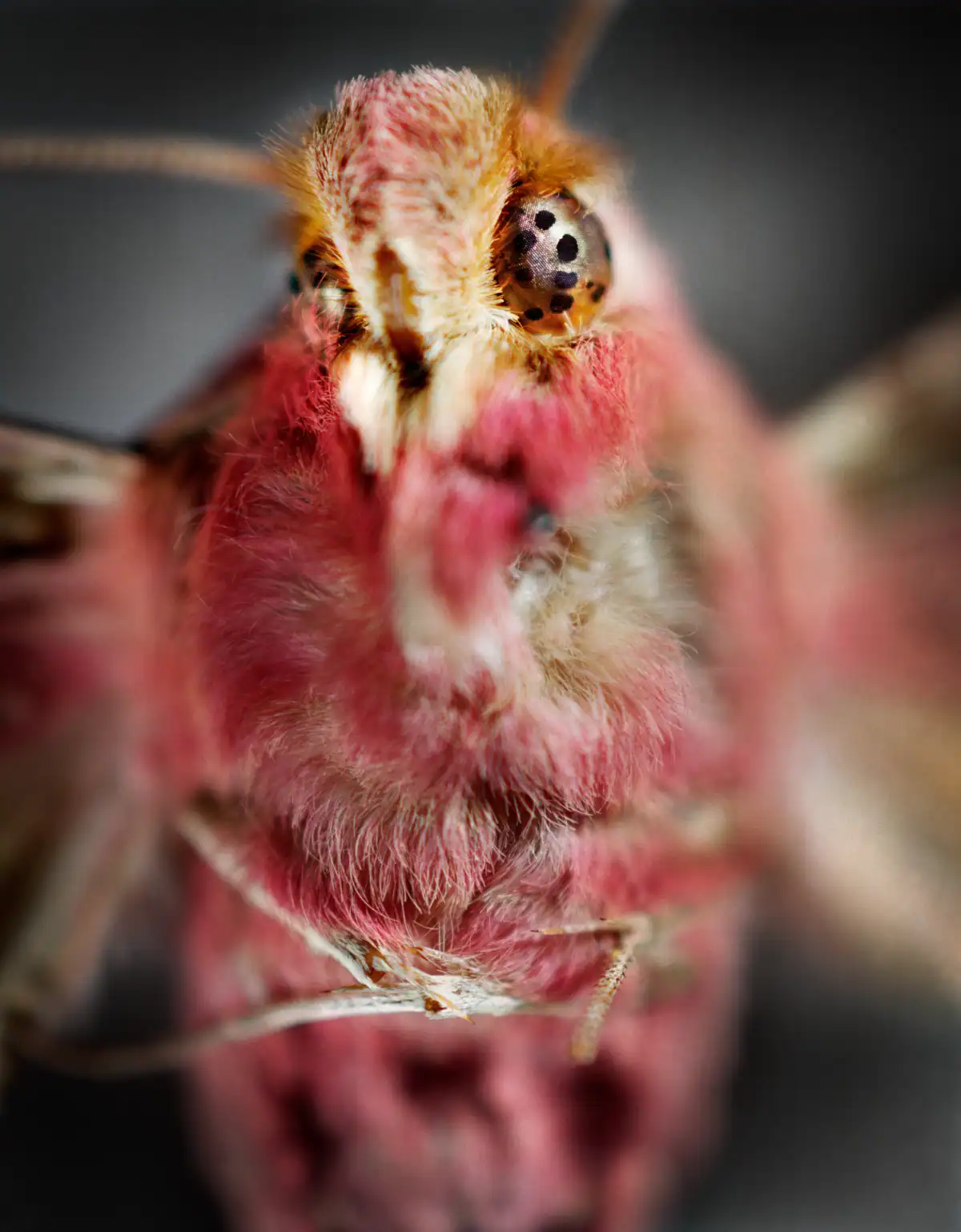
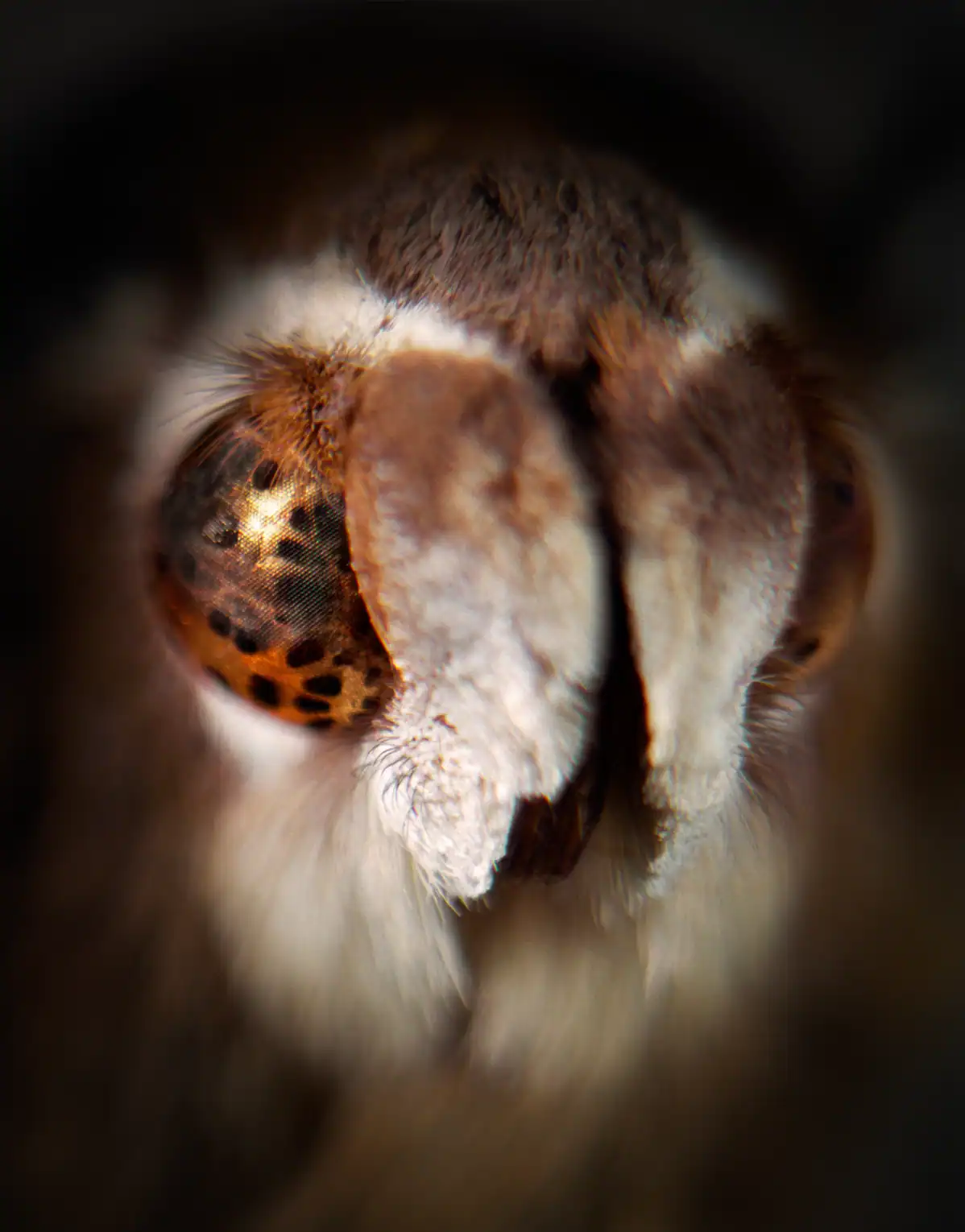
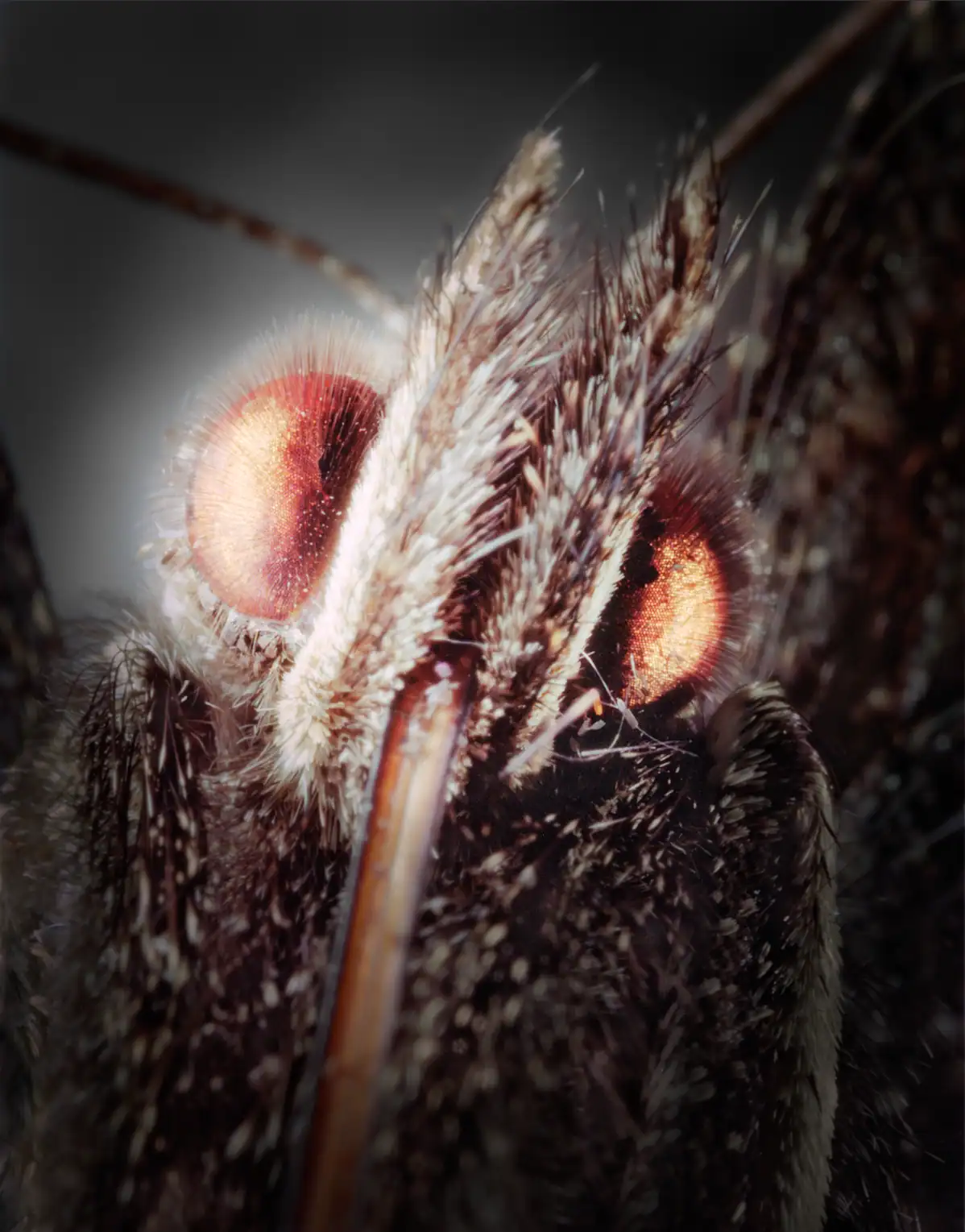
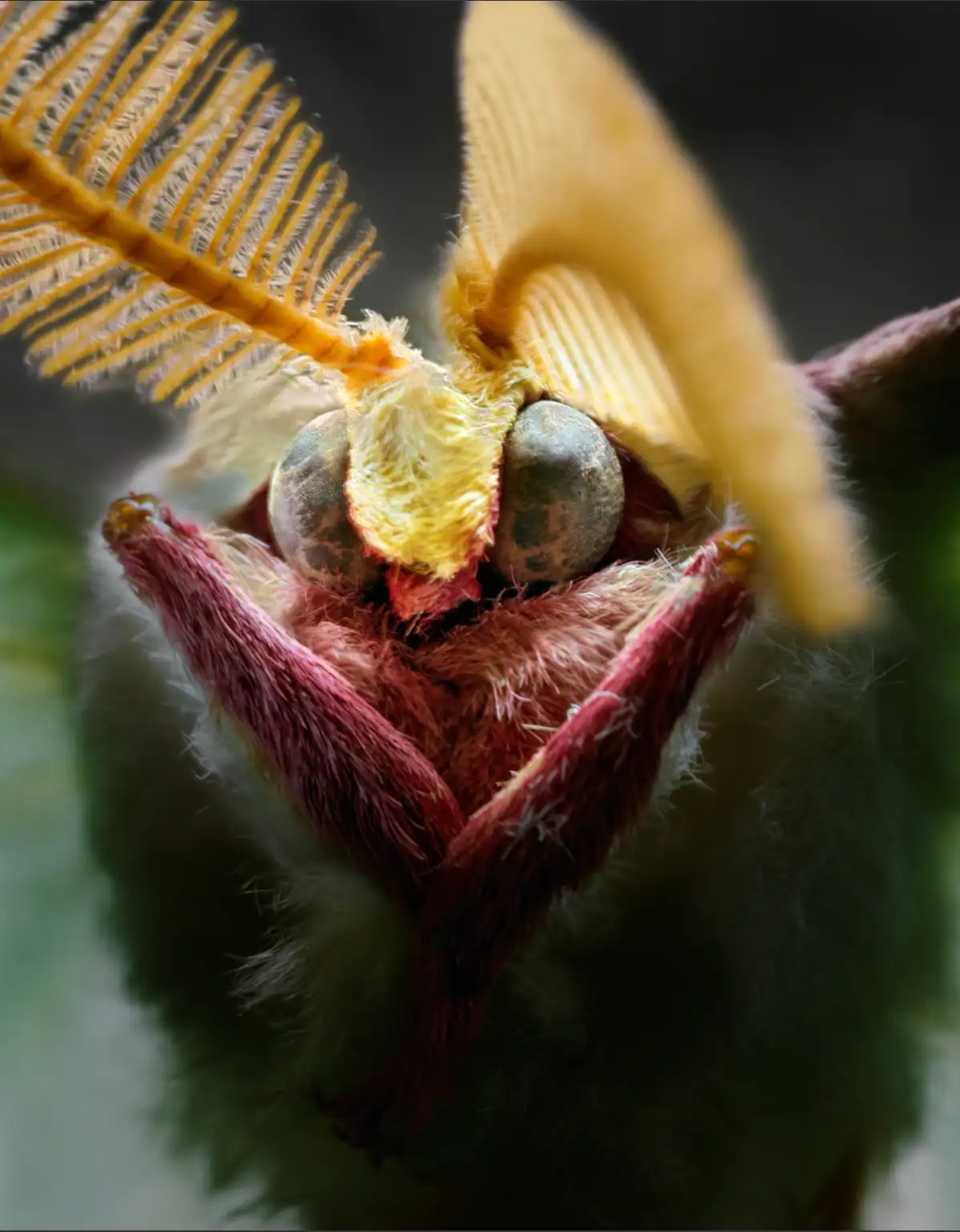
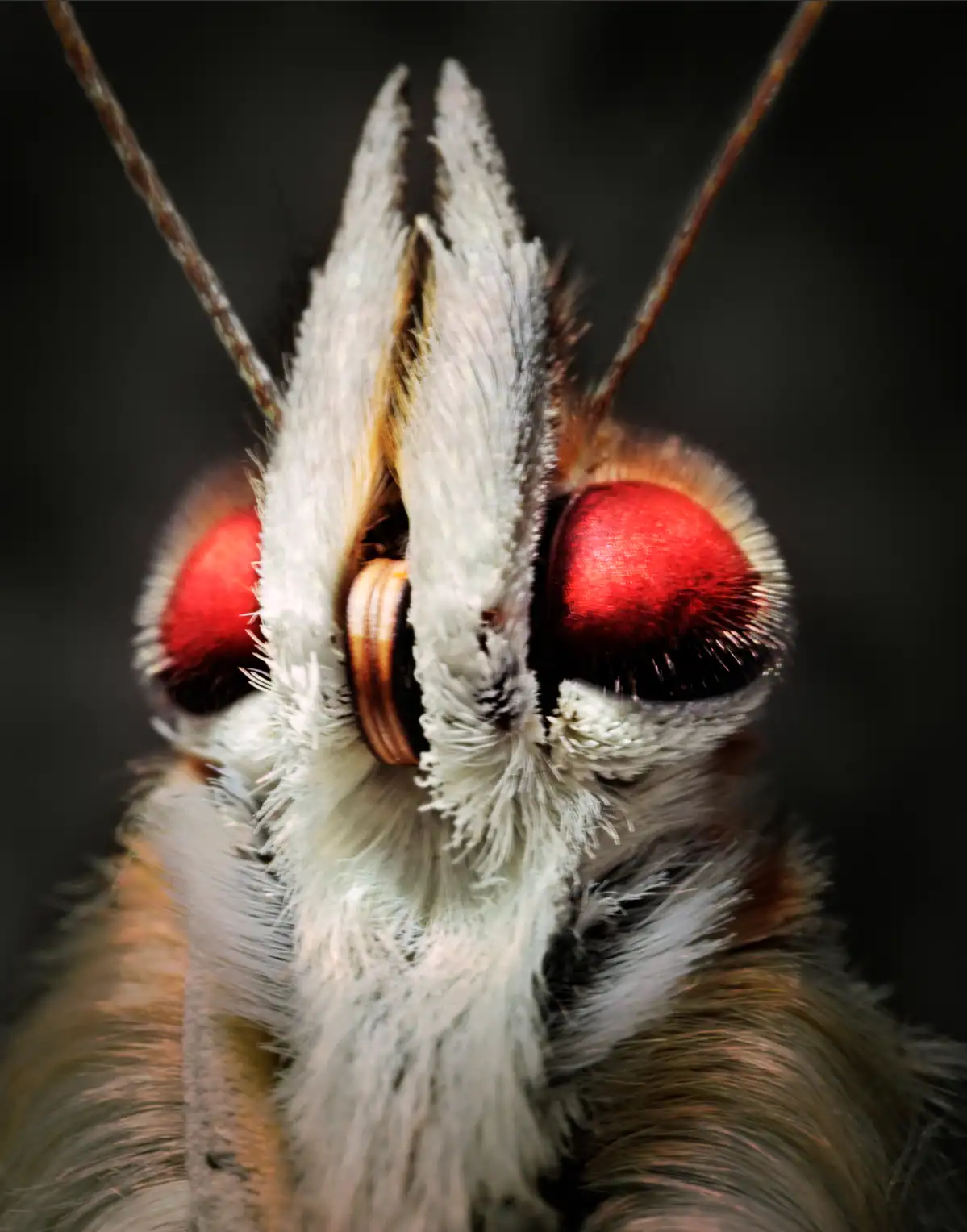
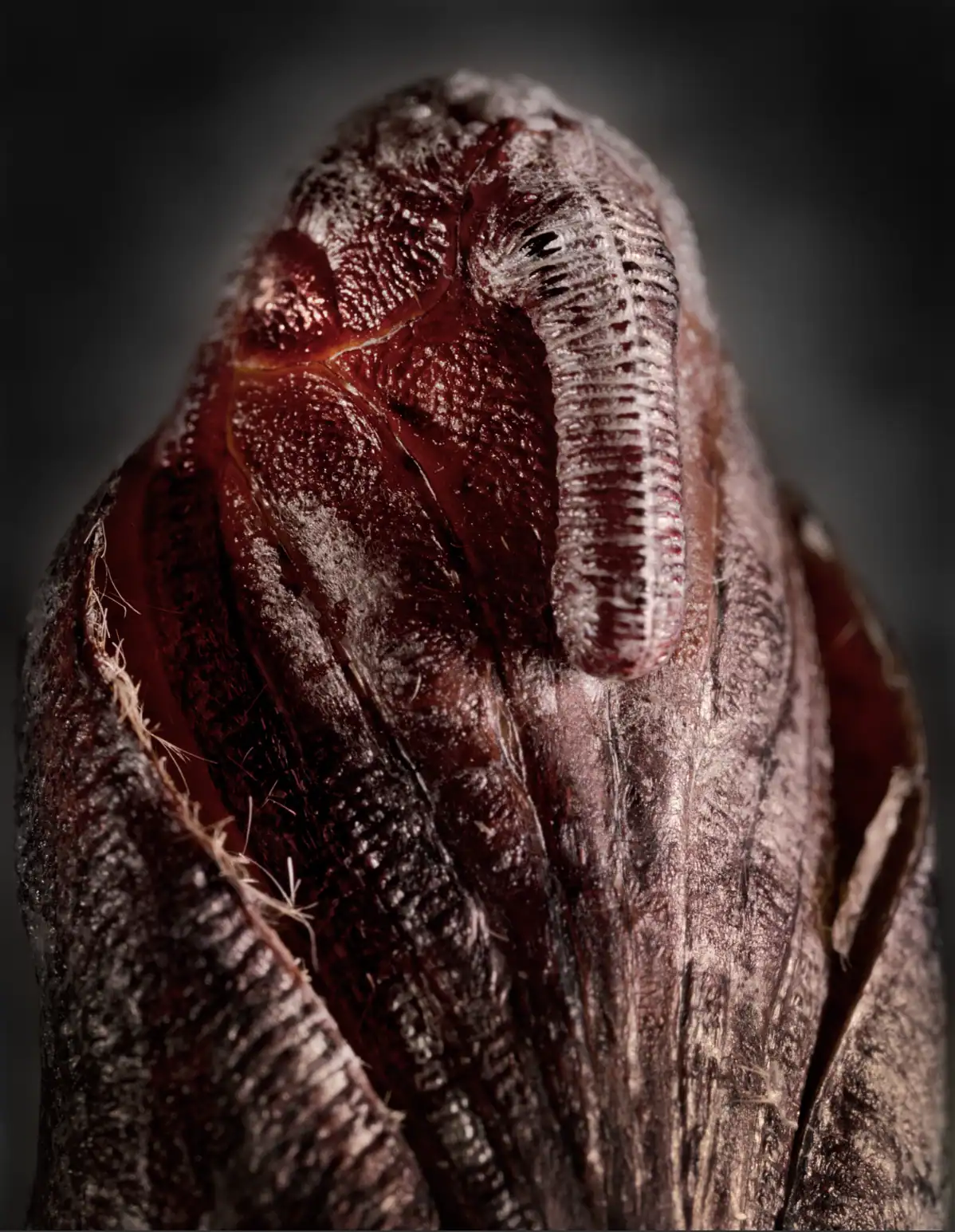
Anthropomorphizing Biological Other, Lepidoptera Portraits explores a reimagining of how we perceive butterflies and moths, moving beyond traditional natural history documentation to anthropomorphize these biological others through the lens of human portraiture. This series employs the aesthetic language and technical approaches typically reserved for photographing people, revealing the remarkable facial expressions and emotional depth of these creatures.
By magnifying these subjects to an extraordinary scale and applying dramatic lighting and composition techniques inside the miniature portrait studio, each image transforms anonymous specimens into distinct individuals with seemingly unique personalities. The resulting portraits evoke a range of emotional responses—some subjects appear wise and contemplative, others fierce or mysterious, while still others possess an almost whimsical charm that challenges our preconceptions about insect consciousness and character.
The intricate details revealed through this macro approach—the fur-like textures of scales, the complex architecture of compound eyes, the delicate mechanics of antennae—create encounters that feel genuinely alien yet strangely familiar. This work serves as both artistic exploration and speculative training, preparing viewers for potential future encounters with “insect sapiens” alien species by expanding our capacity for observation beyond the human-centric realm.
The project carries a dimension of resurrection and transformation. Most specimens featured in this body of work originate from a butterfly and moth collection the artist assembled as a child. When Kallio was in his early teens he joined a science club in the local natural history museum and started to collect butterflies and moths. The collected specimens were mounted and preserved in display cases. Kallio was fascinated by the beauty and complexity of butterfly wing designs and mysterious nocturnal habits of moths. Years later, as his ideas about how to look at nature evolved I started to wonder about the meaning of this collection of dried and preserved specimens.These dusty boxes, preserved over the years and later rediscovered, found new life and purpose through this work. What began as childhood scientific curiosity has evolved into a meditation on the profound complexity of life forms that exists at scales beyond our normal perception.
This project ultimately challenges the boundaries between scientific specimen and artistic subject, between human and non-human consciousness, and between childhood wonder and mature artistic vision. Through this work, viewers are invited to a thought experiment, encountering these creatures not as objects of study, but as individuals.