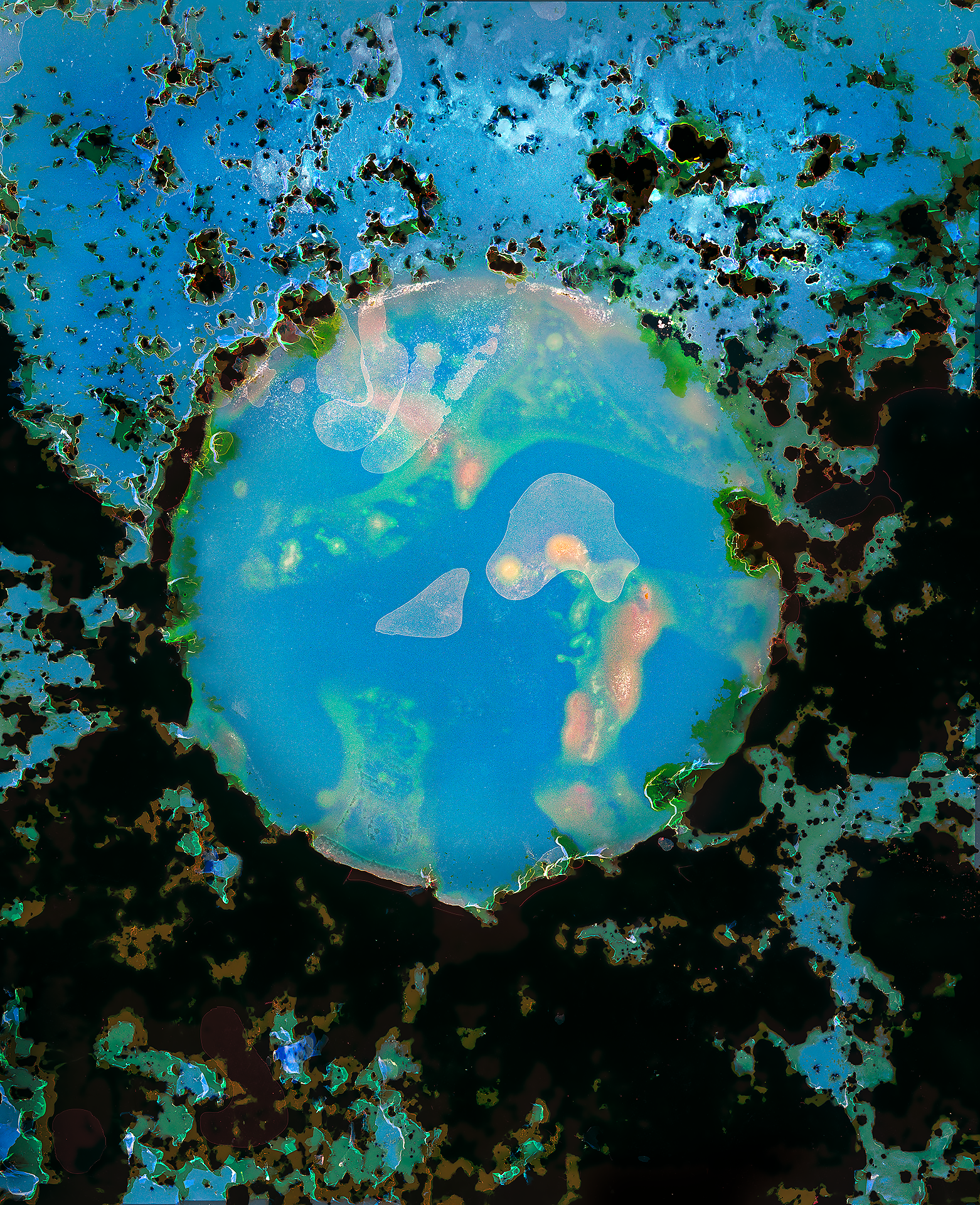
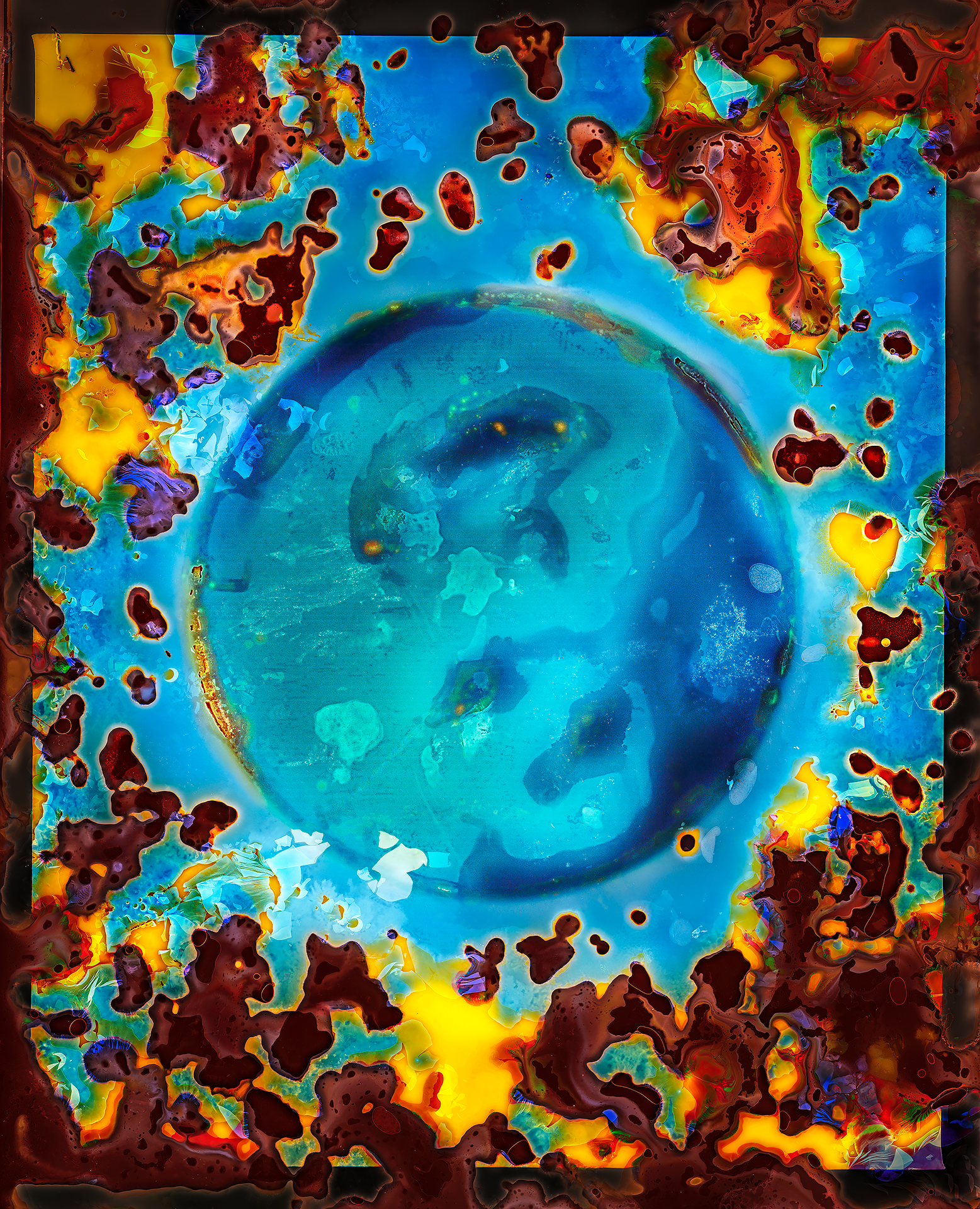
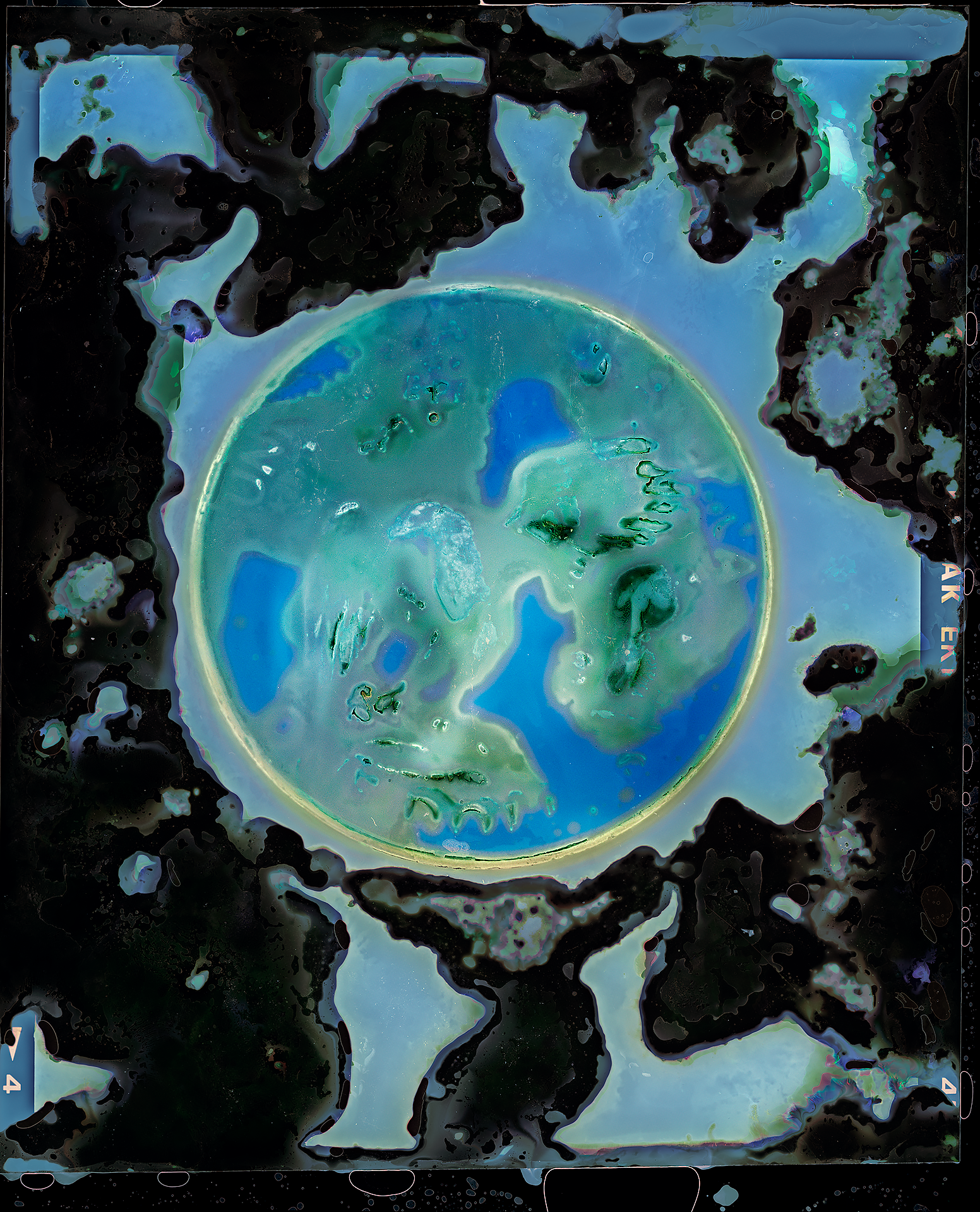
Biological Exposure reimagines Max Ernst’s frottage technique within the realm of contemporary photography, creating a dialogue between Surrealist automatism and modern photographic processes. This body of work translates Ernst’s 1925 innovation—where paper placed over textured surfaces revealed unexpected forms through rubbing—into a direct engagement with photographic emulsion and organic materials and objects.
The process involves placing objects such as metal coins in direct contact with color negative film which is buried inside earth, where they function simultaneously as catalysts and masks. These materials block light, transfer substances, and react chemically with the emulsion through processes of decomposition and mineral staining. Unlike traditional photography that relies on external masks or predetermined compositions, the objects themselves define the final image through their physical and chemical presence on the film surface.
This technique embodies Ernst’s broader exploration of automatism—methods designed to circumvent conscious rational control and allow chance to guide artistic creation. Just as Ernst described frottage as a way to “intensify the irritability of the mind’s faculties,” Biological Object Exposure surrenders elements of artistic control to natural processes, chemical reactions, and the passage of time.
The resulting images exist at the intersection of human intention and biological agency. Organic decay, growth, and chemical transformations collaborate with deliberate placement and exposure decisions to create visual outcomes that neither pure chance nor complete control could achieve alone. The circular forms, varied colorations, and cellular textures that emerge suggest microscopic worlds and organic processes, connecting contemporary bio-art practices with Surrealist methodology.
These photographs represent a temporal collaboration—not merely capturing a moment, but allowing processes to unfold over time. Where Ernst’s original frottage captured existing textures, Biological Object Exposure enables organic and chemical reactions to generate new visual information, introducing entropy and transformation as active participants in image-making.
Biological Exposure
Archival Pigment Prints, Mounted on Dibond
Moon Landing #2, 2014,
54 x 43 3/4 inches and 74 x 60 inches
Moon Landing #3, 2014,
54 x 43 3/4 inches and 74 x 60 inches
Moon Landing #4, 2014,
54 x 43 3/4 inches and 74 x 60 inches