Skip to content
HARRI KALLIO
  • About
  • Biography
  • Artwork
  • Press & Publications
  • Contact
HARRI KALLIO
  • About
  • Biography
  • Artwork
  • Press & Publications
  • Contact
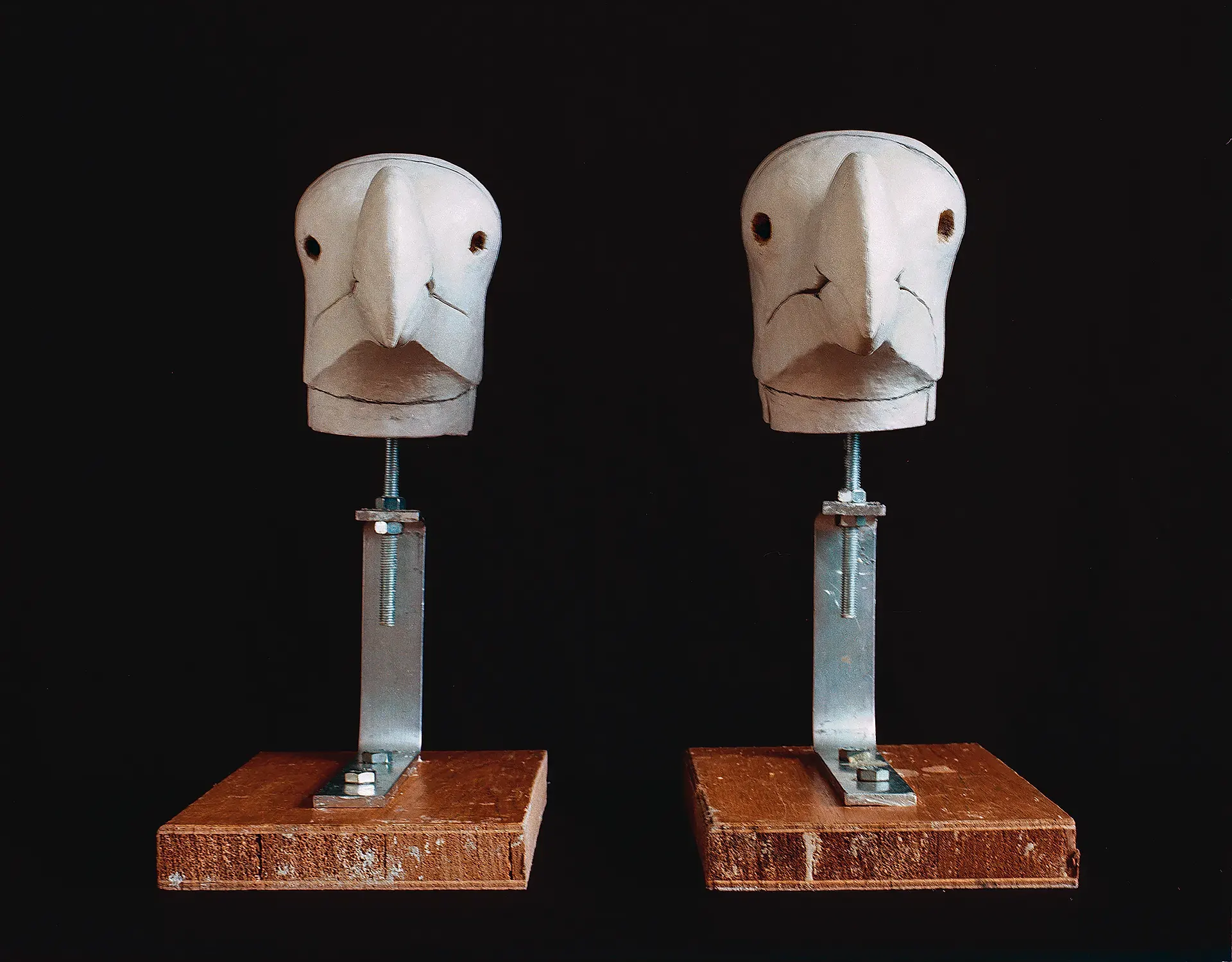
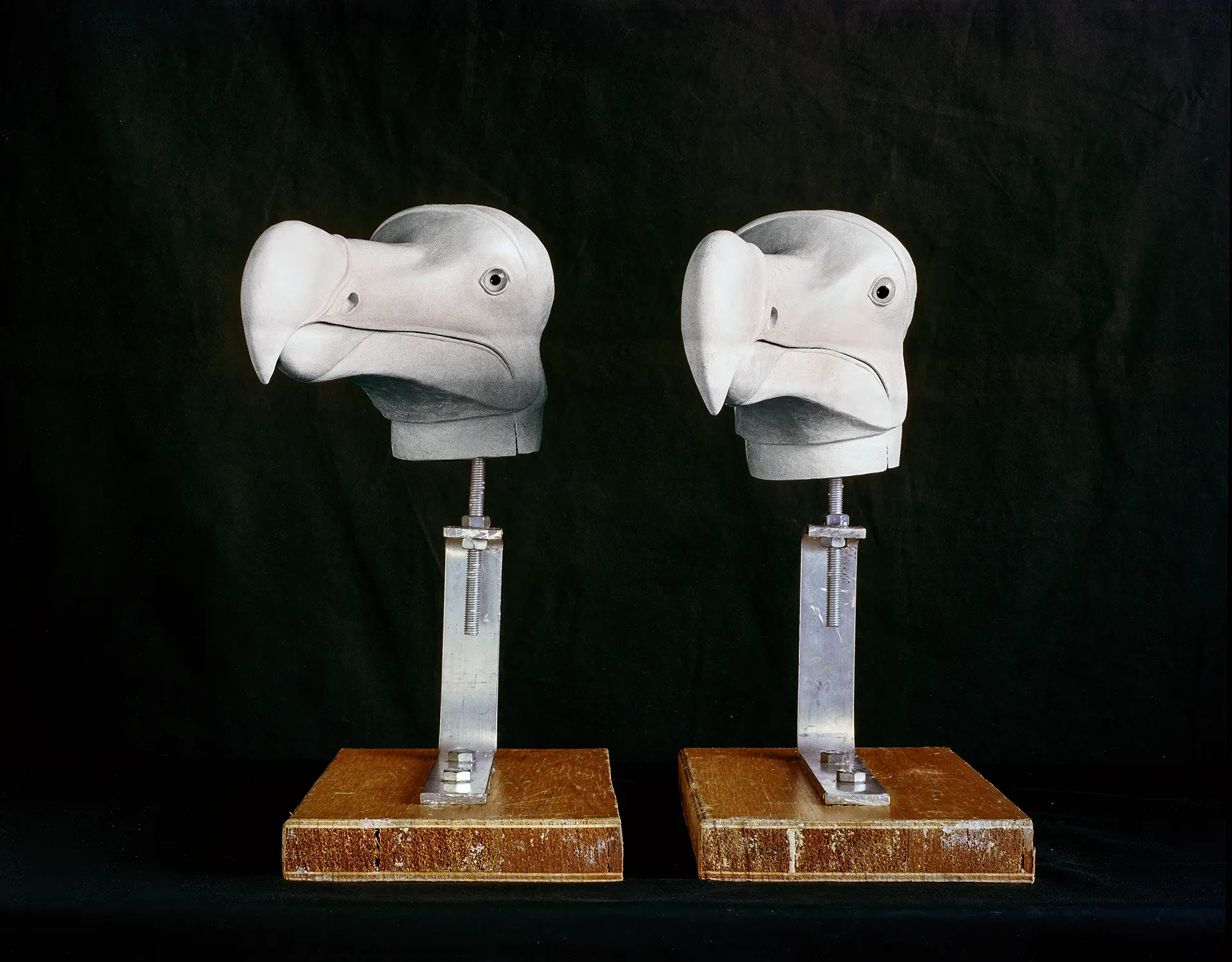
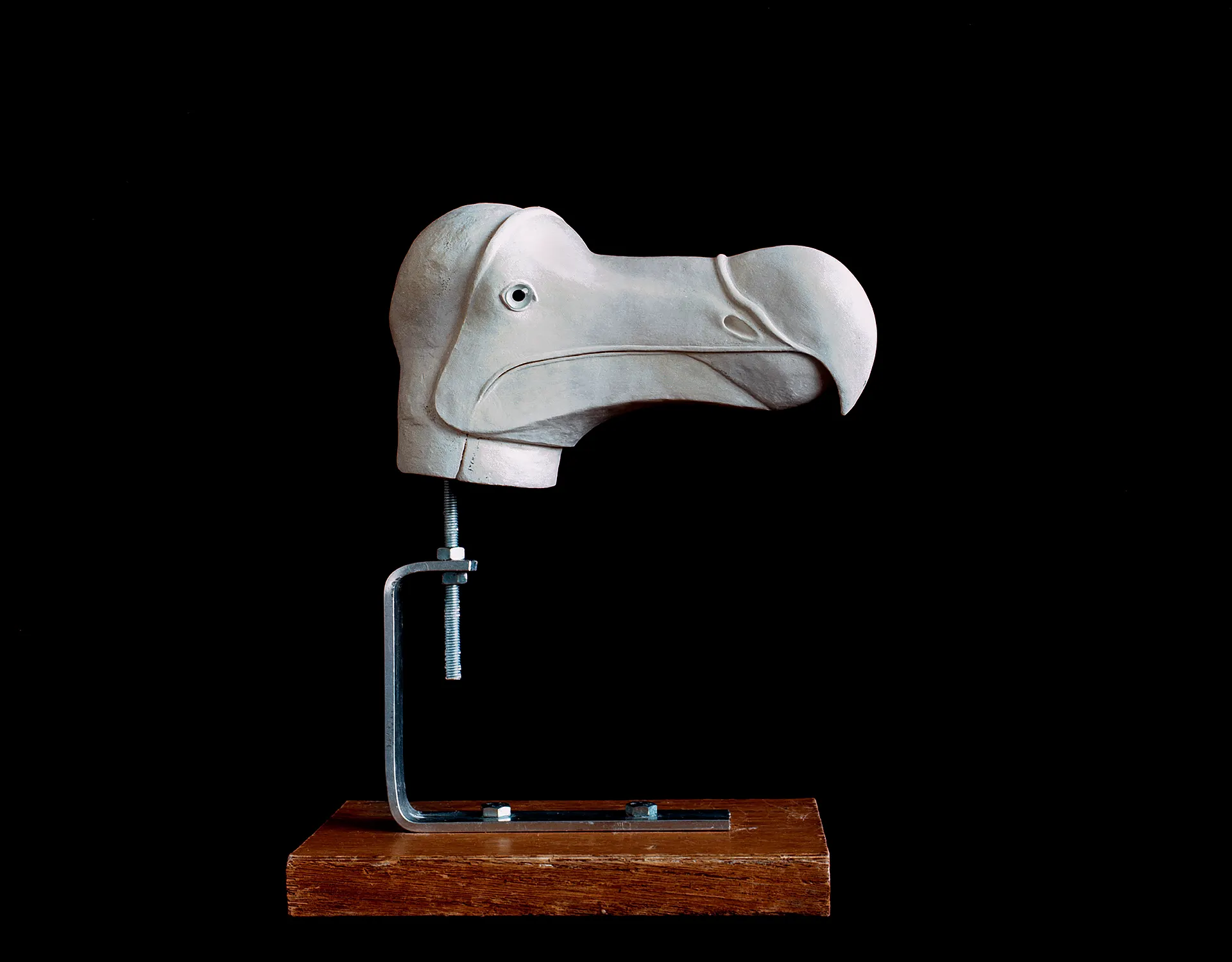
Dodo bird head sculpture carved from pale material, mounted on metal armature with clamp system attached to dark wooden base. Features distinctive curved beak, small eye, and bulbous head shape of extinct dodo against black background.
View All
6X17 cm 250° 5-PINHOLE CAMERA
A QUESTION OF BUTTERFLYNESS SCULPTURE
dodo-sculpture
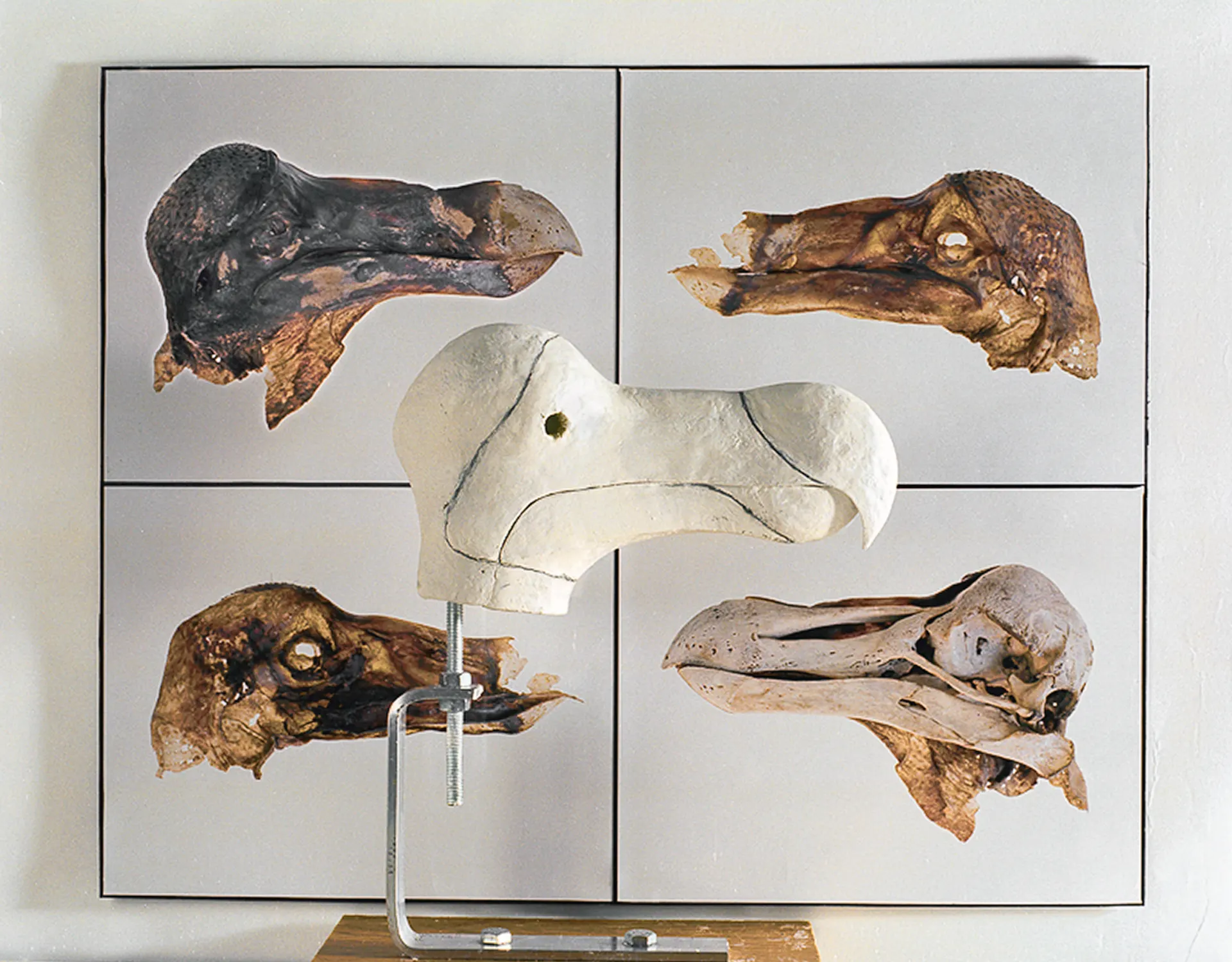
Scientific reconstruction study featuring sculpted dodo head displayed against photographic specimens of preserved skulls. Comparative presentation shows artistic interpretation process from fragmentary fossil evidence to complete three-dimensional form of extinct species.
Dodo Reconstruction In Process #1
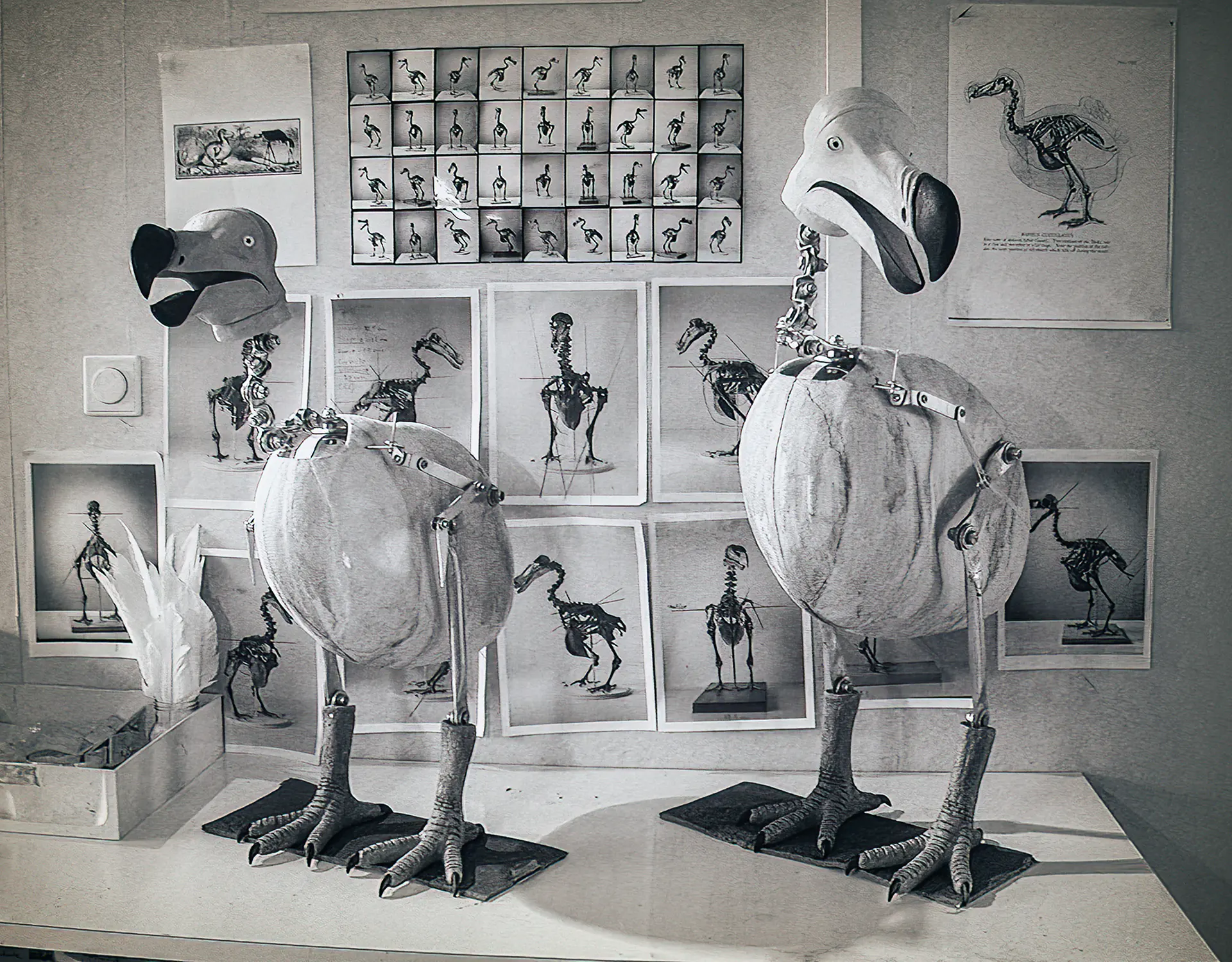
Historical museum laboratory scene featuring sculptural dodo reconstructions surrounded by extensive research documentation including sequential movement studies, skeletal photographs, and anatomical references demonstrating scientific approach to extinct species recreation.
Dodo Reconstruction In Process #2
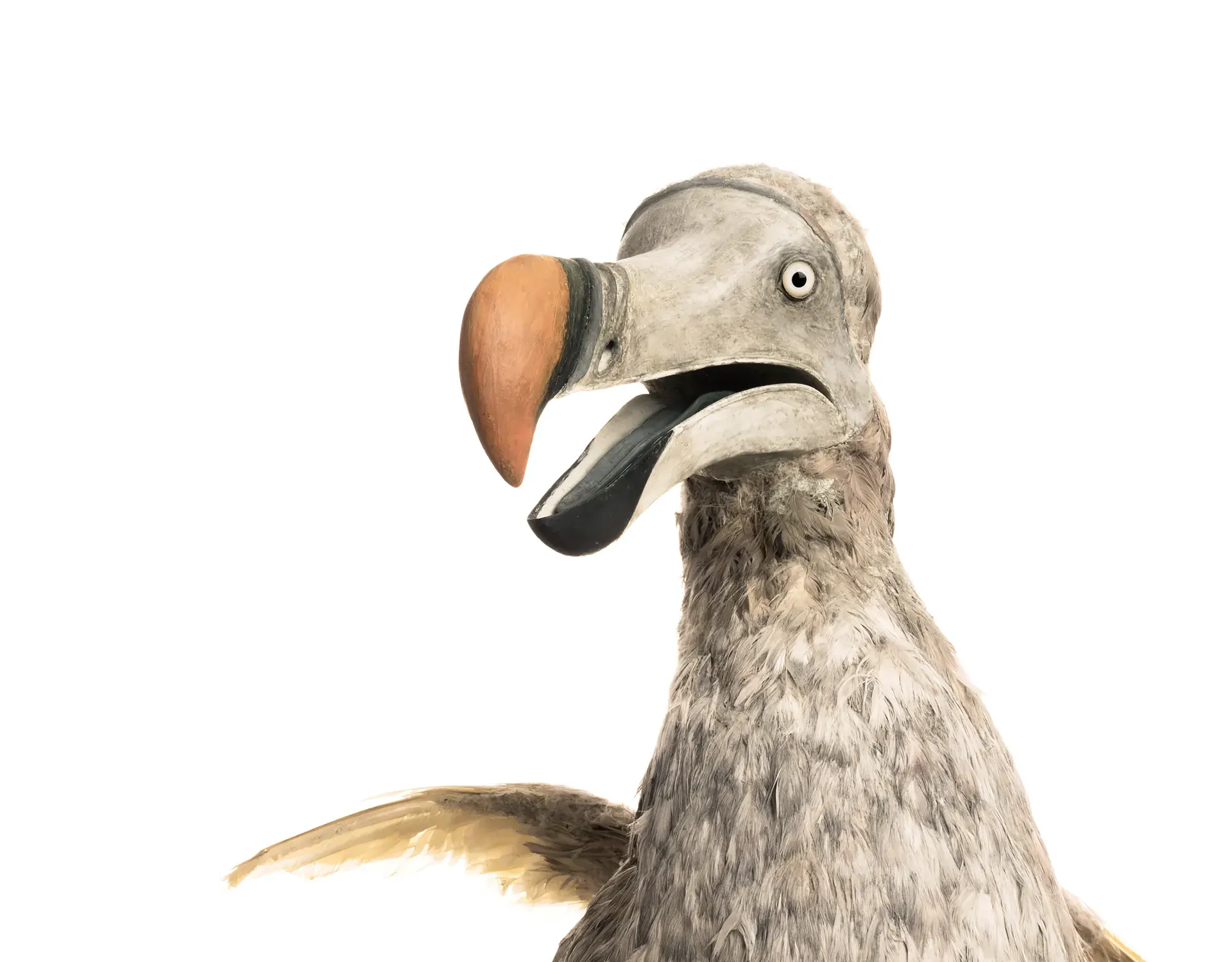
Museum-quality dodo bird reconstruction showing distinctive large curved orange-brown beak, round eye, and gray-brown plumage. Detailed taxidermic or sculptural model demonstrates scientific interpretation of extinct species' appearance based on historical evidence.
Dodo Male Reconstruction Image #1
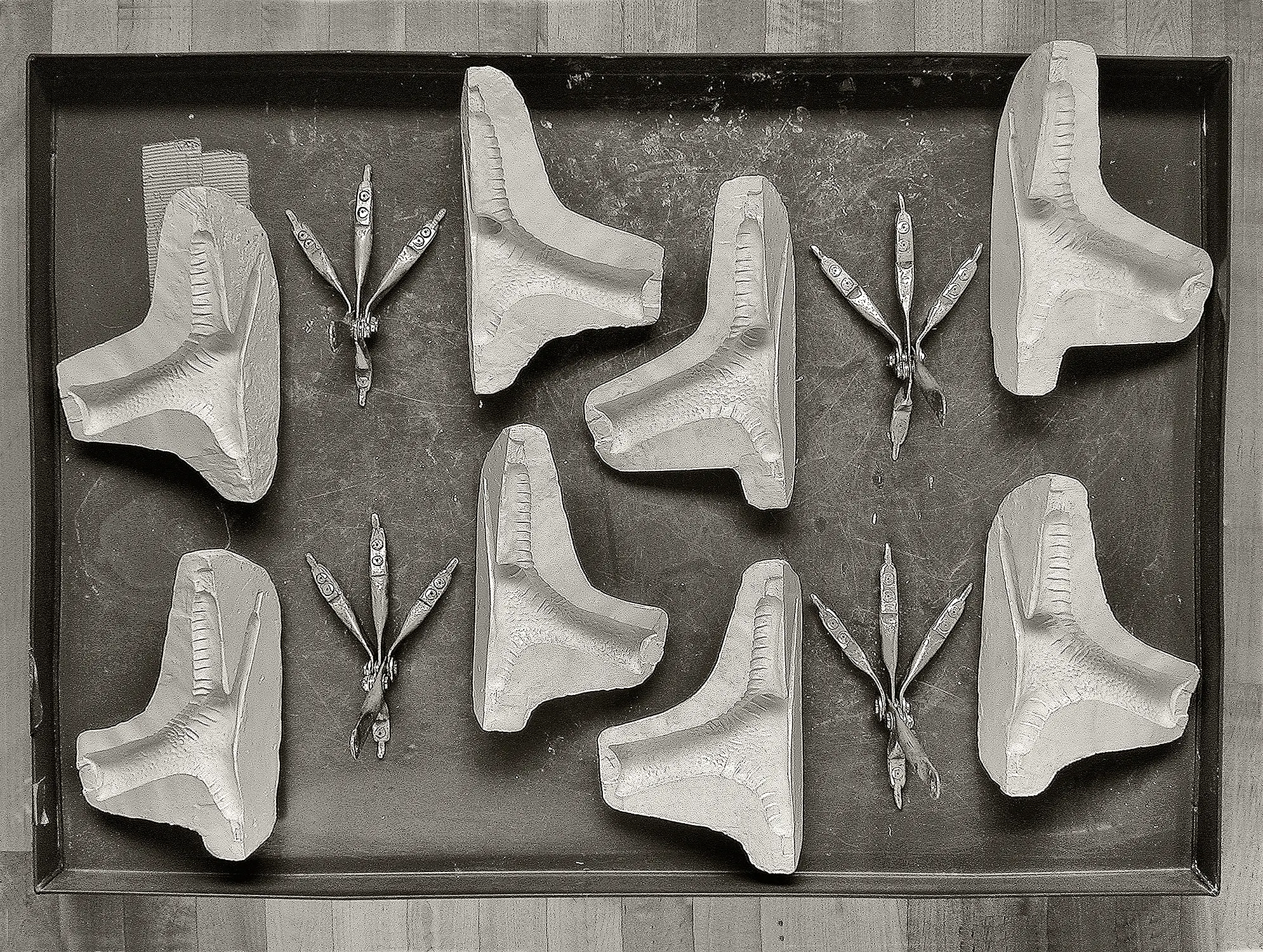
Museum preparation tray displaying multiple sculptural dodo feet reproductions with characteristic robust three-toed design and prominent claws. Systematic arrangement shows various completion stages and individual anatomical elements for scientific reconstruction of extinct bird species.
dodo-feet sculpture-1
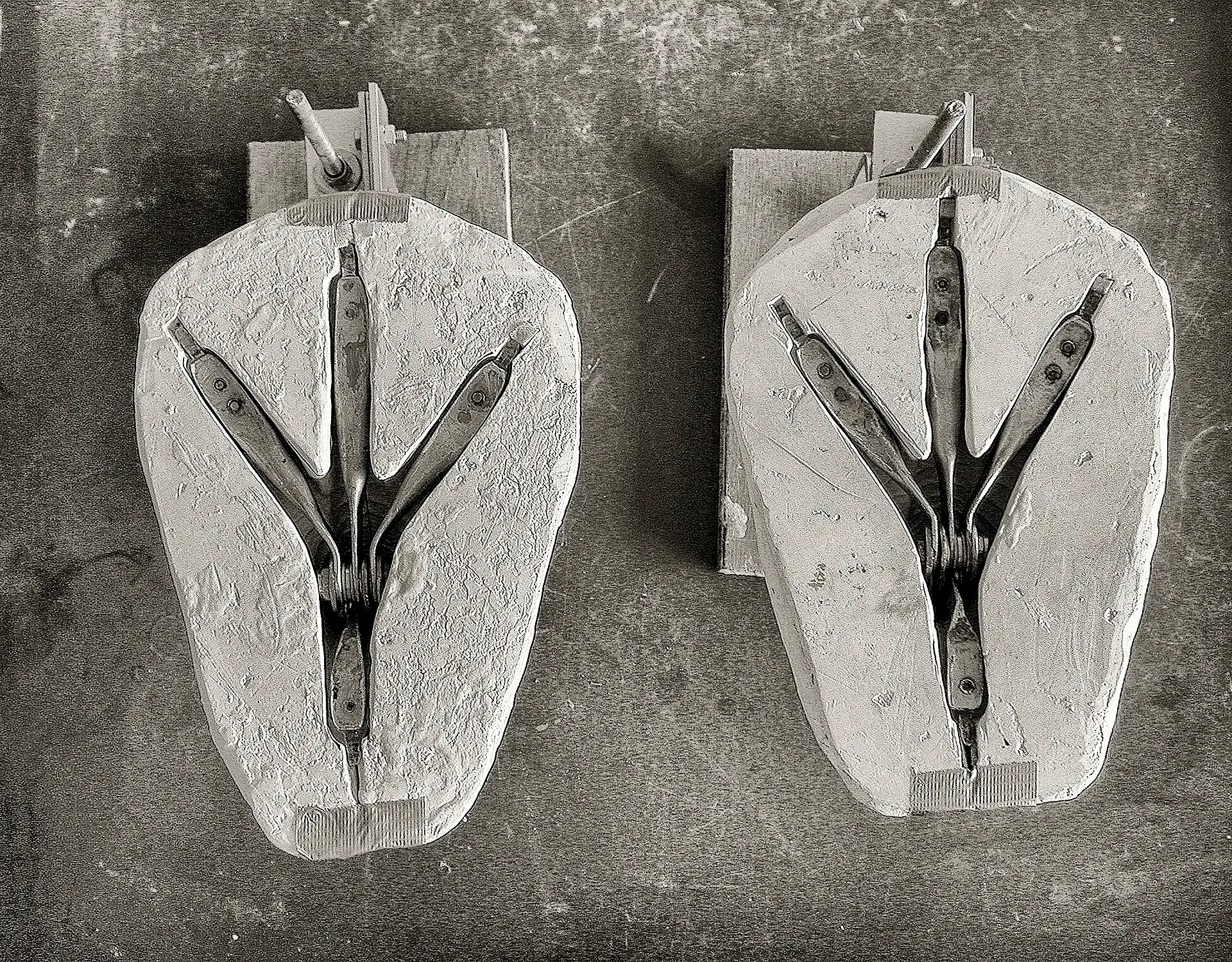
Industrial casting molds displaying dodo foot impressions with precision hardware and measurement tools. Professional museum equipment demonstrates technical process for creating accurate anatomical reproductions of extinct bird species through systematic moldmaking techniques.
Dodo Reconstruction Process
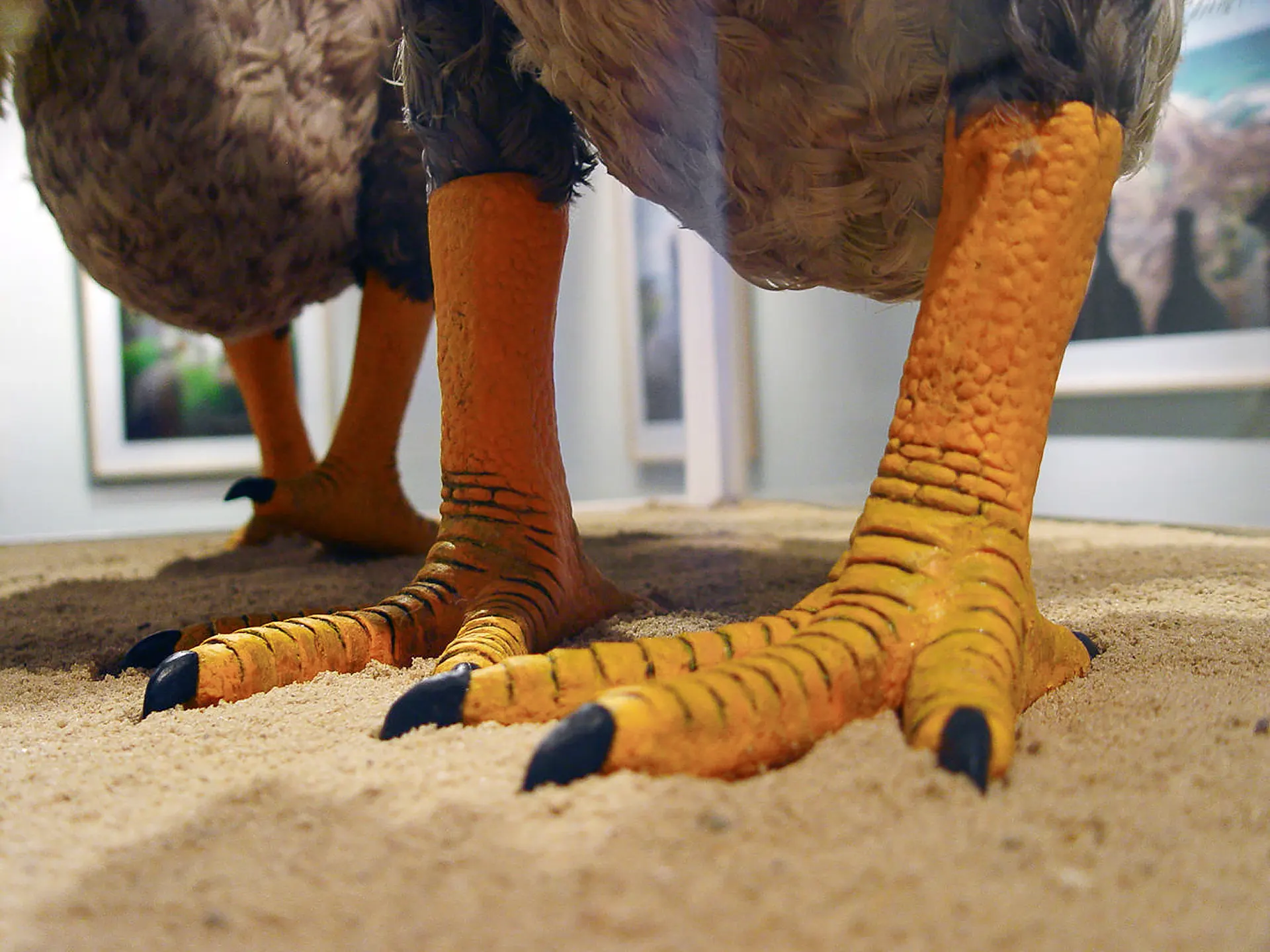
Close-up photograph of reconstructed dodo bird feet showing thick orange-yellow scaled legs and three-toed feet with black claws. Museum display model demonstrates robust anatomical features of extinct flightless bird in indoor exhibition setting.
Dodo Bird Models, Bonni Benrubi Gallery, 2015
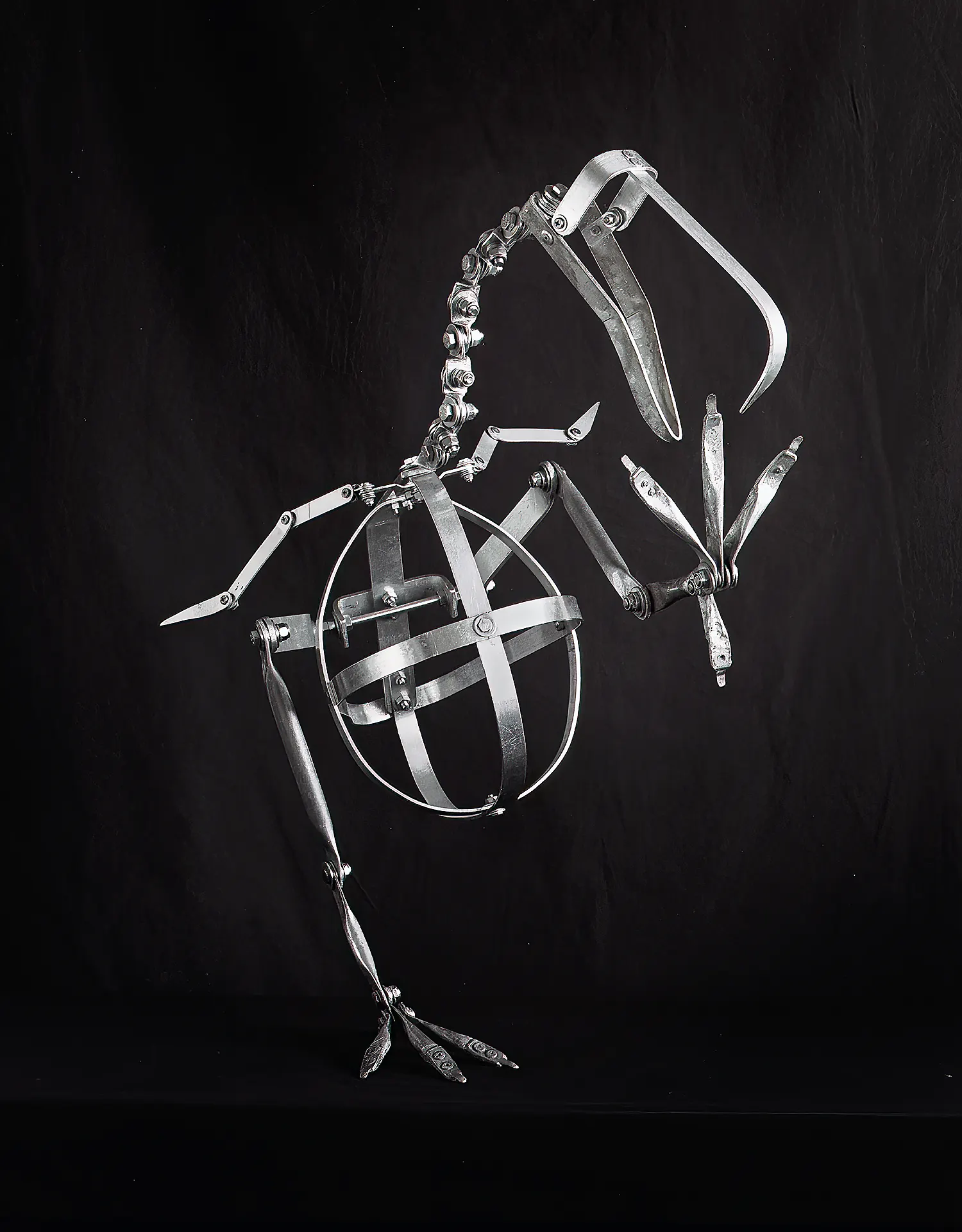
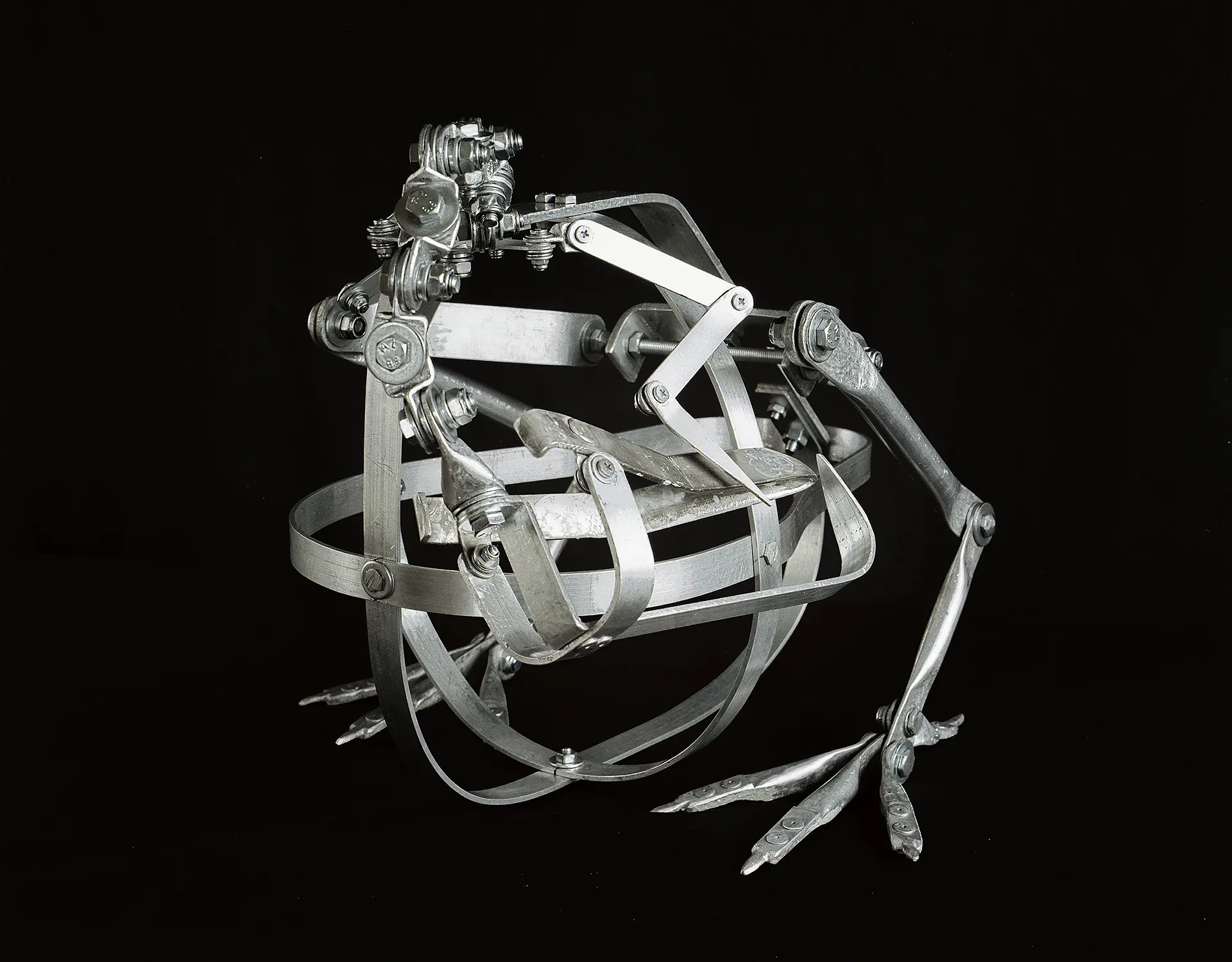
Black and white photograph of complex metal armature with adjustable joints and spherical cage designed for supporting dodo bird reconstruction. Professional museum-quality framework with precision hardware for positioning and articulating extinct species display model.
Dodo mechanical sculptural armature #1
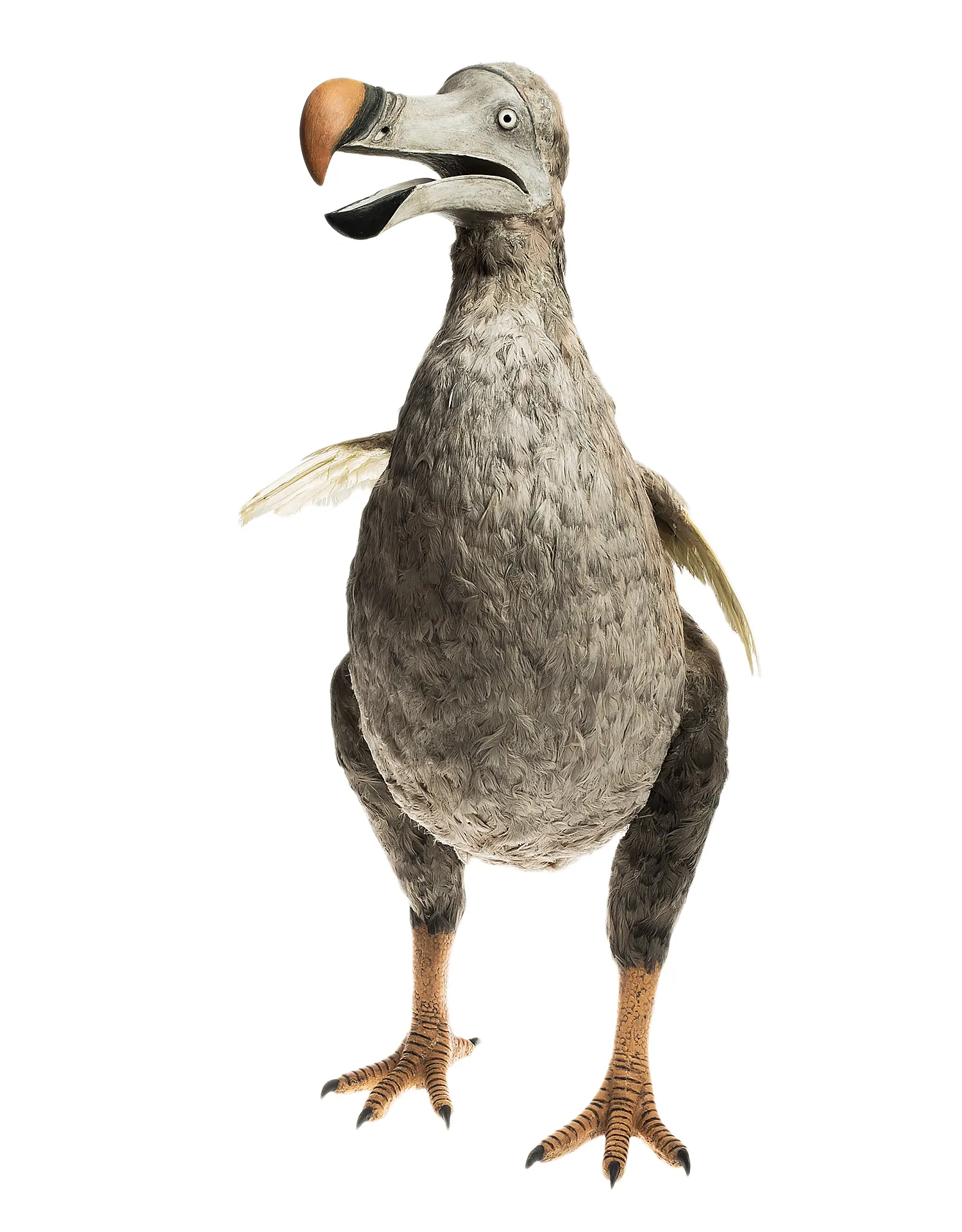
Full-body dodo specimen reconstruction featuring characteristic hooked beak coloration, varied feather textures, substantial build, and powerful scaled legs. Museum display model represents contemporary scientific understanding of extinct Mauritius bird through detailed craftsmanship and anatomical accuracy.
Dodo Male Reconstruction Image #2
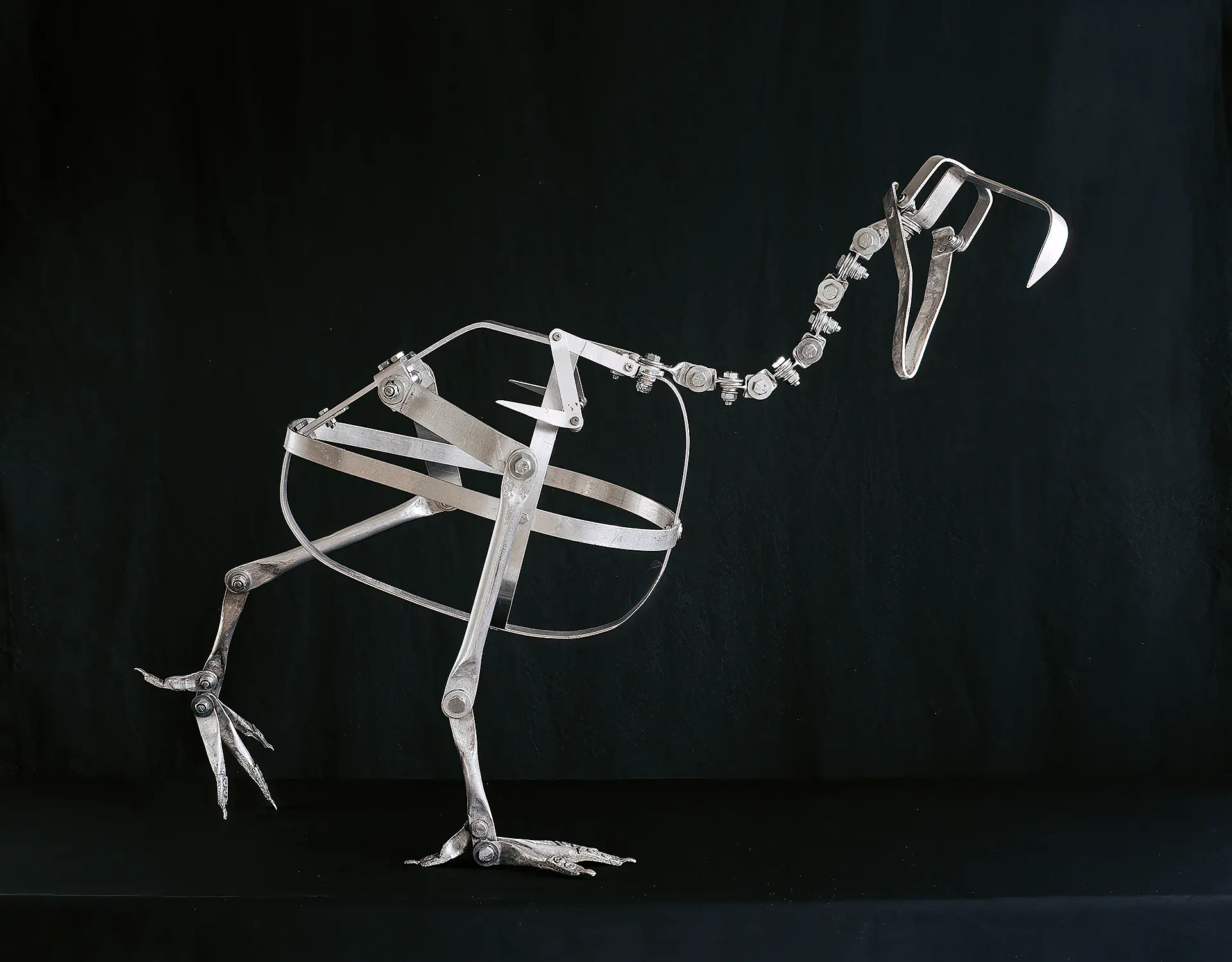
Professional mechanical framework featuring polished metal components and pivot joints for mounting dodo specimen. Museum-grade armature with central torso cage and articulated positioning elements for natural history reconstruction displays.
Dodo mechanical sculptural armature #2
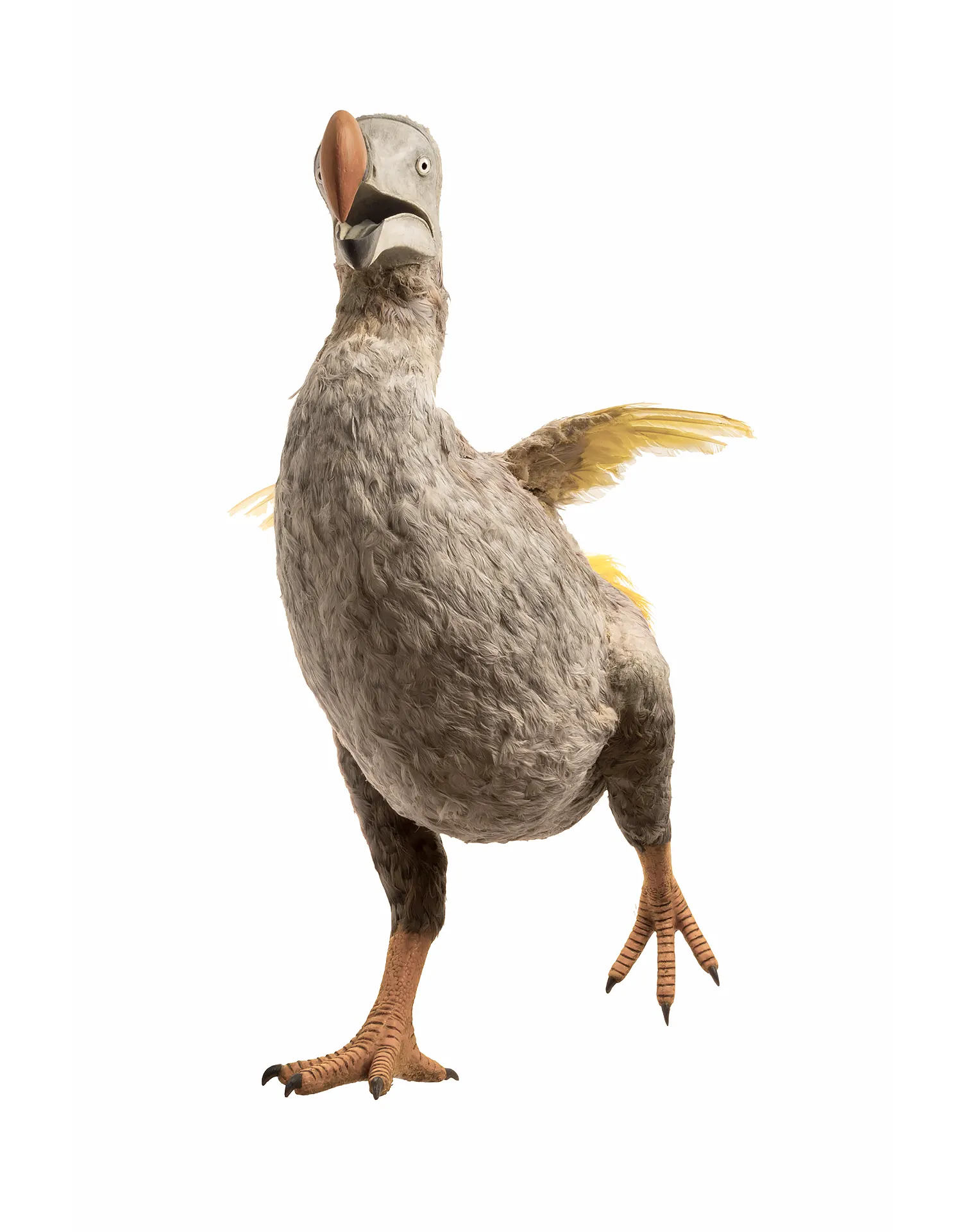
Museum-quality dodo bird reconstruction in profile showing upward-tilted head pose with characteristic large curved beak, gray-brown plumage, and golden wing feathers. Professional model demonstrates alert posture of extinct flightless bird with detailed anatomical accuracy.
Dodo Male Reconstruction Image #3
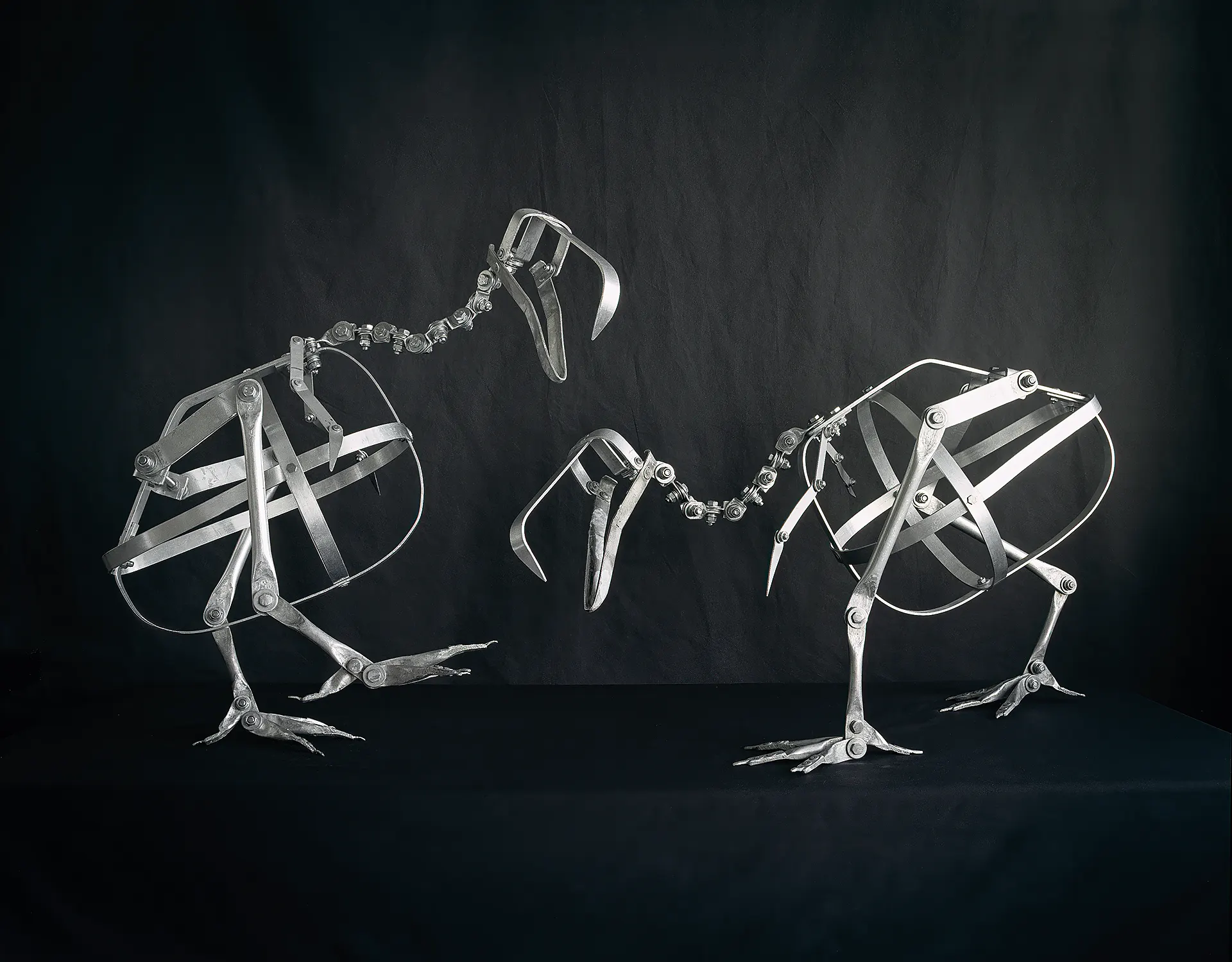
Pair of sophisticated mechanical frameworks featuring polished metal components and pivot joints designed for mounting dodo specimens. Museum-grade armatures with central torso cages and articulated positioning elements positioned to suggest specimen interaction capabilities.
Dodo mechanical sculptural armatures #3
Detailed dodo specimen reconstruction displaying iconic hooked beak coloration, varied feather textures, and substantial body proportions. Museum display model represents scientific interpretation of extinct Mauritius bird through meticulous craftsmanship and anatomical study.
Dodo Male Reconstruction Image #4
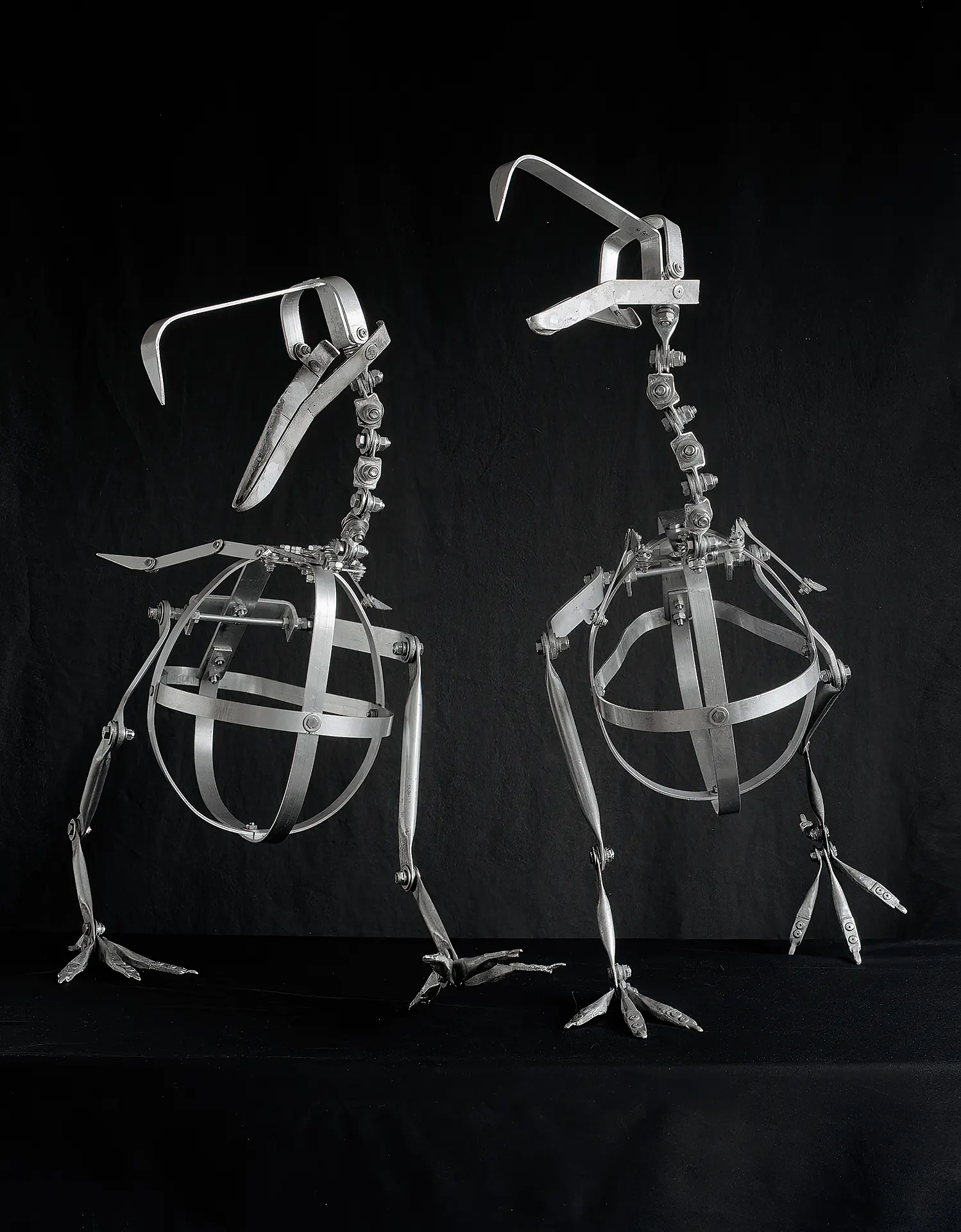
Pair of sophisticated mechanical frameworks featuring polished metal construction with complete bird-form armatures including cage torsos, flexible neck supports, and detailed leg assemblies. Museum-grade mounting systems positioned to suggest specimen interaction capabilities for dodo reconstructions.
Dodo mechanical sculptural armatures #4
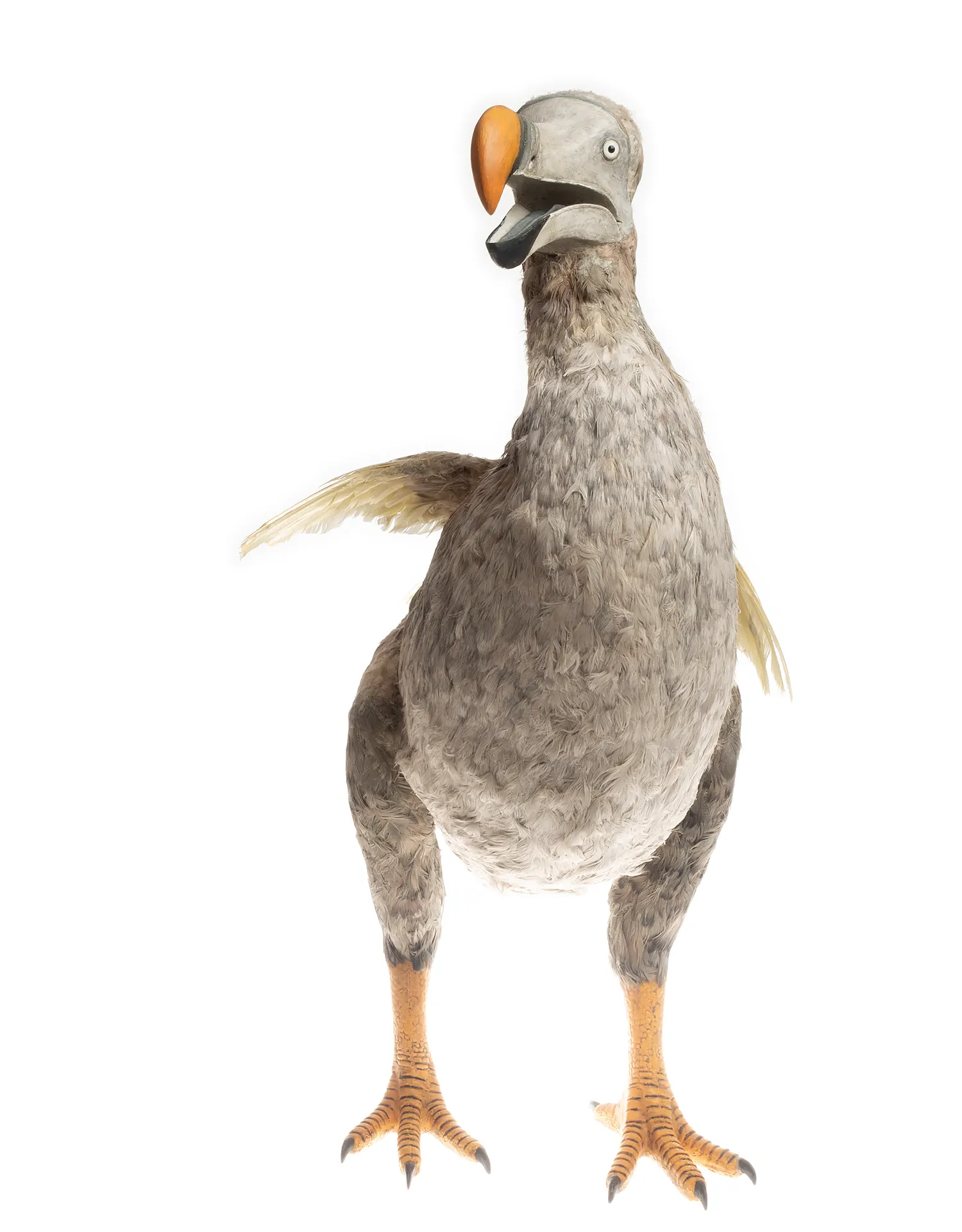
Full-body dodo specimen reconstruction displaying iconic hooked beak coloration, varied feather textures, robust build, and powerful orange scaled legs with clawed feet. Museum display model represents comprehensive scientific interpretation of extinct Mauritius bird through detailed craftsmanship.
Dodo Male Reconstruction Image #5
Intricate mechanical framework featuring elaborate polished metal construction with intersecting cage rings, articulated joints, and hydraulic systems. Museum-grade precision armature demonstrating advanced engineering for dynamic dodo specimen positioning and support.
Dodo mechanical sculptural armature #5
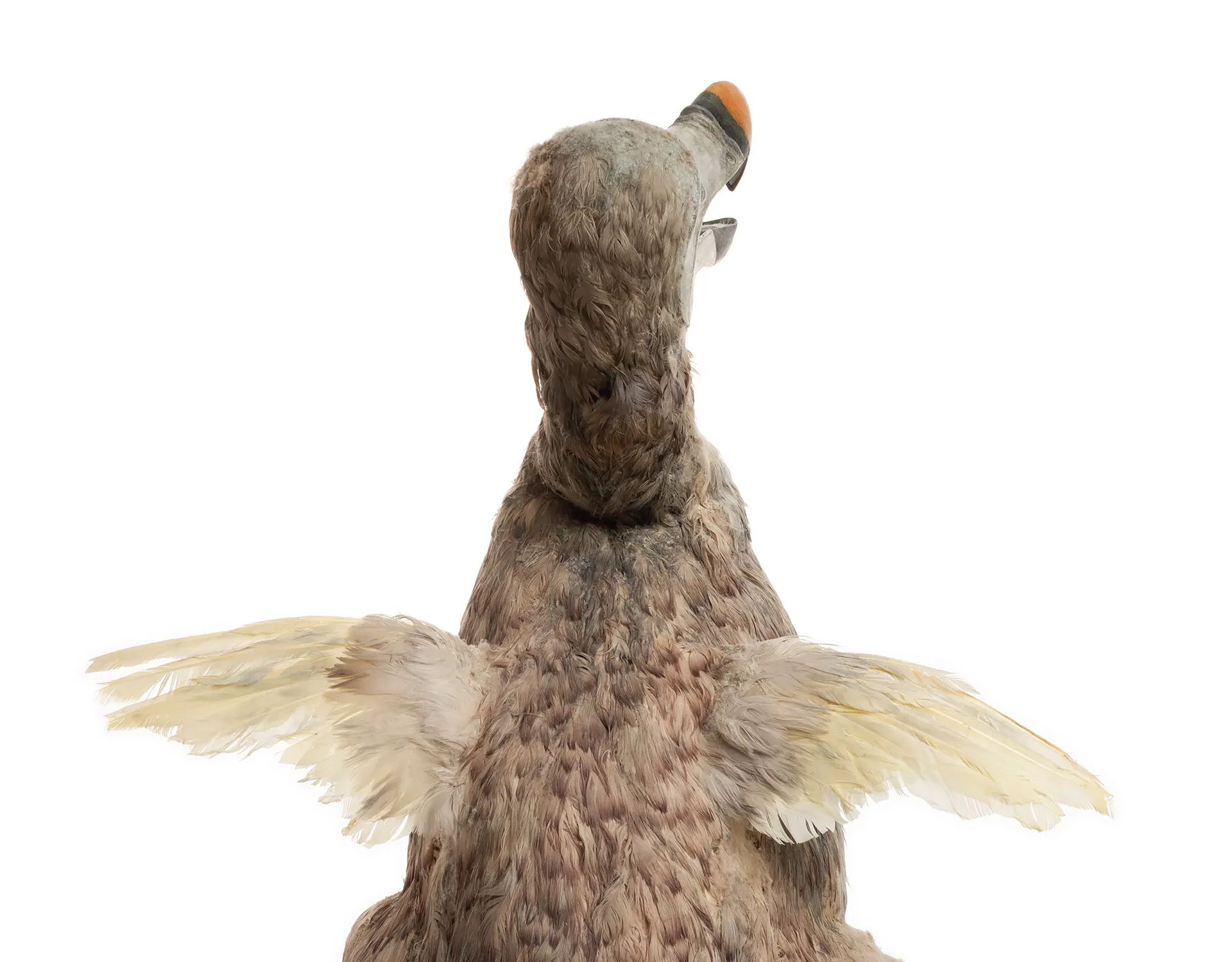
Rear three-quarter view of dodo bird reconstruction showing spread vestigial wings with pale yellow flight feathers, gray-brown body plumage, and characteristic orange beak in profile. Museum model demonstrates wing structure and robust build of extinct flightless species.
Dodo Male Reconstruction Image #6
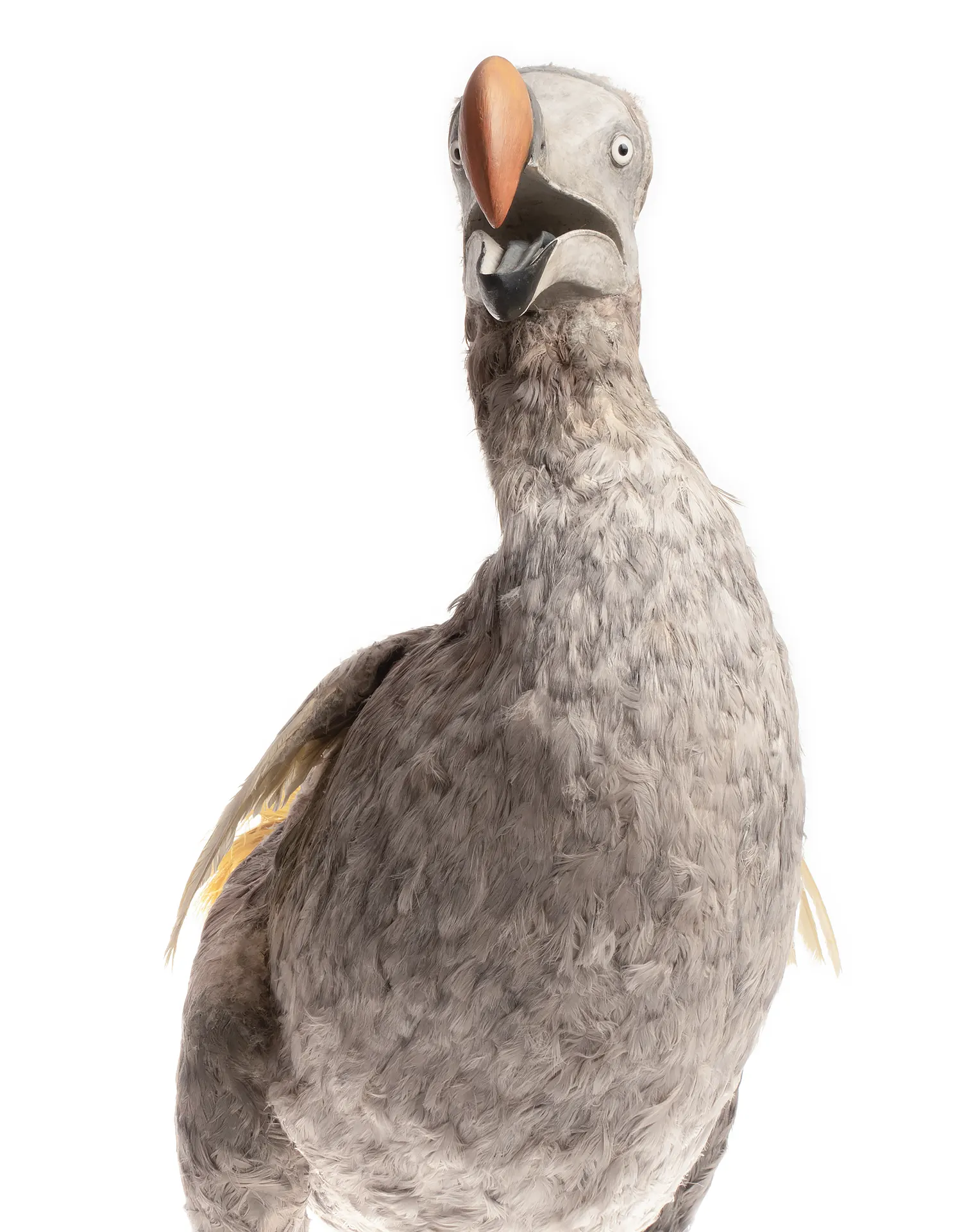
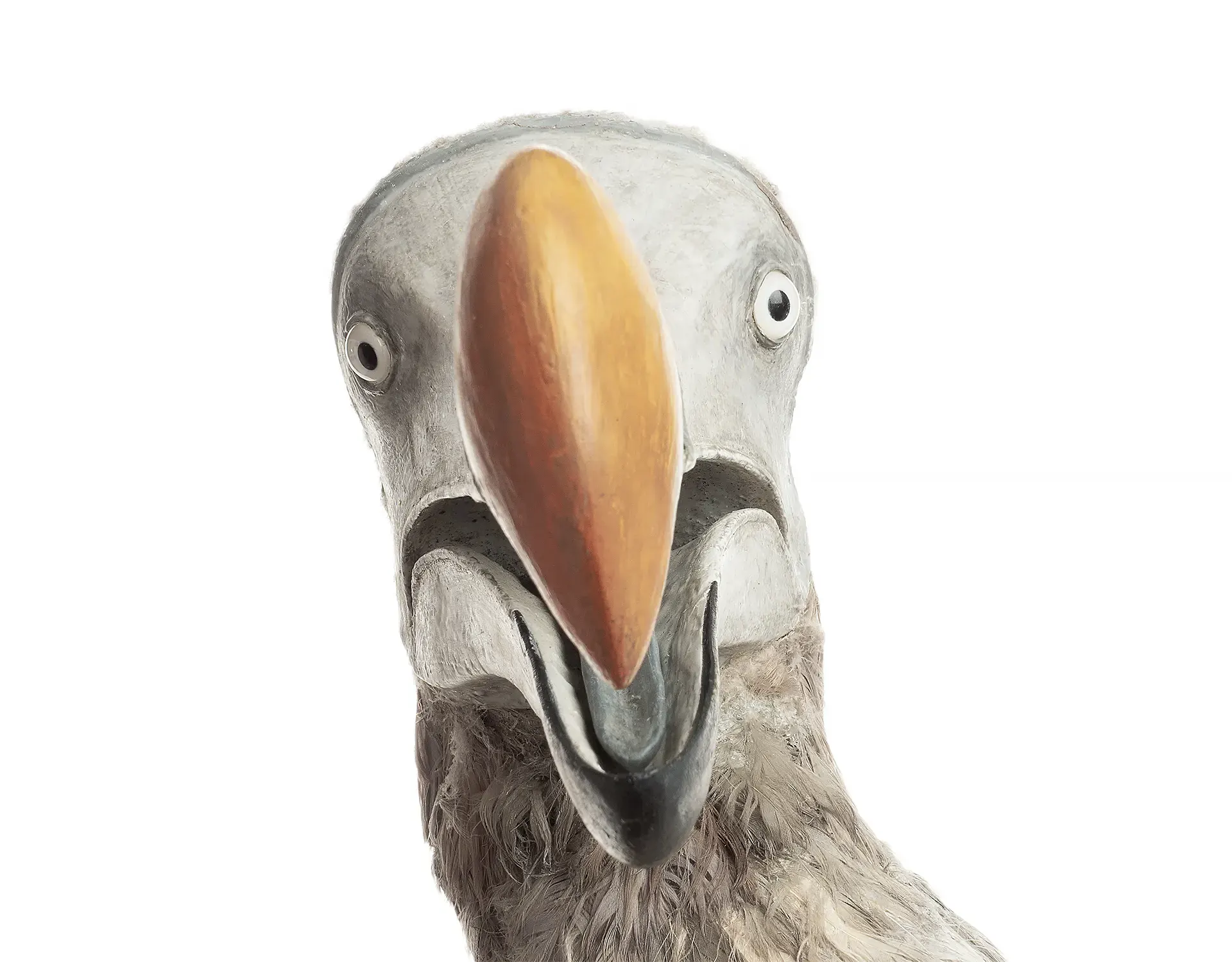
Detailed frontal view of dodo head featuring iconic oversized hooked beak in golden-brown tones, bilateral round eyes, and textured pale gray facial features. Professional reconstruction illustrates distinctive cranial proportions and beak structure of extinct Mauritius bird species.
Dodo Male Reconstruction Image #7
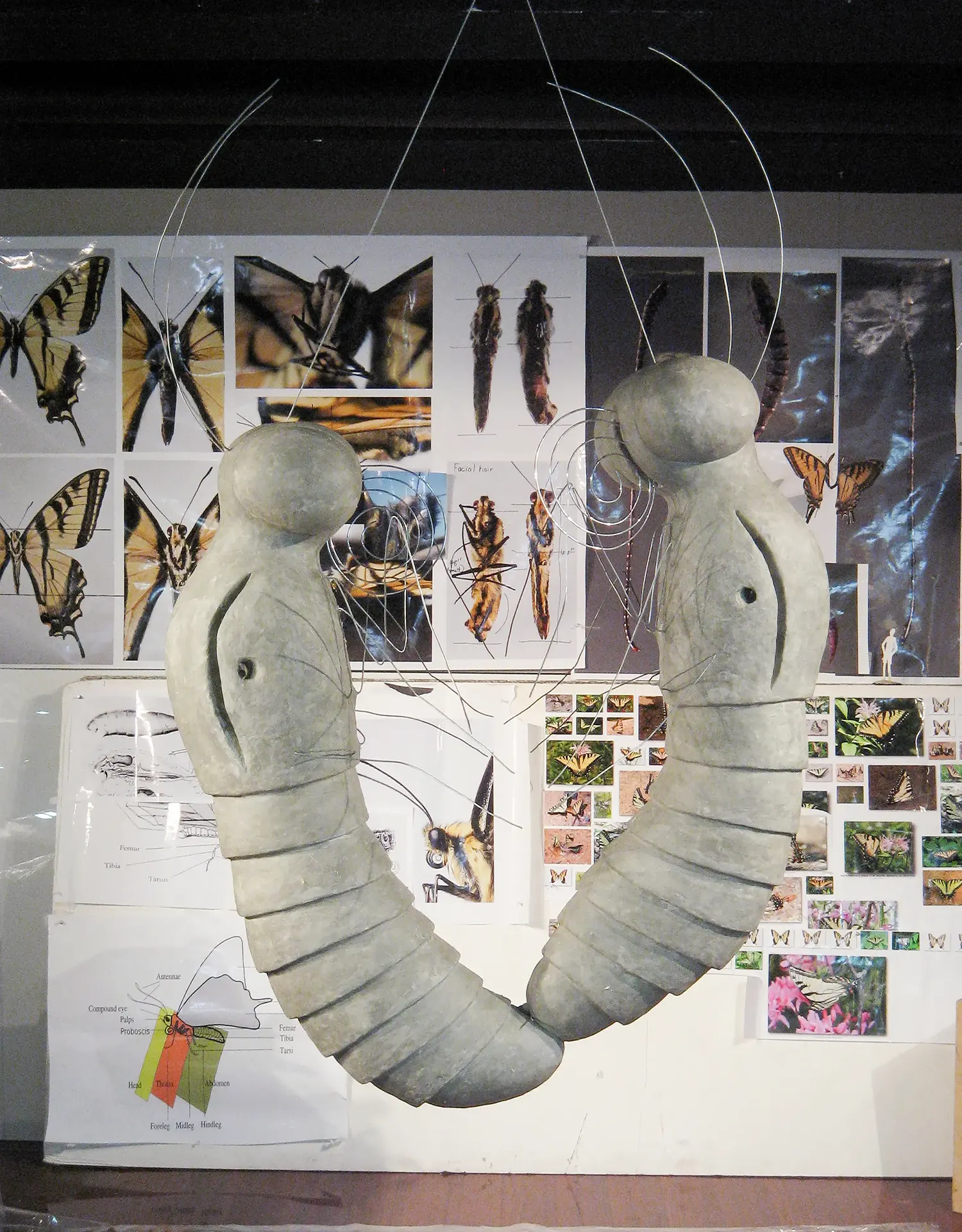
Artist studio image featuring hanging sculptural forms with bulbous heads and ring-segmented bodies displayed against extensive lepidopteran research materials. Creative workspace shows intersection of scientific butterfly documentation and artistic exploration of metamorphosis concepts through sculptural practice.
A Question of Butterflyness, Sculpture Process Image #1
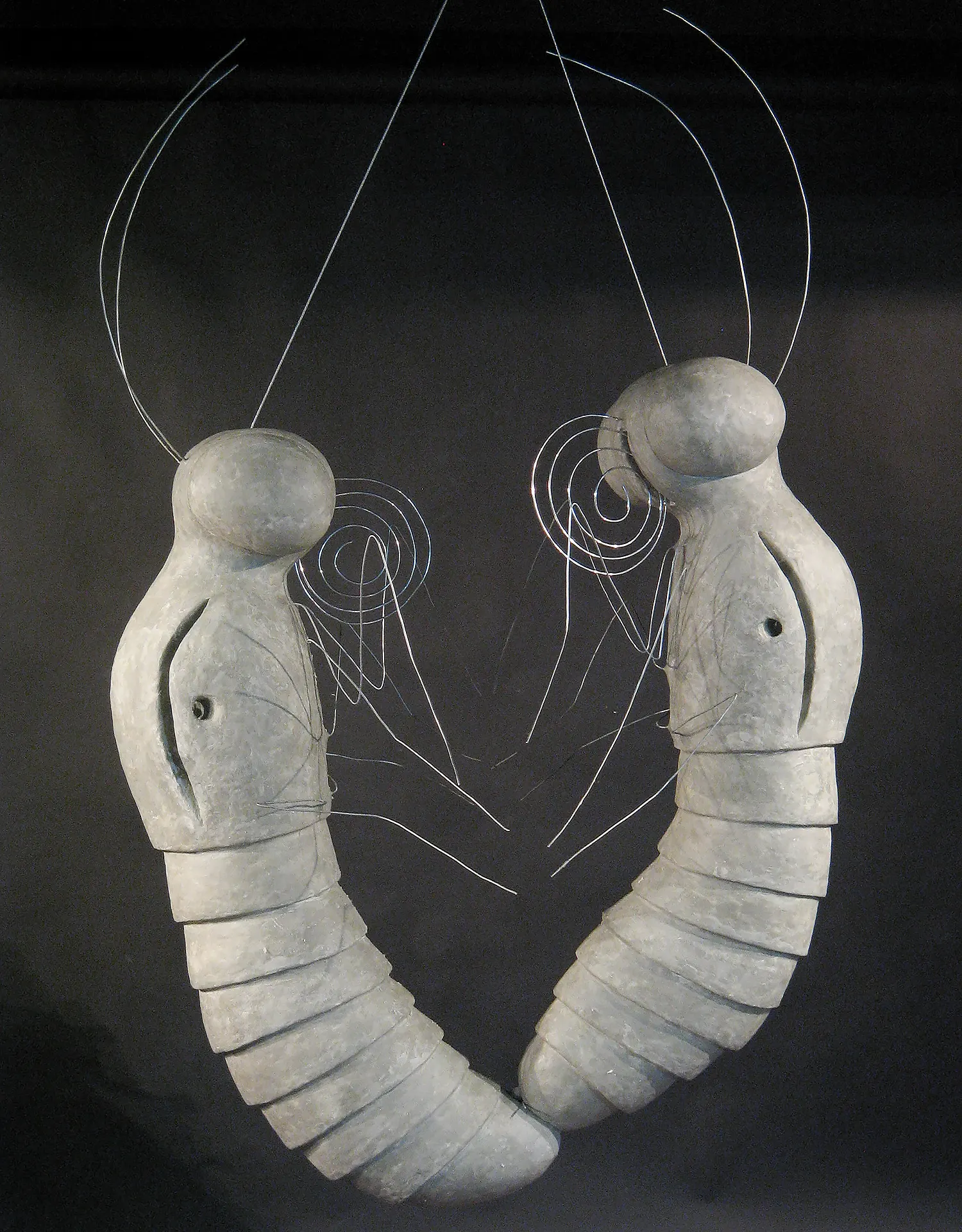
Sculptural installation featuring two suspended pale segmented forms with bulbous heads positioned in interactive pose against dark background. Linear wire elements create spiral patterns suggesting metamorphic transformation and communication between stylized larval forms.
A QUESTION OF BUTTERFLYNESS SCULPTURE Process Image #2
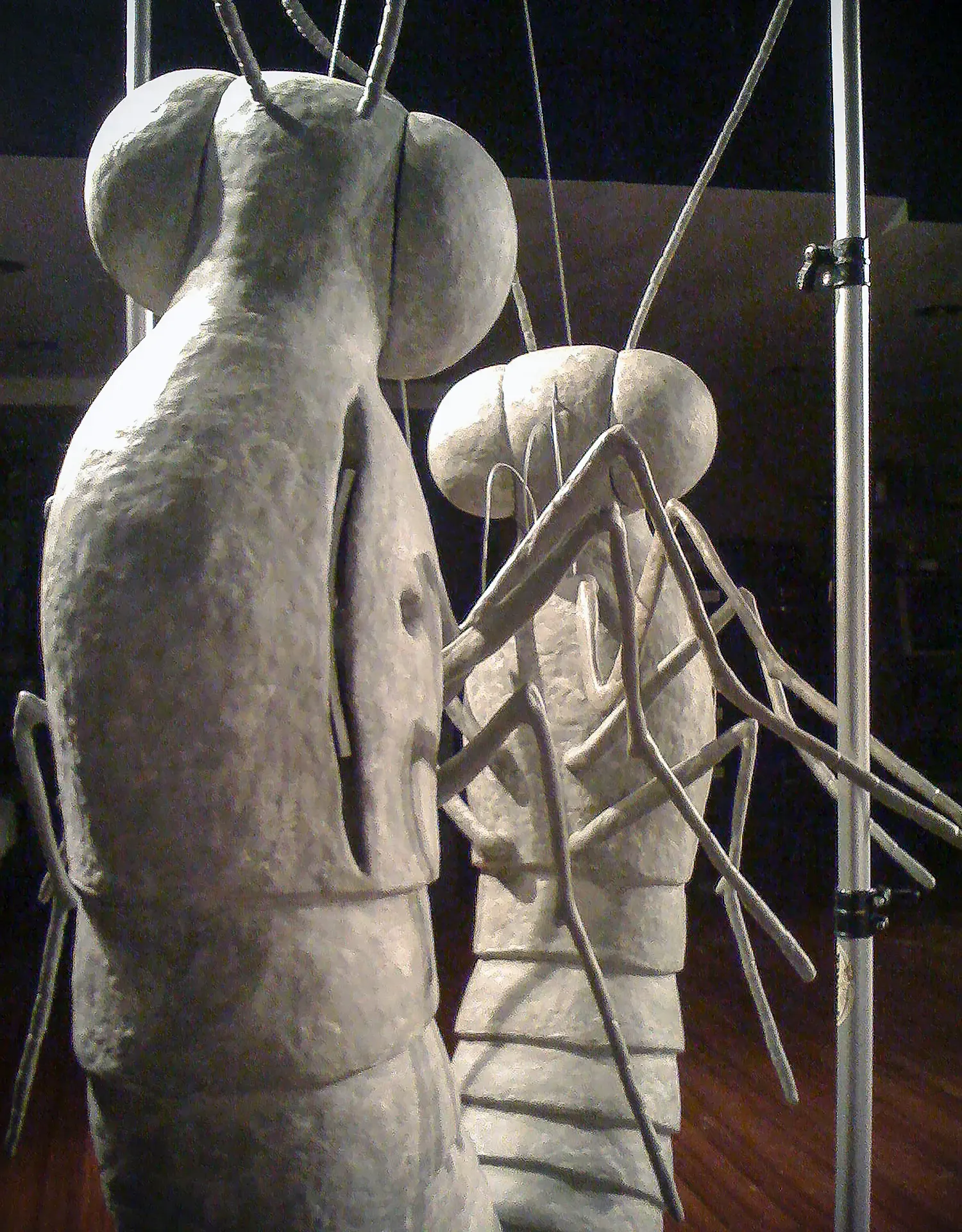
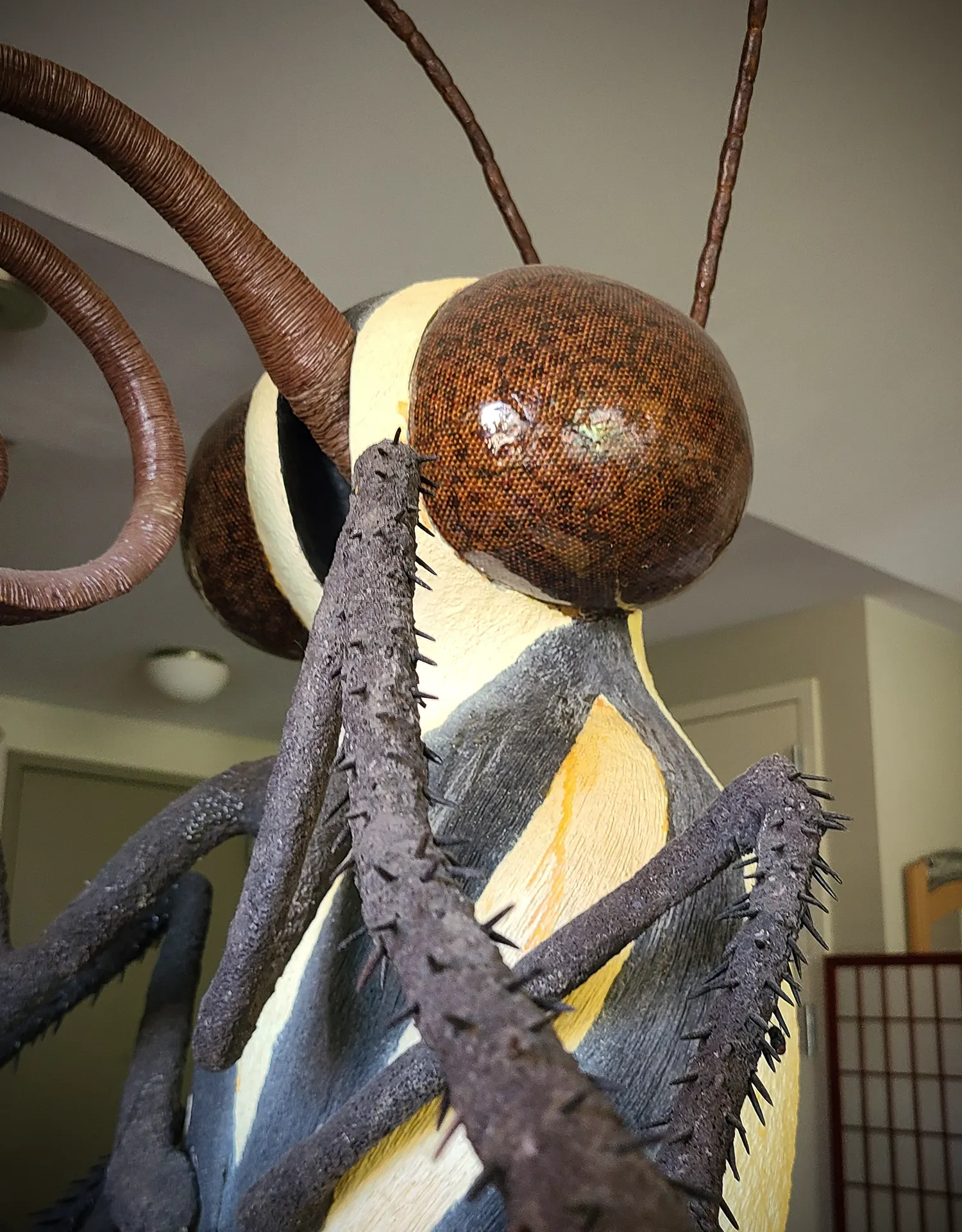
Detailed view of sculptural pair featuring rounded head forms and ring-segmented bodies with metal rod supports. Intimate positioning of pale larval-inspired sculptures demonstrates artistic exploration of lepidopteran transformation and reproductive processes through three-dimensional media.
A QUESTION OF BUTTERFLYNESS SCULPTURE Process Image #3
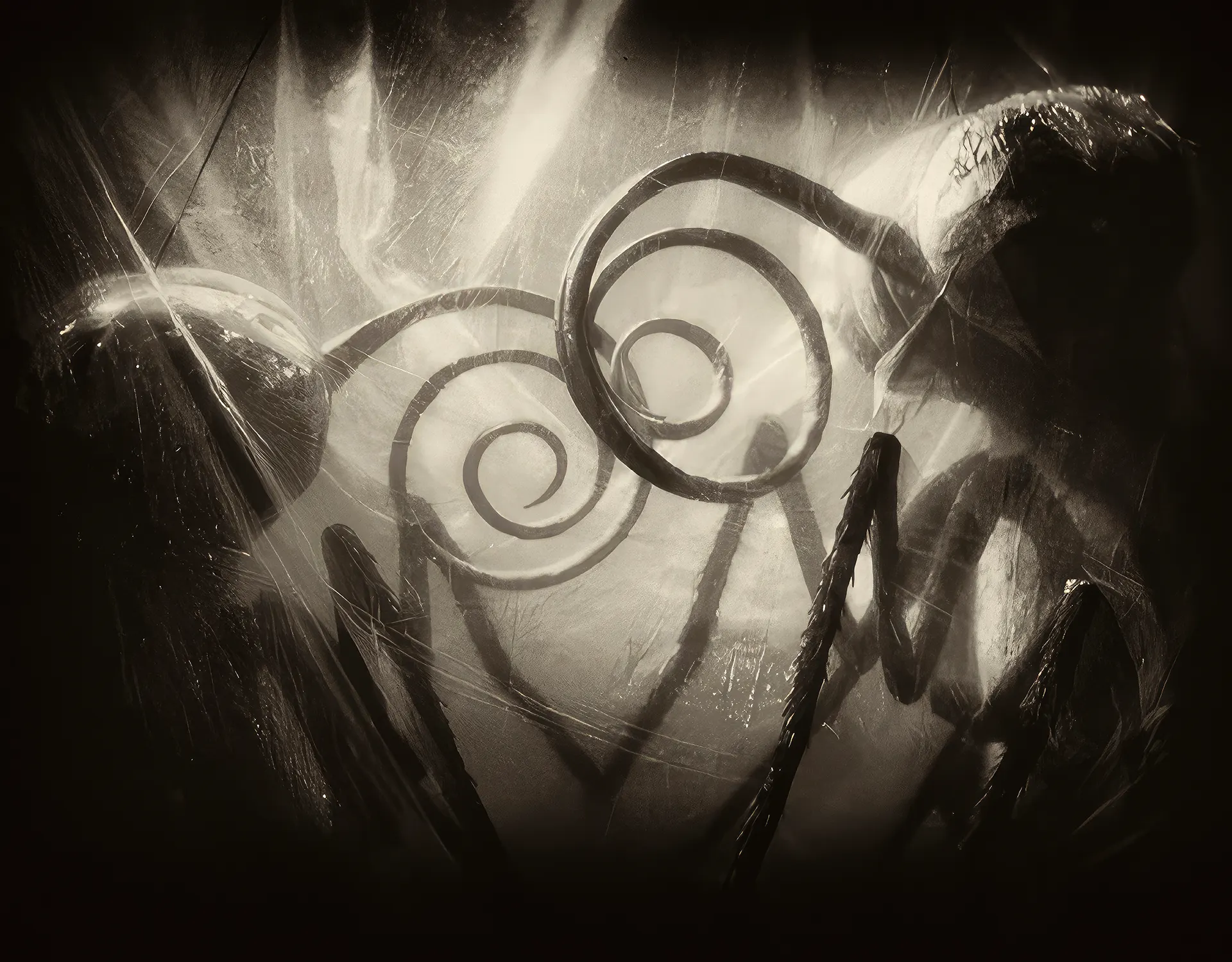
Dramatic black and white photograph of abstract sculptural composition featuring curved spiral forms with flowing organic contours. High contrast lighting emphasizes three-dimensional quality and movement within biomorphic sculpture exploring natural transformation themes.
A QUESTION OF BUTTERFLYNESS SCULPTURE Sculpture Process Image #4
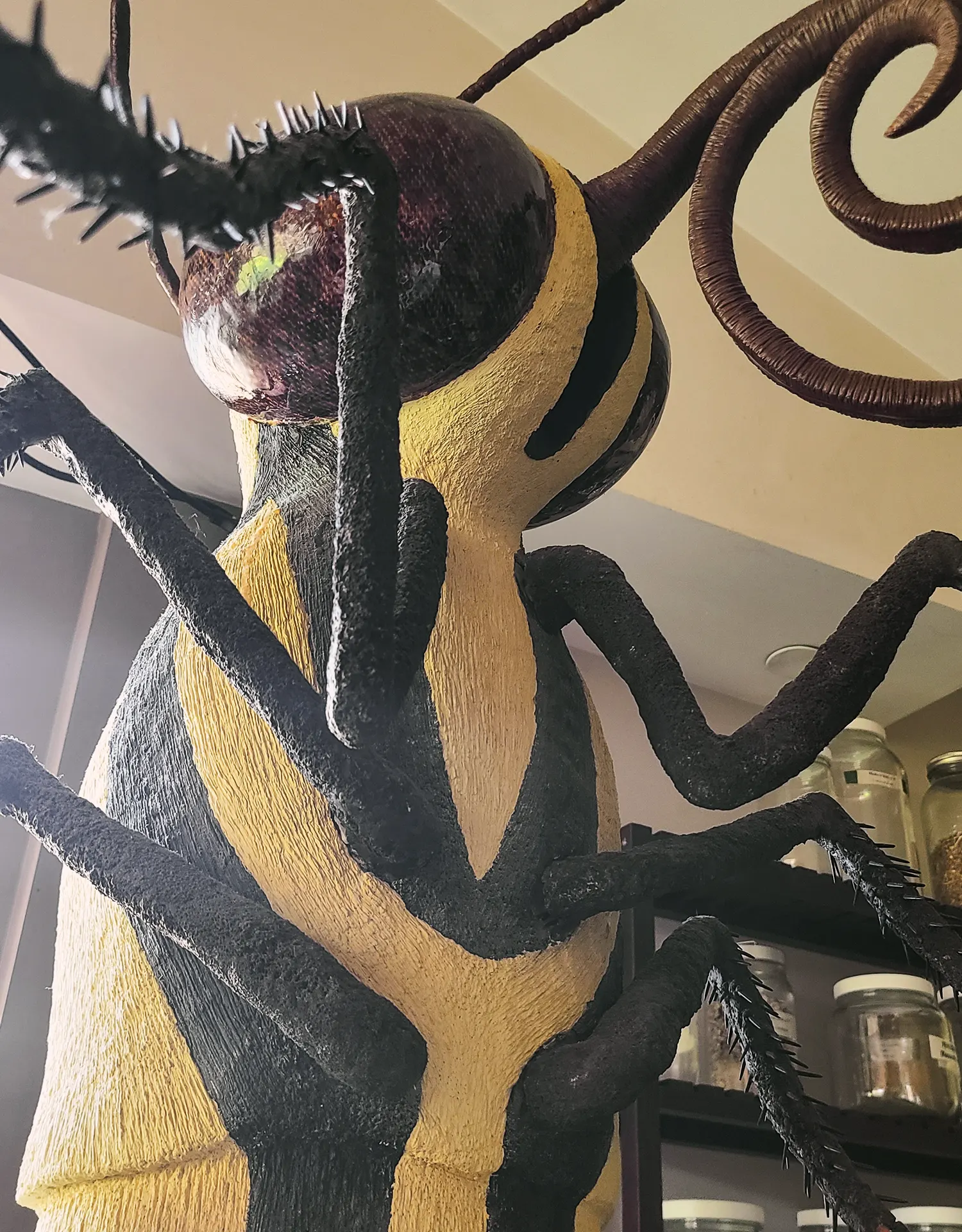
Enormous suspended caterpillar sculpture displaying characteristic warning coloration stripes and segmented body with extending prolegs. Museum installation transforms tiny larval form into monumental presence with organic textures and dynamic spatial composition.
A QUESTION OF BUTTERFLYNESS SCULPTURE Process Image #5
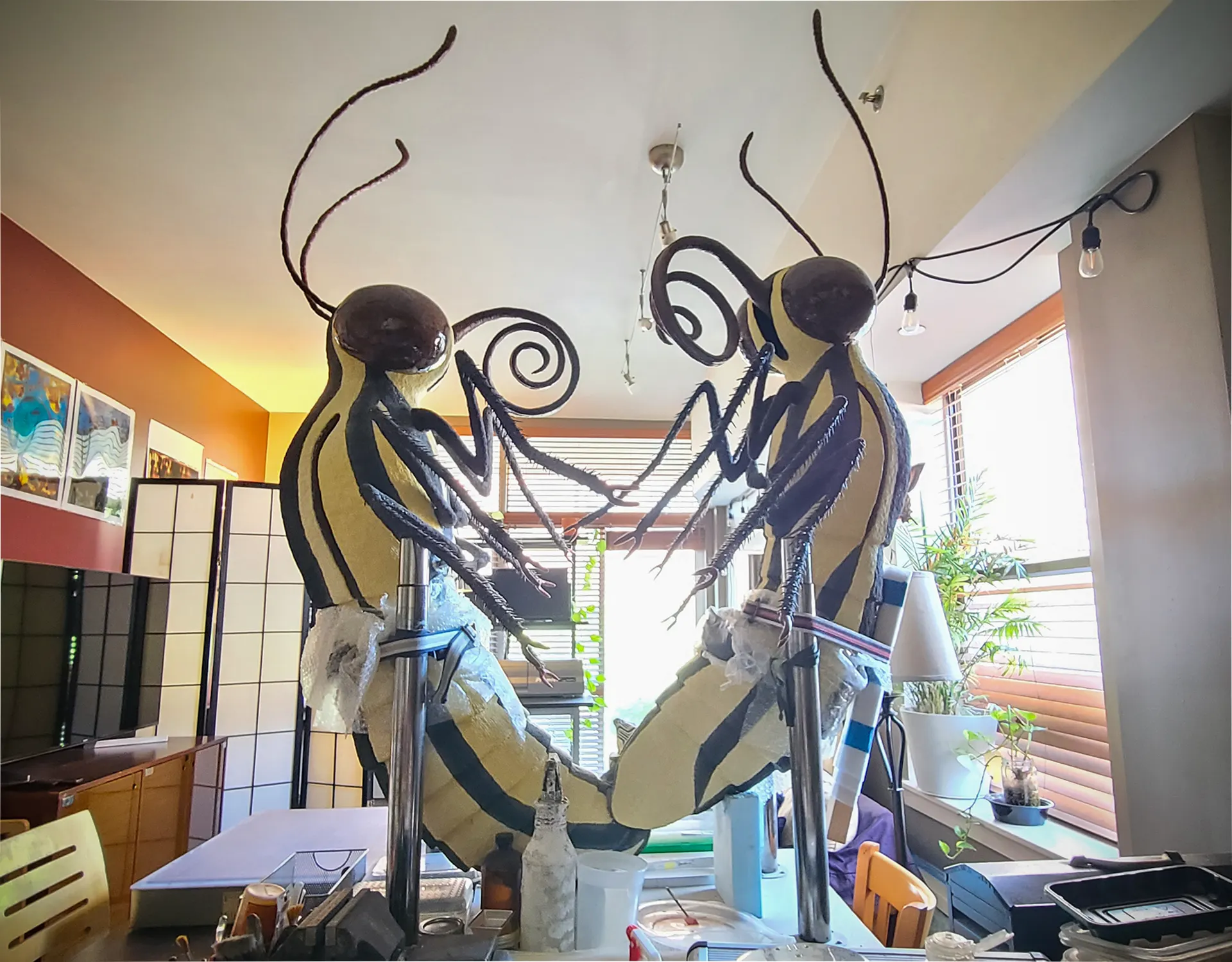
Sculptural installation in residential space featuring two suspended pale forms with segmented bodies, black striping, and curved spiral appendages positioned in interactive pose. Large-scale creatures with bulbous heads transform domestic interior into otherworldly environment.
A QUESTION OF BUTTERFLYNESS SCULPTURE Process Image #6
Enormous suspended caterpillar sculpture part 2displaying characteristic warning coloration stripes and segmented body with extending prolegs. Museum installation transforms tiny larval form into monumental presence with organic textures and dynamic spatial composition.
A QUESTION OF BUTTERFLYNESS SCULPTURE Process Image #7
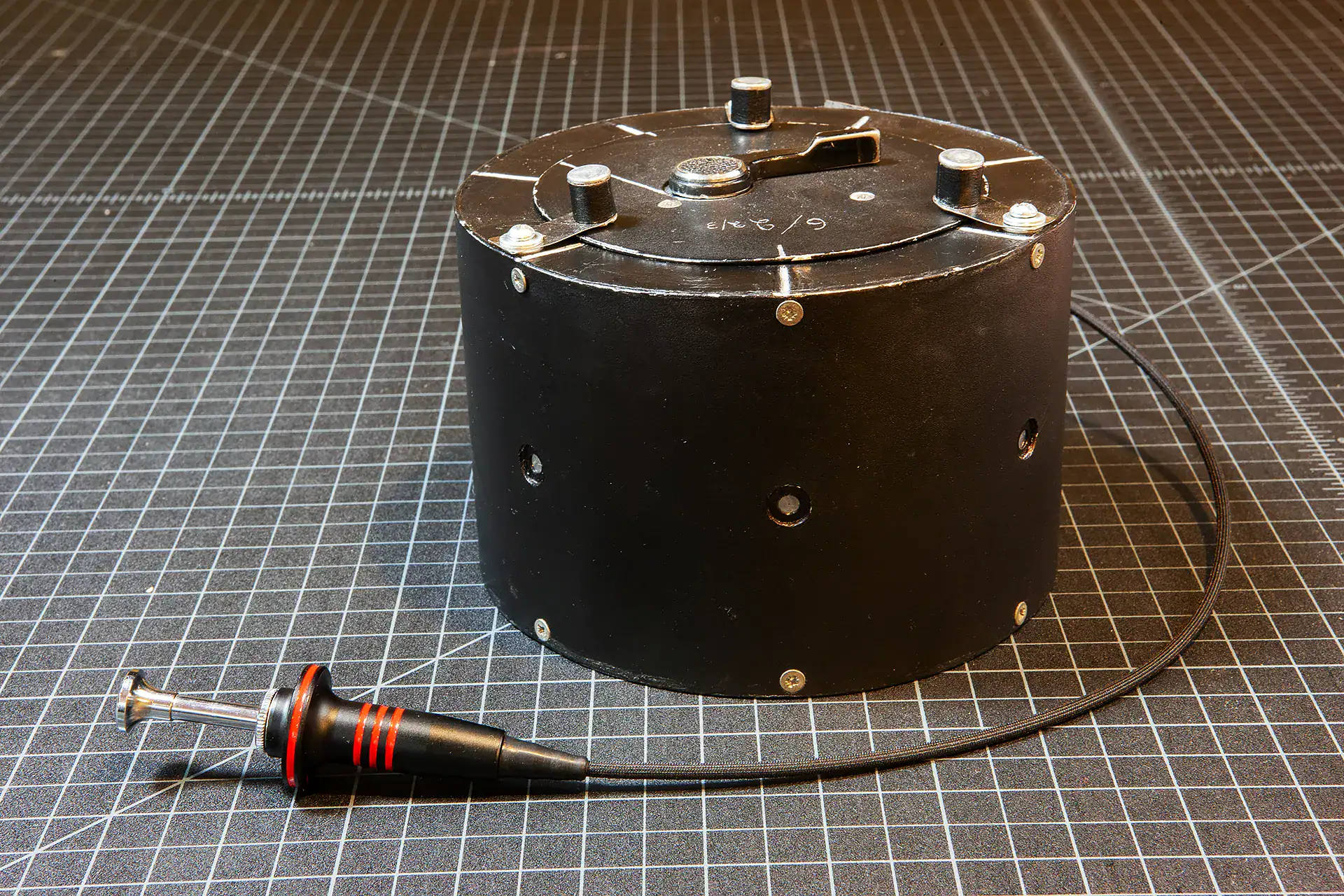
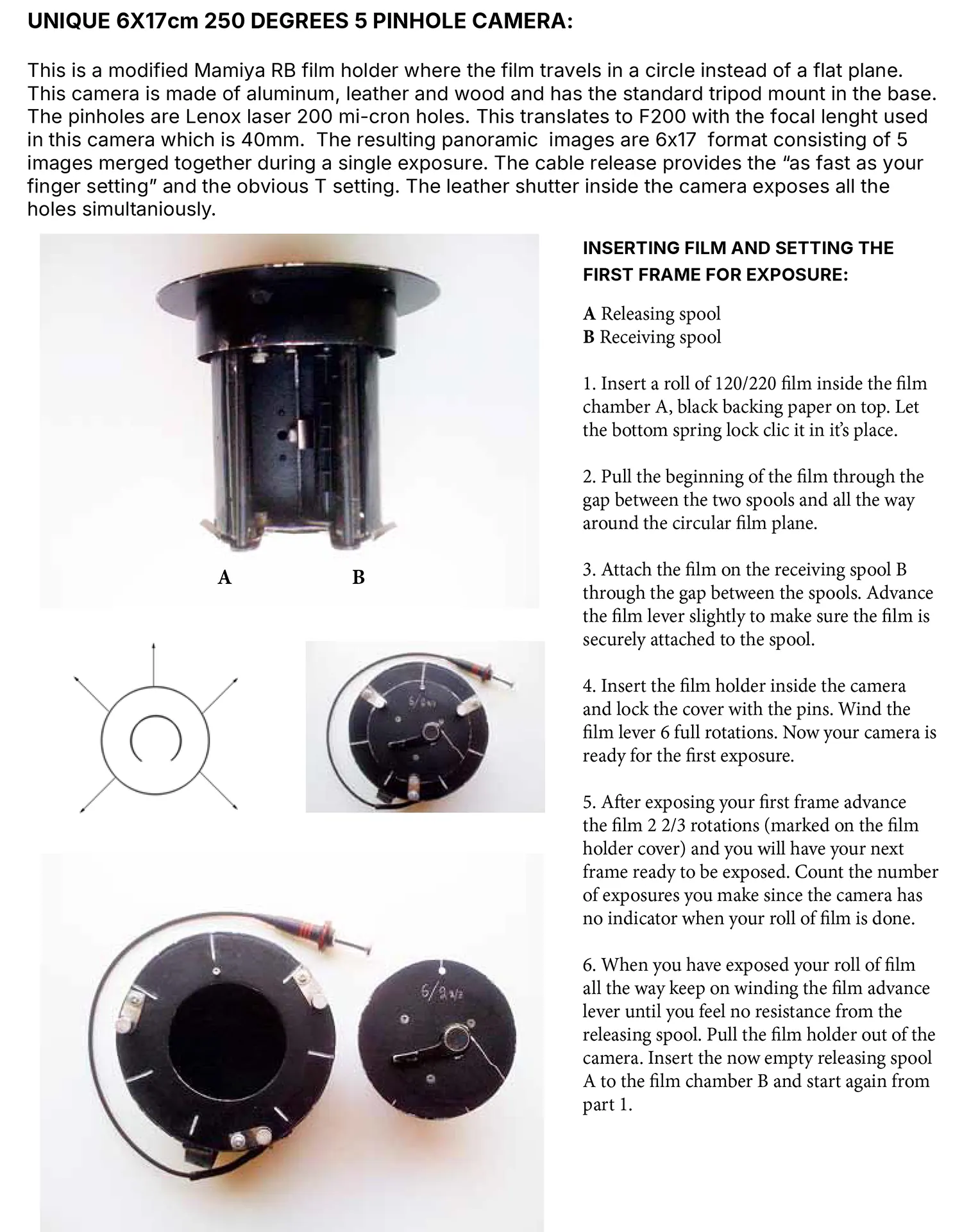
Handcrafted panoramic 6x17cm 250° multi-pinhole camera built from a modified Mamiya RB film back. The matte black cylindrical housing features multiple drilled pinholes and a top-mounted winding lever marked with exposure rotation indicators. A black and red cable release is attached, and the camera is placed on a grid-lined work surface.
A custom-built 6x17cm 250-degree panoramic 5-pinhole camera
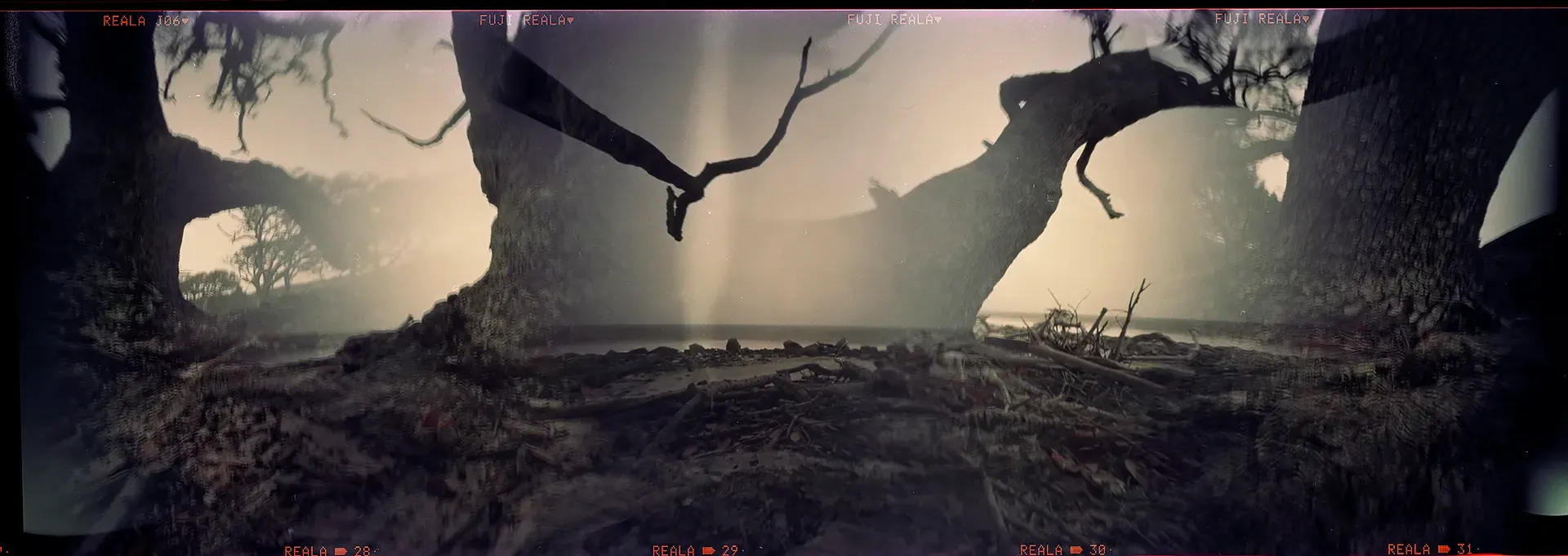
Experimental wide-format pinhole image capturing a coastal landscape with gnarled, arching tree trunks and scattered driftwood. The overlapping exposures create ghostly silhouettes against a mist-filled horizon, blending sharp bark textures with soft atmospheric light for a surreal, dreamlike effect.
Edward Scissor Hands Used To Live Here #1, 2005, 10 x 28 inches, Pigment Print, 6x17cm 250° 5-Pinhole Camera
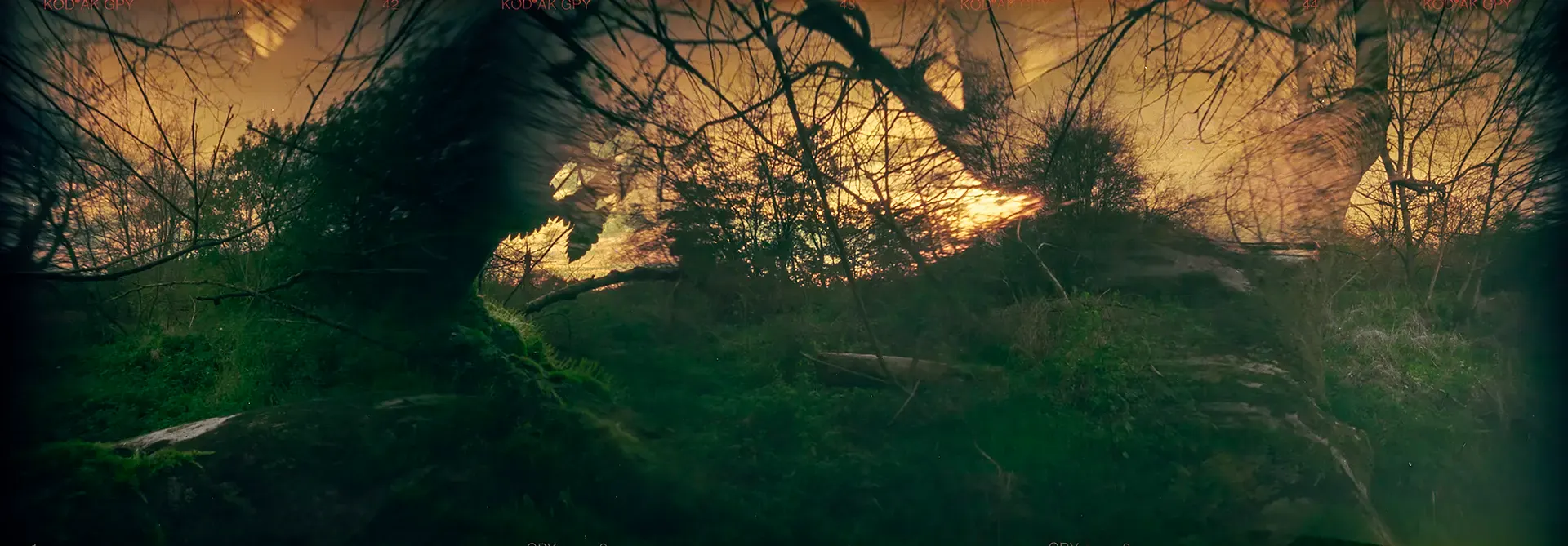
Panoramic multi-exposure pinhole photo of magical forest.
Edward Scissor Hands Used To Live Here #2, 2005, 10 x 28 inches, Pigment Print, 6x17cm 250° 5-Pinhole Camera
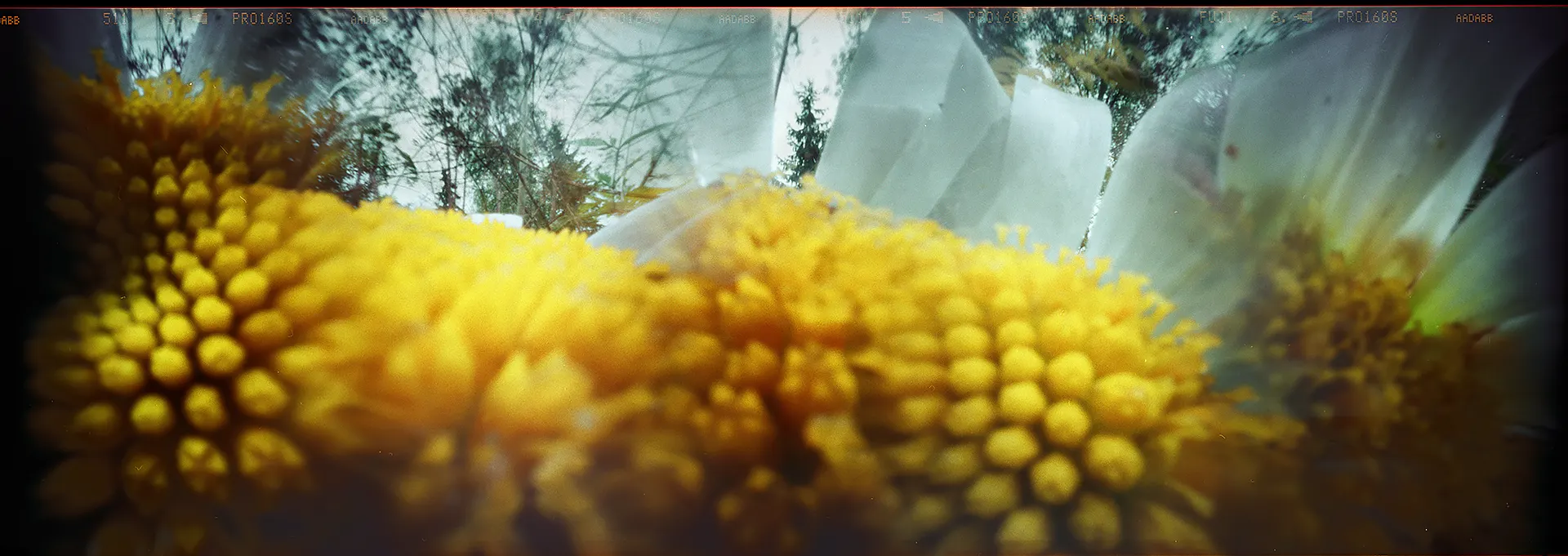
Panoramic multi-exposure pinhole photo of inside of a flower
How Does It Feel To Sit Inside a Flower, 2005, 10 x 28 inches, Pigment Print, 6x17cm 250° 5-Pinhole Camera
  • About
  • Biography
  • Artwork
  • Press & Publications
  • Contact

© 2026 Harri Kallio / Artists Rights Society (ARS), New York